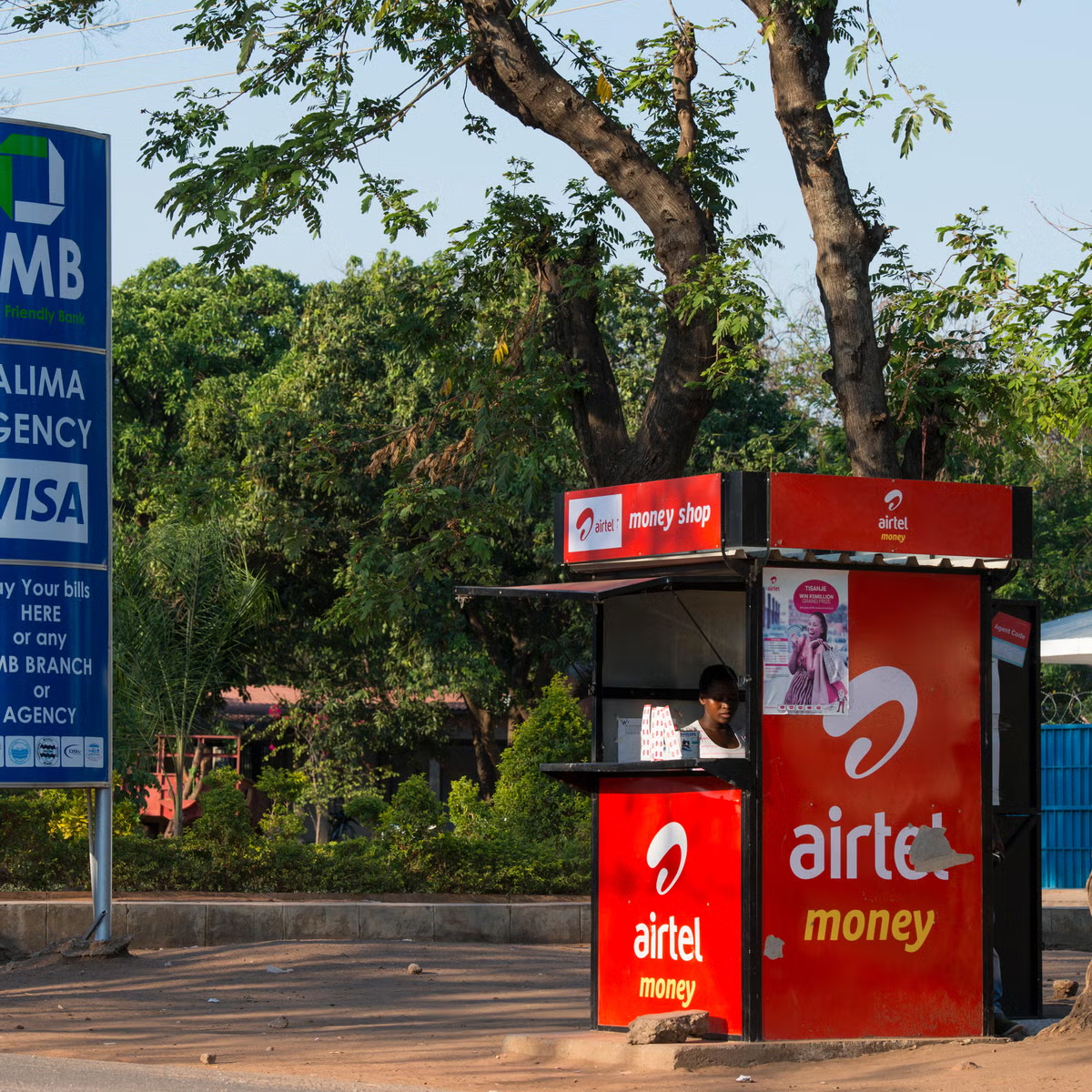
Airtel Money has reported $830 million in revenue for the six months to 30 September 2026, its first results since joining the London Stock Exchange. Revenue rose 34% in reported US dollars and 25.1% at constant currency, while its customer base reached 56.7 million. The figures give investors their first listed-company view of a payments network that spans 13 African markets.
The results, released by Airtel Mobile Commerce on Monday, show growth beyond the number of people holding wallets. The company processed $128 billion in transactions during the half-year, up from $87 billion a year earlier. Its annualised transaction run rate for the September quarter was $270 billion. That second figure extrapolates a quarter’s activity over a full year; it is not the value actually processed during the six months.
Airtel Money added customers at a faster pace than its underlying telecoms base, lifting mobile money penetration to 42.9%, up 3.2 percentage points from a year earlier. It reported 4.1 million app customers, a 64.3% increase, even though its wider service remains accessible through other mobile channels. Active agents rose 26.3% to 2.4 million, and active merchants increased 85.5% to more than 587,000.
That distribution matters. An app can make payments easier for smartphone users, but local agents still help people move between cash and digital balances. A growing merchant network, meanwhile, gives customers more reasons to keep money in the system rather than withdraw it after a transfer. The latest numbers suggest Airtel Money is trying to deepen everyday use, not simply register more accounts.
The company said wallet-services revenue grew 27.6% at constant currency, payments and transfers 29.4%, and financial services 44.8%. Financial services remain a much smaller part of the business than wallets and transfers, so that faster percentage growth should not be mistaken for a change in what currently generates most revenue.
Profit after tax increased to $228 million from $188 million. Underlying earnings before interest, tax, depreciation and amortisation rose 26.4% in reported currency to $398 million, but the underlying margin narrowed from 50.8% to 48%. Airtel attributed the pressure chiefly to changes in agreements with other companies in its group and to additional levies in one market. Its operating profit margin also fell, to 45% from 49%.
The difference between the 34% reported-currency revenue increase and the 25.1% constant-currency increase also deserves attention. Airtel said currency appreciation, particularly in the Zambian kwacha, boosted the dollar figure. Constant-currency growth strips out that translation effect and offers a clearer view of underlying trading, although it is still a company-defined measure.
For the full fiscal year ending in March 2027, Airtel Money reiterated guidance for revenue growth in the mid-20s percentage range at constant currency. It expects its underlying EBITDA margin to ease by up to about two percentage points against the previous fiscal year before moving back above 50% over the medium term. The board declared an interim dividend of 6.4 US cents a share.
Airtel Money began unconditional trading in London on 14 October under the ticker AMC. Existing shareholders sold 10% of the company at GBP 1.96 a share, valuing it at roughly GBP 5.3 billion, or about $7 billion. Because the shares came from existing holders, the flotation did not raise fresh capital for the company. TechBooky reported on Airtel’s listing plans while it was still preparing to separate the money business from the wider telecoms story.
As an independently traded company, Airtel Money now has to show that its scale can translate into durable earnings as well as transaction growth. It sees an opportunity in roughly 75 million Airtel telecoms subscribers who do not yet use the money service. Its longer-term ambitions include merchant acquiring, lending, insurance, savings and cards. Those products could increase revenue per customer, but also bring more competition, regulation and credit risk. The next results will show whether stronger usage can offset the margin pressure visible in this first report.
Related Reading
More contextual TechBooky stories selected from tags, categories and article context.
Paul Femi Balo is the founder and publisher of TechBooky. He covers artificial intelligence, African technology, digital infrastructure, enterprise technology and the global digital economy.
We use cookies to ensure that we give you the best experience on our website. If you continue to use this site we will assume that you are happy with it.