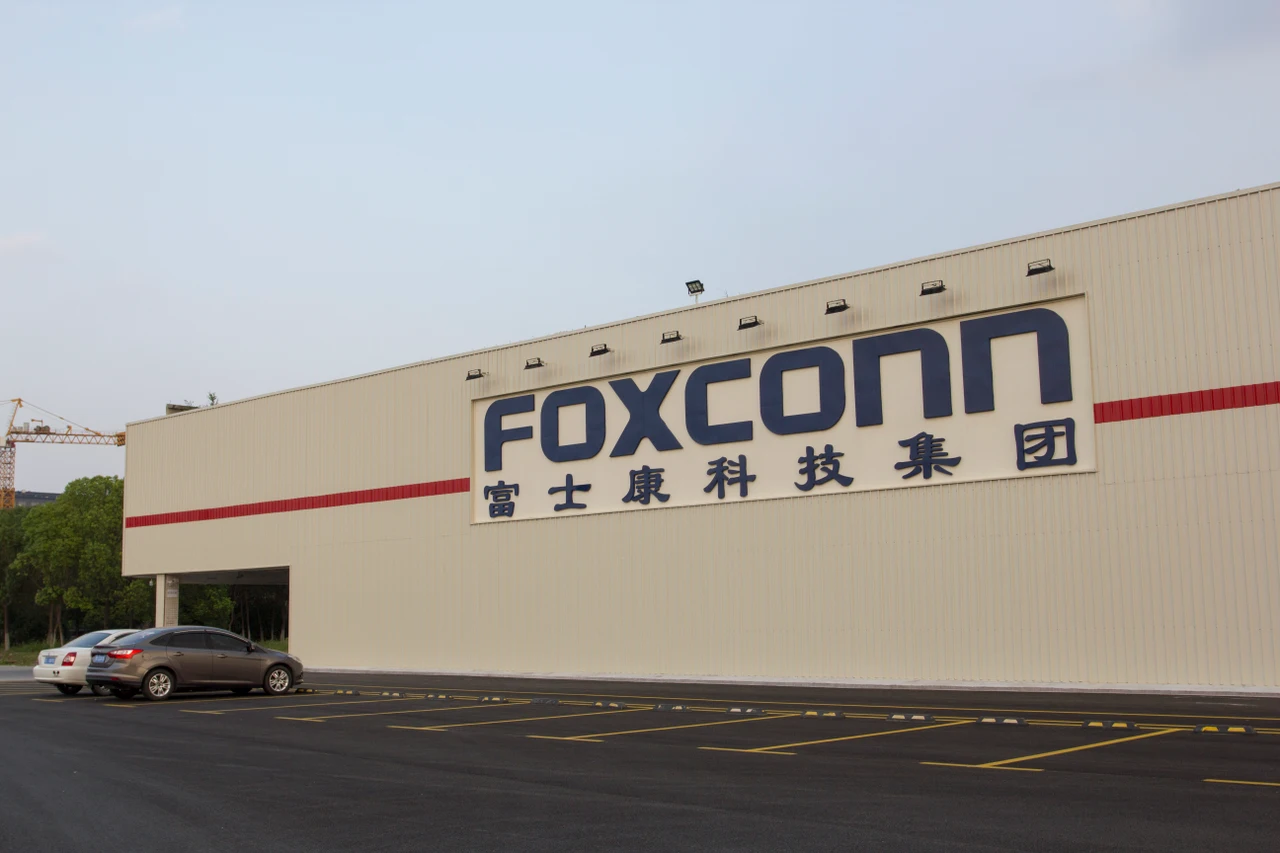
Foxconn has delivered another striking measure of the money flowing into AI infrastructure. The Taiwanese manufacturer reported third-quarter revenue of NT$3.03 trillion, about $95.4 billion, up 47 percent from a year earlier. It is a record for the July-to-September period and well above the NT$2.83 trillion analyst estimate cited by Reuters.
The figures come from Hon Hai’s October 5 unaudited revenue announcement. Foxconn, as the company is better known globally, said demand for cloud and networking products remained strong, with AI-related business driving growth. Smart consumer electronics, which include iPhones, also grew, so the quarter was not an AI-only story. But the scale of the increase makes it difficult to dismiss AI servers as a sideline.
September alone brought in about NT$1.16 trillion, up roughly 38 percent year on year. That monthly record helped lift the quarter above expectations. Reuters reported that AI demand underpinned the cloud and networking division while consumer electronics also posted significant growth.
Foxconn is still one of the names most closely associated with Apple manufacturing. That makes its changing business mix worth watching. In August, we looked at how AI servers had become a bigger part of Foxconn’s story after cloud and networking products accounted for more than half of second-quarter sales. Today’s result suggests that demand has carried through another quarter, even as the usual seasonal lift in phone production also arrived.
The company occupies a less visible but essential position in the AI supply chain. Nvidia may sell the processors that attract most of the headlines, yet someone has to assemble those chips into servers and racks, integrate networking and power systems, and deliver the equipment at enormous scale. Foxconn is one of the manufacturers turning orders for computing capacity into physical data-centre hardware.
That is also why the revenue figure should be read carefully. It is not a profit number, and a larger volume of expensive AI equipment does not automatically mean margins are rising at the same rate. Foxconn’s full quarterly results will be needed to see how much of this sales growth reaches earnings. For now, the unaudited figures establish that customers are still ordering hardware rapidly enough to produce an unusually strong quarter.
The result adds another physical-world signal to the AI spending debate. Nvidia’s recent earnings showed the strength of demand for AI chips; Foxconn’s new sales figures show what happens further down the manufacturing chain. The question ahead is not whether the buildout is real. It is whether this pace can be sustained, and how much of it suppliers can convert into lasting profit.
Related Reading
More contextual TechBooky stories selected from tags, categories and article context.
Paul Balo is the founder of TechBooky and a highly skilled wireless communications professional with a strong background in cloud computing, offering extensive experience in designing, implementing, and managing wireless communication systems.
We use cookies to ensure that we give you the best experience on our website. If you continue to use this site we will assume that you are happy with it.