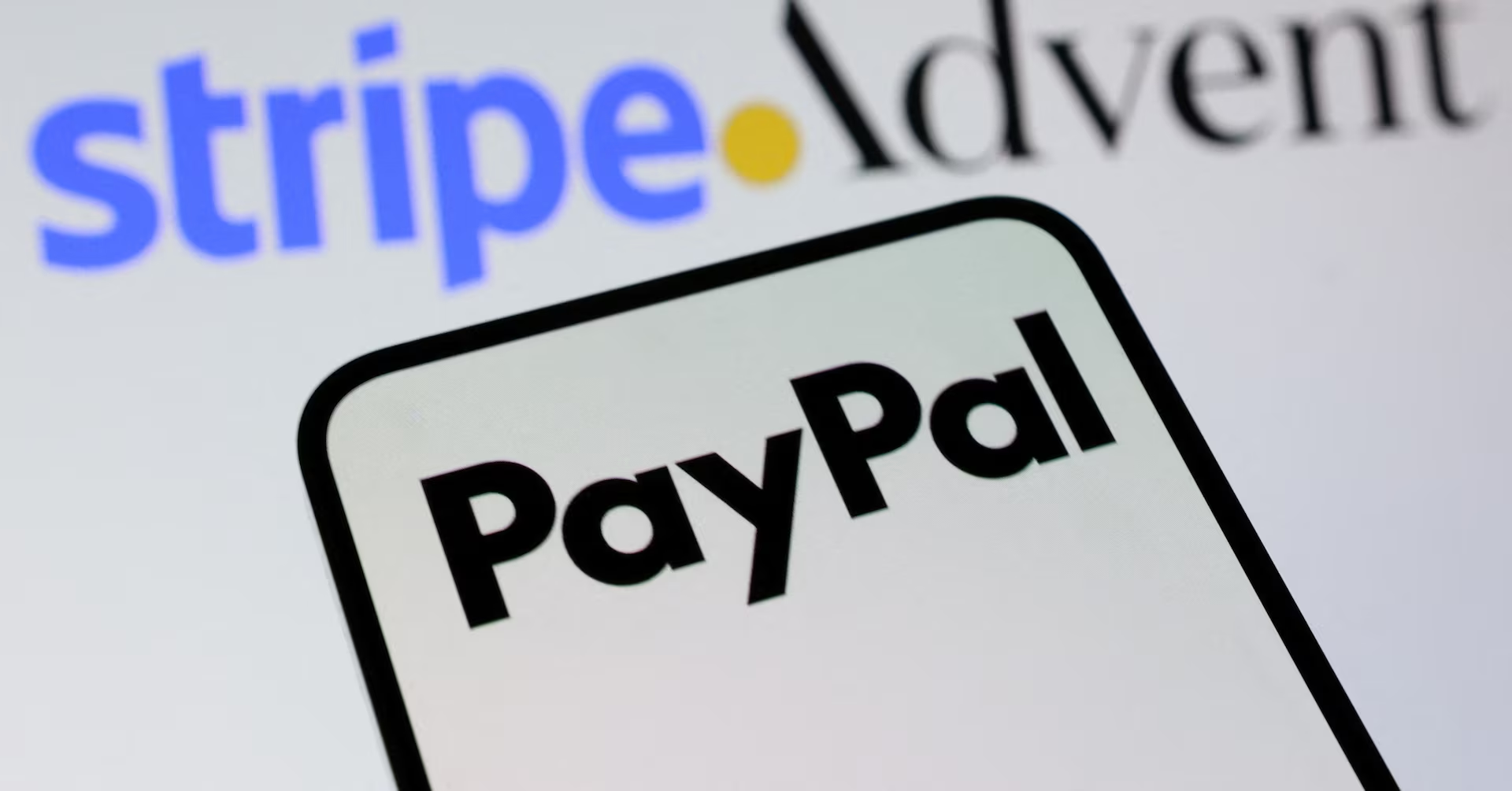
Stripe and Advent International have reportedly walked away from their pursuit of PayPal, cooling what could have become one of the largest fintech acquisitions ever attempted.
Axios reports that the consortium is no longer pursuing a deal after an earlier offer valued PayPal at about $53 billion, or $60.50 per share. Reuters, citing Bloomberg, also reported that the group had decided to abandon the pursuit, while PayPal, Stripe and Advent declined to comment on the report.
The collapse of the talks is not surprising when you look at the timing. PayPal’s shares had moved above the reported offer price, making the proposal harder to defend unless Stripe and Advent were willing to raise their bid. At the same time, PayPal is still trying to prove that it can rebuild investor confidence after years of pressure from Apple Pay, Shop Pay, Klarna, banks and other checkout competitors.
A Stripe-PayPal combination would have been a major reshaping of the payments market. Stripe is strongest with developers, online businesses and modern payment infrastructure. PayPal still has a large consumer wallet, Venmo, Braintree and a global merchant footprint. Put together, the companies could have created a payments giant with both developer depth and consumer distribution.
But that is also why the deal would have been difficult. Regulators would likely have asked hard questions about online payments, checkout power, merchant fees, consumer wallets and whether one combined company would have too much control across different layers of digital commerce.
There is also the strategic question for Stripe. The company has been moving deeper into AI-era payments and infrastructure, including reported interest in AI model marketplaces and developer platforms. Buying PayPal would have been a huge consumer-fintech swing, but it would also have brought legacy complexity, regulatory exposure and a major integration problem.
For PayPal, the end of the pursuit puts the focus back on execution. The company has to show that it can grow beyond the old PayPal button, keep Venmo relevant, improve merchant tools, compete with Apple and Shopify, and use AI to reduce fraud, personalize checkout and improve risk decisions. A takeover headline can lift sentiment for a while, but it does not replace a working strategy.
The broader fintech market should pay attention because the payments sector is entering a new consolidation phase. Margins are under pressure, fraud is rising, cross-border payments are changing, stablecoins are becoming harder to ignore and merchants want lower costs. In that environment, scale matters, but strategic fit matters even more.
This also connects to Africa’s fintech story. Companies such as OPay, PalmPay, Moniepoint and Interswitch are building payments and banking rails in markets where digital finance is still expanding quickly. The global PayPal-Stripe drama shows how valuable payment distribution can become once a company owns both consumer habits and merchant relationships.
For now, the PayPal pursuit appears to be off. But the logic behind it has not disappeared. Payments remain one of the most important layers of the internet economy, and the companies that control checkout, identity, fraud, credit and cross-border settlement will keep attracting attention. Stripe may have stepped back from PayPal, but the race to own the next payments platform is not slowing down.
Related Reading
More contextual TechBooky stories selected from tags, categories and article context.
Paul Balo is the founder of TechBooky and a highly skilled wireless communications professional with a strong background in cloud computing, offering extensive experience in designing, implementing, and managing wireless communication systems.
We use cookies to ensure that we give you the best experience on our website. If you continue to use this site we will assume that you are happy with it.