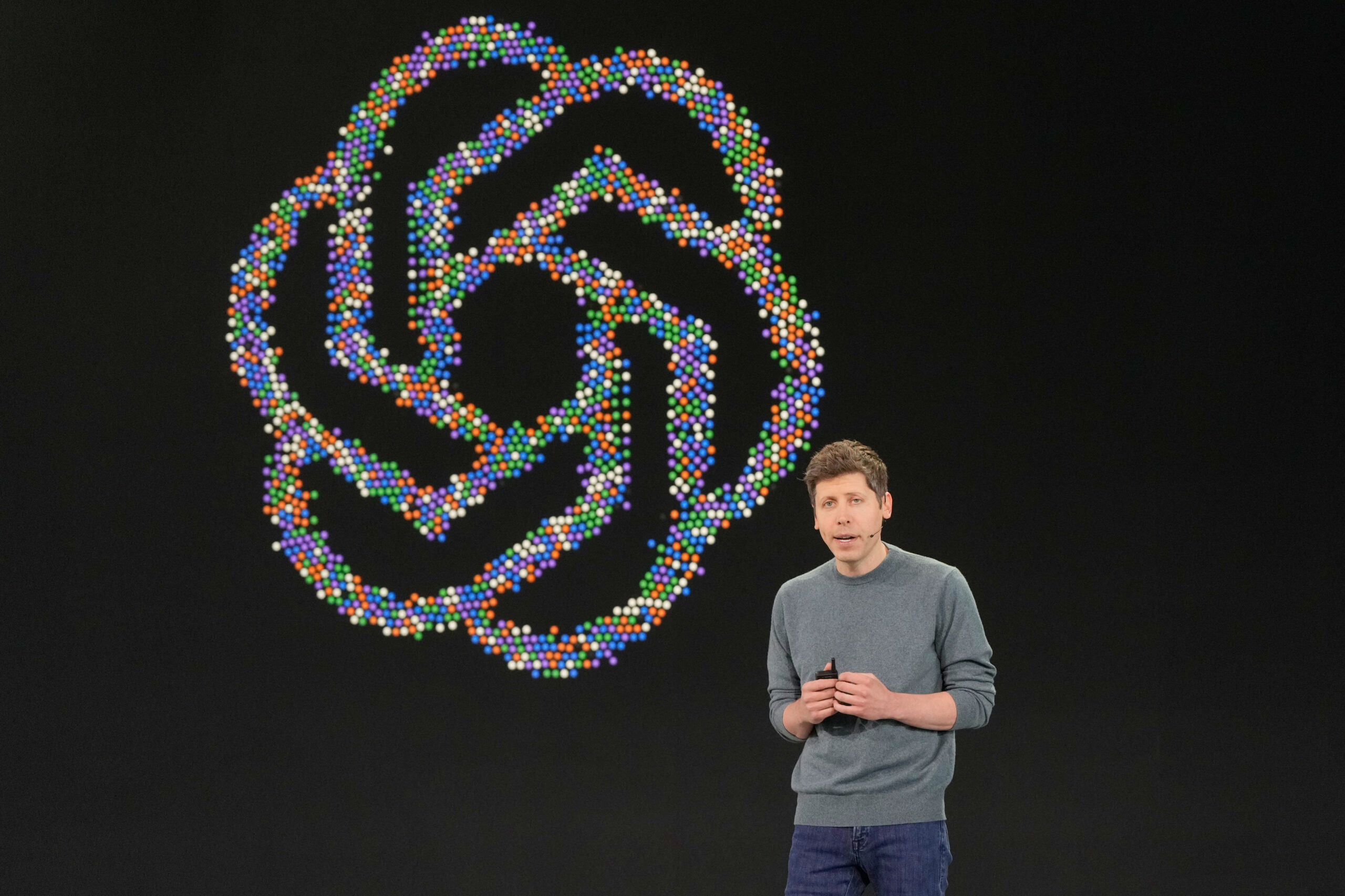
Open AI CEO Sam Altman speaks at the OpenAI DevDay 2026 conference, Tuesday, Sept. 29, 2026, in San Francisco. (AP Photo/Jeff Chiu)
OpenAI’s dismissal of three safety researchers has become a public dispute over whether staff can challenge the company and work with outside evaluators without putting their jobs at risk. The firings happened last week. The new development is a letter from the former employees and OpenAI’s response on Friday, which puts two sharply different accounts of the same events on the record.
The researchers, Jasmine Wang, Tomek Korbak and Mikita Balesni, say the circumstances of their departures have unsettled colleagues who were encouraged to speak openly about AI risks. In a letter to OpenAI’s safety oversight groups, they urged the company to keep its commitments to independent scrutiny and to preserve ways of monitoring more capable models. The Associated Press reported that the researchers believe their work on safety, not misconduct, was central to the dispute.
OpenAI rejects that account. The company says an investigation found violations of its rules for handling sensitive information and describes the matter as a breach of trust. It says the dismissals were not retaliation for raising safety concerns or speaking out. OpenAI has not publicly laid out the full evidence behind its decision, while the former employees reject the suggestion that they acted outside acceptable procedures. Neither side’s version resolves the underlying facts on its own.
One point of contention is contact with external evaluators. Korbak says he was told that communication with METR, an independent group brought in to examine an earlier OpenAI incident involving Hugging Face, was cited in his dismissal. He argues that talking to the group was part of his job. That does not establish what information was shared, under which rules, or why OpenAI concluded that its policies had been broken. Those details would matter to any fair assessment.
This is more than an employment argument because frontier AI companies increasingly ask the public to trust their internal risk assessments. Outside experts can test claims that a company might miss or have an incentive to downplay. Yet independent review also needs clear rules for protecting confidential research and security-sensitive information. The question is whether a lab can make those boundaries explicit without discouraging its staff from flagging uncomfortable results.
TechBooky recently examined David Robinson’s criticism of OpenAI’s safety culture. His resignation and these firings are separate events; neither proves that a particular OpenAI model is unsafe. Together, however, they increase pressure on the company to explain how researchers can challenge a launch decision, who can review a disputed finding and what protections apply when an employee raises a concern in good faith.
There is a practical answer OpenAI could offer. It could spell out approved channels for external evaluators, describe how alleged violations are independently reviewed and show that safety teams can delay or alter a release when testing warrants it. It need not publish confidential personnel records to do that. Until more of the process is visible, readers should regard retaliation and misconduct as competing claims, not settled facts.
Related Reading
More contextual TechBooky stories selected from tags, categories and article context.
Paul Balo is the founder of TechBooky and a highly skilled wireless communications professional with a strong background in cloud computing, offering extensive experience in designing, implementing, and managing wireless communication systems.
We use cookies to ensure that we give you the best experience on our website. If you continue to use this site we will assume that you are happy with it.