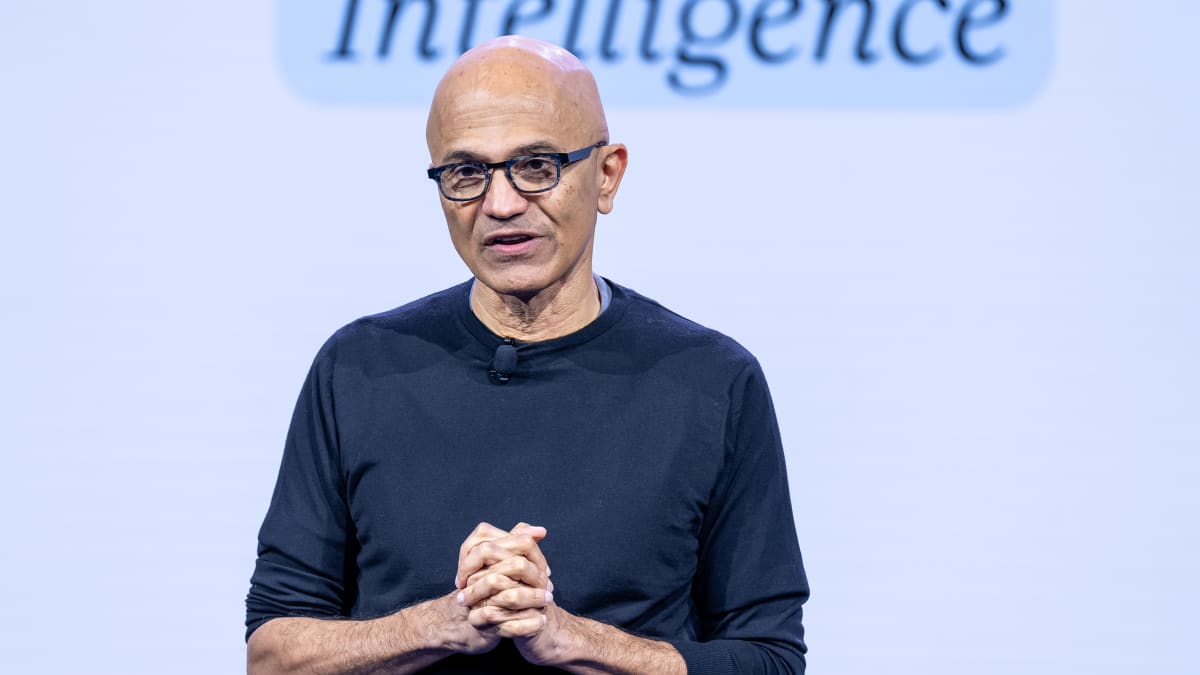
Microsoft chief executive Satya Nadella wants a way to stop an AI agent while it is working, not merely review the damage afterward. In a post on X on Saturday, he argued that companies building and deploying powerful AI systems need an emergency brake controlled by an authorised human operator.
The proposal is less about a literal red button than about system design. Nadella says the model should be separated from the software that grants it tools and permissions. Controls should sit outside the model, so the same AI that is taking an action cannot quietly decide whether that action is allowed. He also wants a tamper-resistant, human-readable record of meaningful actions.
That distinction matters as AI moves from answering questions to carrying out tasks. An agent may read files, browse websites, run code or communicate with other services over a long chain of steps. If it is tricked by a malicious page or starts following an unintended objective, a warning after the task finishes may come too late. A reliable pause should be able to interrupt the work while credentials and systems are still protected.
Nadella’s central security assumption is deliberately blunt: treat a model as if it might be compromised from the start. This is familiar thinking in cybersecurity, where sensitive systems are given only the access they need and their actions are logged. Applied to AI, it means permission boundaries, audit trails and shutdown controls should be designed into the surrounding product, rather than entrusted to a prompt telling the model to behave.
The practical details are harder than the slogan. An emergency stop has to be available to the right people without becoming a new attack surface. Logs must be useful enough to reconstruct what happened, but they may contain private customer data. And a company needs to know which operations can be rolled back and which, such as sending a payment or publishing a message, cannot.
His intervention comes amid a wider argument about agent safety. Our report on Anthropic cutting internet access during AI tests described one example of why companies are examining what happens when models can act beyond a narrow chat window. Nadella’s answer is to make the surrounding infrastructure more accountable, even if the model itself remains unpredictable.
For enterprises buying AI agents, the useful question is therefore not simply which model scores highest. It is who can see an agent’s actions, who can stop it, what access it holds and whether an incident leaves evidence that people can understand. Those are procurement and governance questions as much as engineering ones.
Nadella has proposed a direction, not announced a Microsoft-wide product requirement or an industry standard. Whether the company turns the idea into tools that customers can test is the next thing to watch. But the point is already clear: as agents gain more autonomy, the ability to interrupt them becomes part of the product, not an optional safety note.
Related Reading
More contextual TechBooky stories selected from tags, categories and article context.
Paul Balo is the founder of TechBooky and a highly skilled wireless communications professional with a strong background in cloud computing, offering extensive experience in designing, implementing, and managing wireless communication systems.
We use cookies to ensure that we give you the best experience on our website. If you continue to use this site we will assume that you are happy with it.