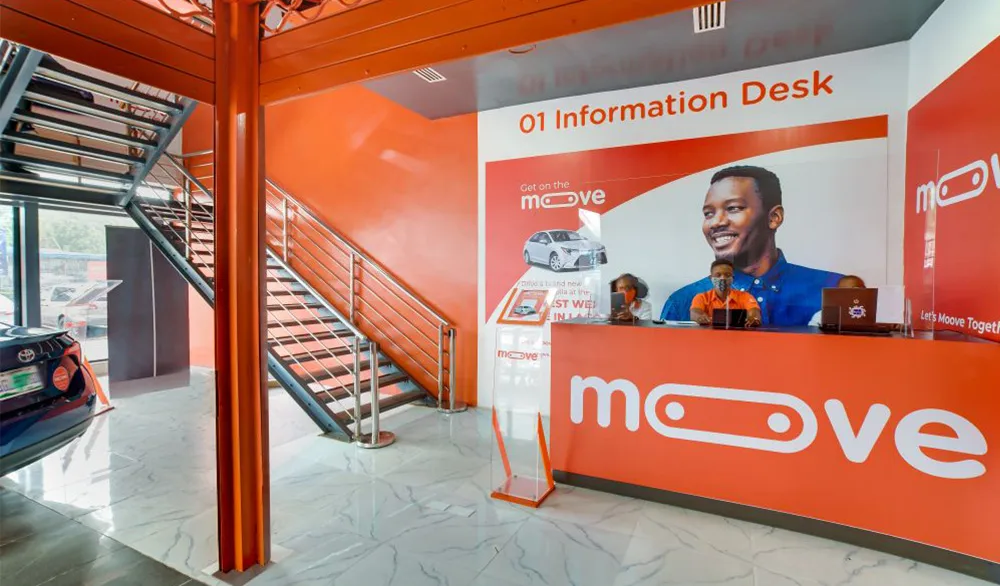
Moove is leaving the country where it began. The Lagos-founded vehicle financing company said on Thursday, October 8, that it is ending its Nigerian operations and transferring eligible vehicles to drivers under a plan it values at about N35 billion. For people who have spent years making payments on cars used for ride-hailing, the distinction between access to a vehicle and ownership is a consequential one.
Moove calls the programme “Thank You Nigeria.” It says qualifying customers will not have to make further vehicle payments from October 1, 2026, and can take ownership of their cars. That does not mean every person who has ever used a Moove vehicle automatically receives a free car. Eligibility, any amounts owed for earlier periods and the documentation needed to complete a transfer will matter to individual drivers. The company should make those terms clear to customers before accounts are closed.
The company says it has served more than 9,000 customers in Nigeria since launching with 76 vehicles in Lagos in 2020. That figure describes its customer base over time, not the number of vehicles changing hands now. Moove also says its cars have helped drivers earn more than N57 billion. Those figures, along with the N35 billion transfer estimate, are company figures outlined in its exit announcement; Moove has not published a vehicle-by-vehicle breakdown of the ownership programme.
The departure follows Uber’s exit from Nigeria in September. Uber was an investor in Moove, and the two companies were closely linked through the ride-hailing market. The timing raises an obvious question about demand for Moove’s original financing model, but it would be premature to say Uber’s withdrawal alone caused this decision. Drivers may still use other platforms, while fuel, maintenance, insurance and licensing remain their responsibility even if they own the car outright.
For Moove, leaving Nigeria is not the same as shutting down globally. The business has pushed further into international fleet operations and autonomous vehicles. In August it raised $250 million for robotaxi infrastructure, putting a different emphasis on the company that started by financing vehicles for gig workers. Moove says it now operates a fleet of about 42,000 vehicles across 29 cities. It has also said it will give a vehicle to each of its Nigeria-based employees as part of its exit package.
What comes next is practical, not just symbolic. Eligible drivers need written confirmation of title transfer, a clear statement of any old balance and enough time to update registration and insurance. The handover could leave some with an asset they might otherwise have spent years paying for. It could also expose how much a ride-hailing business depends on a financing partner that can change strategy. Moove’s exit closes a chapter in Nigerian mobility, but the outcome for drivers will be measured in completed paperwork and workable cars, not the headline value of the transfer.
Related Reading
More contextual TechBooky stories selected from tags, categories and article context.
Paul Balo is the founder of TechBooky and a highly skilled wireless communications professional with a strong background in cloud computing, offering extensive experience in designing, implementing, and managing wireless communication systems.
We use cookies to ensure that we give you the best experience on our website. If you continue to use this site we will assume that you are happy with it.