Kenyan climate-tech startup SunCulture has launched a profit-sharing plan for employees, and the move raises a useful question for African startups: should the people building the company share more directly in the upside?
The company has introduced a scheme called RainDrops for its full-time employees, according to an August 20 report. Employees earn RainDrops over time as a reflection of their contribution, and if SunCulture reaches a liquidity event, they can receive a financial reward based on the RainDrops accumulated.
This is not the same as ordinary salary, and it is not the same as every employee holding traditional equity. It is closer to a structured way of sharing value if the company eventually reaches an exit, financing event or other liquidity milestone.
That matters because African startup employees often take real risk without the same upside culture seen in Silicon Valley. Early teams work through uncertainty, low budgets, product pivots and difficult markets. Founders and investors may hold the clearest financial upside, while employees can end up with limited long-term benefit if the company succeeds.
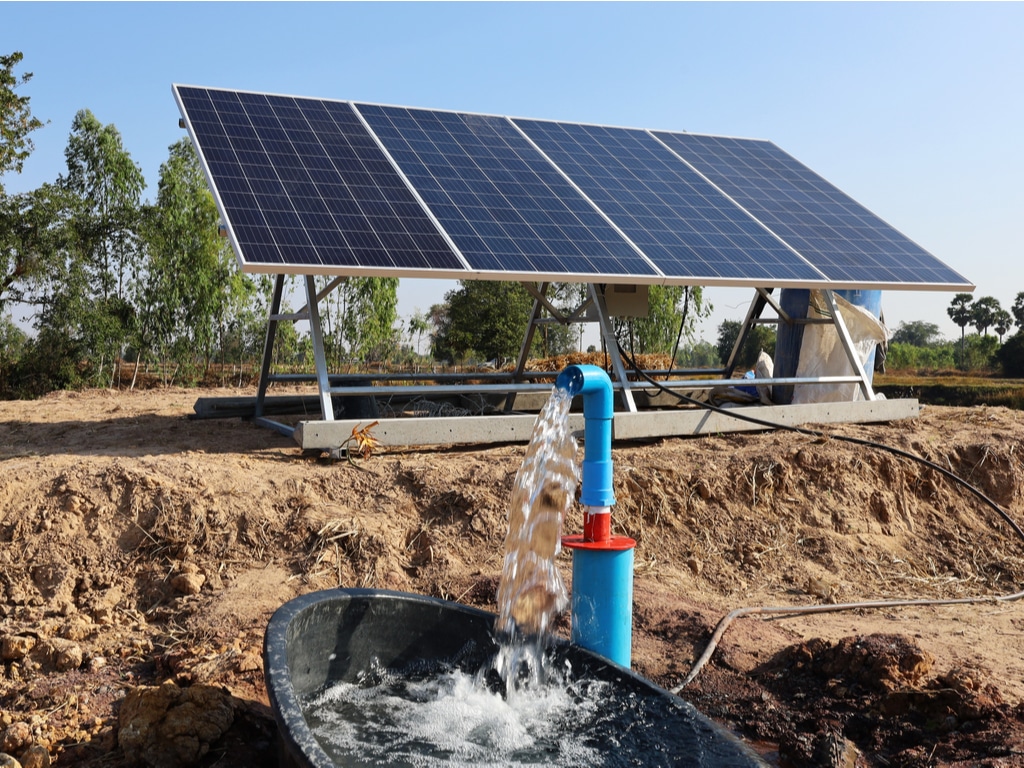
SunCulture’s approach tries to make that imbalance less sharp. The company works in solar irrigation, helping smallholder farmers access water and energy solutions through technology and financing. That is a hard market. It requires field teams, operations staff, customer support, financing systems, hardware logistics and trust with farmers. Success is not created by founders alone.
A profit-sharing scheme can also help with retention. Talented workers in African tech now have more choices: startups, banks, telcos, global remote jobs, development organizations and international tech firms. A credible upside plan gives employees a stronger reason to stay through the difficult middle years of company building.
The governance design will matter. Employees need to understand how RainDrops are earned, how they vest, what counts as a liquidity event, what happens if someone leaves, and how rewards are calculated. If the rules are not clear, profit-sharing can create confusion rather than loyalty.
SunCulture’s wider work also gives the story a stronger climate-tech angle. Solar irrigation is one of the more practical forms of climate adaptation in Africa because it can improve farmer productivity while reducing dependence on diesel pumps and rainfall uncertainty. Organizations such as IWMI have worked with SunCulture on sustainable solar irrigation in Kenya.
This is why the plan is more than an HR story. African climate-tech companies are trying to solve difficult physical problems, not only build apps. If those companies want durable teams, they need compensation models that recognize long execution cycles and operational complexity.
SunCulture’s RainDrops scheme will ultimately be judged by whether employees actually receive meaningful rewards if the company succeeds. But as a signal, it is useful. African startups talk a lot about building ecosystems. Sharing upside with workers is one way to make that ecosystem feel real inside the companies themselves.
Related Reading
More contextual TechBooky stories selected from tags, categories and article context.
Paul Balo is the founder of TechBooky and a highly skilled wireless communications professional with a strong background in cloud computing, offering extensive experience in designing, implementing, and managing wireless communication systems.
We use cookies to ensure that we give you the best experience on our website. If you continue to use this site we will assume that you are happy with it.