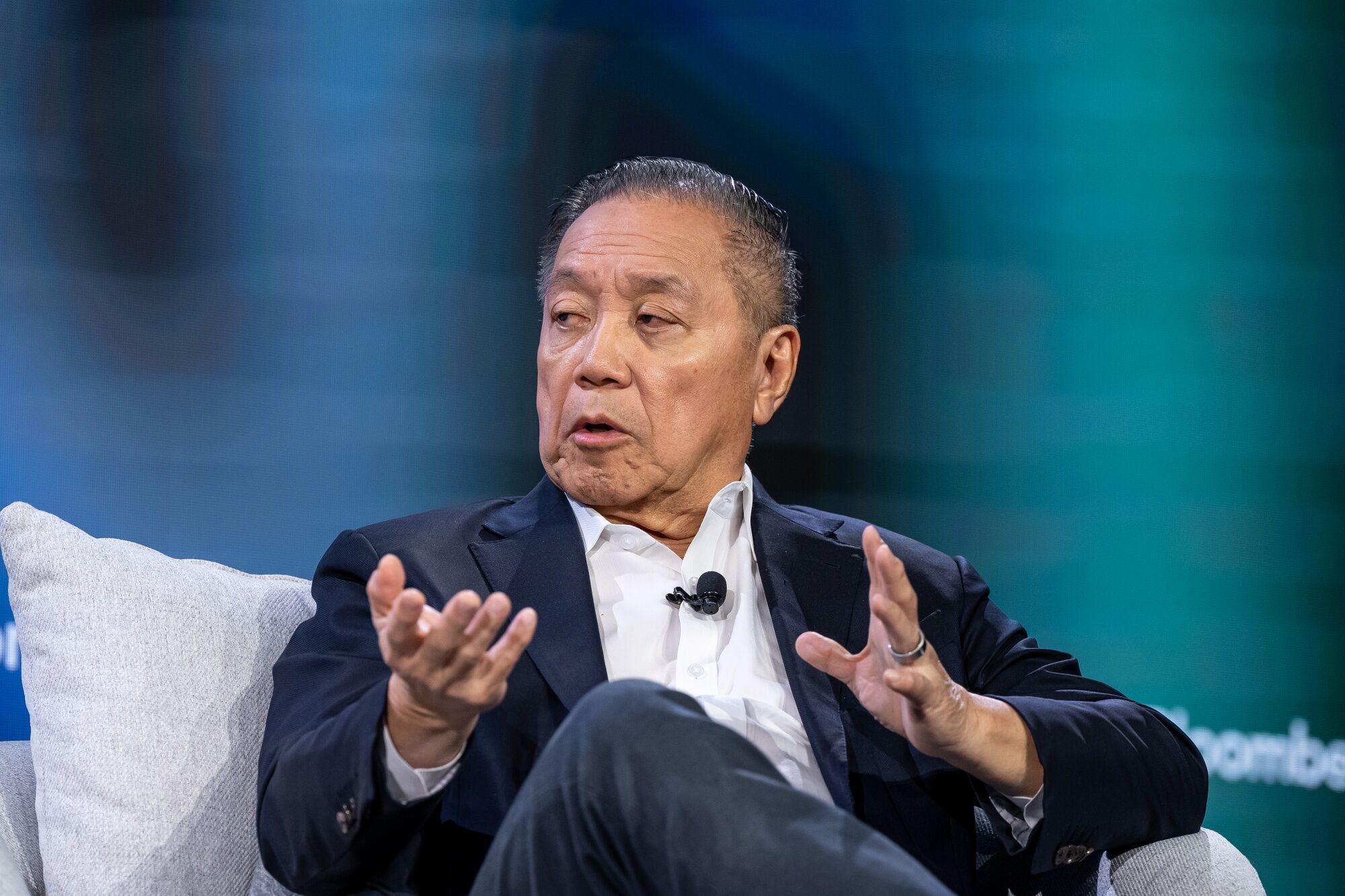
Hock Tan, president and chief executive officer of Broadcom, during the Bloomberg Tech conference in San Francisco, California, US, on Thursday, June 4, 2026. The event brings together the leading CEOs, investors and innovators who are harnessing technology to change the world around us.
The AI industry has spent much of the past few years worrying about whether it can get enough chips. Broadcom chief executive Hock Tan thinks the harder question may soon be whether companies can keep paying for the infrastructure needed to put those chips to work. Speaking at a technology conference in Singapore, Tan said capital, rather than memory or wafer supply, could become the biggest constraint on AI’s next stage of growth.
His comments, reported by Reuters on Monday, are a useful change in emphasis. The semiconductor industry has worked through severe shortages before, and Tan said constraints involving wafers and memory are being overcome. But building an AI service at global scale requires much more than securing a processor. Data centres need servers, networking equipment, cooling systems and enormous amounts of electricity. Each new generation of models can demand another expensive round of investment.
That does not mean chip supply is suddenly plentiful everywhere, or that every AI company is running out of money. Tan was describing the pressure he expects as the industry expands. Broadcom has a direct view of it as a supplier of networking technology and custom chips to large AI customers, but his assessment is still a forecast, not a measured ceiling on industry growth.
There is a distinction between buying compute and earning enough from it to justify the bill. A company can raise money for a new data centre, but that centre must eventually attract sufficient paying demand to support its operating costs and financing. The longer the buildout takes, the longer capital is tied up before the investment produces meaningful returns.
Tan pointed to revenue at OpenAI and Anthropic as evidence that advanced AI assistants are becoming substantial businesses. That helps make the case for infrastructure spending. Yet revenue growth does not settle the question of how quickly the firms and their partners can recover the cost of training and serving increasingly capable models. Investors will be looking at both sides of that equation, not just at user demand.
The scale of financing already moving into AI infrastructure shows why the issue matters. Crusoe’s multibillion-dollar fundraise illustrated the appetite for new capacity, while the market for AI compute financing is drawing lenders and other investors deeper into projects once funded largely from big technology companies’ own balance sheets.
For smaller developers and countries hoping to build domestic AI capacity, the capital question may be sharper still. They may be able to obtain chips eventually, yet struggle to finance the power, facilities and ongoing operation needed to use them competitively. That is one reason cheaper models and more efficient inference matter: they can lower the amount of infrastructure needed to deliver a useful service.
Tan’s argument does not end the debate over bottlenecks. Power availability, permitting and supply chains can all slow projects, sometimes simultaneously. But his warning reframes the AI race in financial terms. If hardware shortages ease while infrastructure costs keep rising, the winners may be the companies that can fund expansion without losing sight of what customers are willing to pay.
Related Reading
More contextual TechBooky stories selected from tags, categories and article context.
Paul Balo is the founder of TechBooky and a highly skilled wireless communications professional with a strong background in cloud computing, offering extensive experience in designing, implementing, and managing wireless communication systems.
We use cookies to ensure that we give you the best experience on our website. If you continue to use this site we will assume that you are happy with it.