For nearly two years, many observers suspected something unusual was happening in Silicon Valley.
Tech executives who once openly criticized Donald Trump appeared increasingly willing to engage with him, visit Mar-a-Lago, attend inauguration events and publicly soften their tone. Some called it pragmatism. Others called it business. Critics called it something else entirely.
Now, a new book suggests those suspicions may not have been far from the truth.
According to excerpts from Regime Change: Inside the Imperial Presidency of Donald Trump by New York Times reporters Maggie Haberman and Jonathan Swan, President Trump privately mocked attempts by some of America’s most powerful tech leaders to win his favour after his 2024 election victory. The accounts were first reported by WIRED, which obtained a copy of the book ahead of publication.
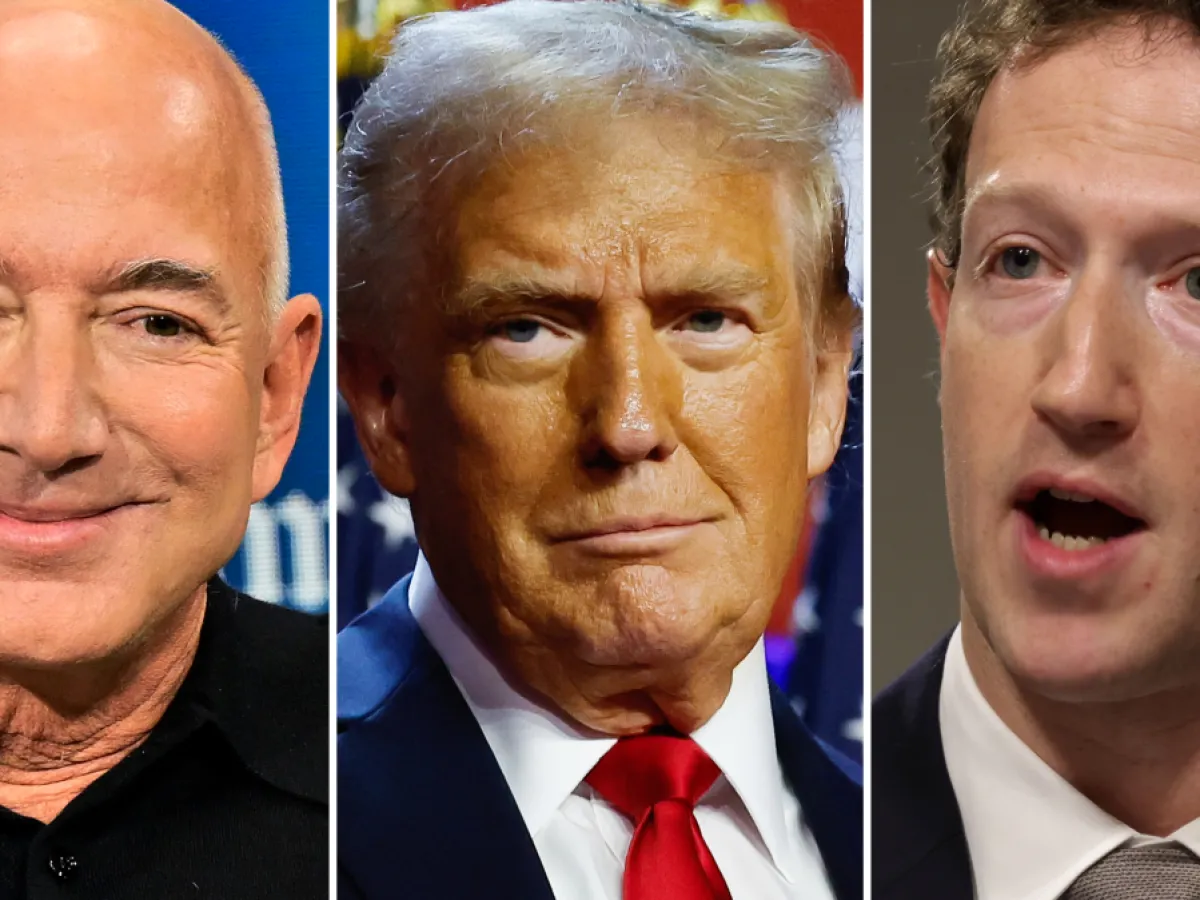
Among the most striking claims is that Meta CEO Mark Zuckerberg allegedly sent Trump a photo of a letter written by one of his children praising what was described as America’s coming “golden age,” echoing language frequently used during Trump’s campaign. Amazon founder Jeff Bezos is also said to have criticized The Washington Post during conversations with Trump while later seeking support on issues related to his space company, Blue Origin.
According to the book, Trump later showed some of these messages to guests and associates, boasting about the efforts made by tech leaders to get closer to him. Trump reportedly described Zuckerberg and Bezos as “kissing my ass” and told associates, “You would not believe the texts I got from these tech guys.”
The Part That Isn’t Surprising
What may be most remarkable is not the allegation itself.
It’s that very few people in the technology industry will be genuinely shocked.
The relationship between Big Tech and political power has always been transactional.
When Barack Obama was in office, technology leaders flocked to Washington. During the Biden years, tech firms invested heavily in regulatory relationships, AI policy discussions and federal partnerships. When political winds shifted again, many executives adjusted accordingly.
The difference here is that the new reporting appears to provide a rare glimpse behind the curtain.
For years, many Silicon Valley executives publicly positioned themselves as independent actors focused on innovation rather than politics. Yet as AI regulation, antitrust scrutiny, government contracts and national security issues became increasingly important, maintaining a productive relationship with whichever administration occupied the White House became a business necessity.
That’s not unique to Zuckerberg or Bezos.
The book notes that other technology leaders, including Google’s Sundar Pichai and Apple’s Tim Cook, also sought meetings with Trump during the transition period.
Unlike many technology executives who were reportedly attempting to build bridges after the election, Musk had already become one of Trump’s most visible allies. According to the book, Trump even shared some of the messages with Musk, who reportedly described the efforts by rival executives as “first-class groveling.”
The irony is difficult to ignore.
For years, Musk, Zuckerberg and Bezos have been portrayed as rivals competing for influence across artificial intelligence, space exploration, social media and technology infrastructure.
Now the same rivalry appears to have extended into politics.
The book suggests Trump viewed their outreach less as strategic relationship-building and more as evidence that former critics had been forced to change course.
There is a practical explanation for all of this. The world’s largest technology companies increasingly depend on government decisions. AI regulation can determine how quickly products reach the market.
Antitrust investigations can reshape billion-dollar businesses. Defense contracts can create entirely new revenue streams.
Space companies depend heavily on federal partnerships and launch contracts.
Cloud providers compete for government infrastructure deals. In that environment, access matters.
Whether it is Democrats or Republicans in power, CEOs often find themselves pursuing relationships with political leaders they may have previously criticized.
The technology industry likes to present itself as disruptive and independent.
In reality, it often behaves much like every other major industry when political power is at stake.
The most interesting takeaway from these revelations may not be that Zuckerberg and Bezos allegedly sought Trump’s approval.
Most people already assumed major business leaders were doing exactly that.
The bigger story is that, according to the book, Trump apparently enjoyed displaying that influence.
The accounts paint a picture of a president who not only welcomed outreach from Silicon Valley but also took pleasure in demonstrating how dramatically the relationship had changed from the hostility of previous years.
Whether readers view the reported interactions as diplomacy, business pragmatism or outright flattery will largely depend on their political perspective.
But if the book’s reporting is accurate, one thing is difficult to dispute:
Many of the same tech leaders who once appeared determined to keep Washington at arm’s length were eventually competing for access to it.
And according to these accounts, the person they were trying to impress may have been laughing about it all along.
Related Reading
More contextual TechBooky stories selected from tags, categories and article context.
Paul Balo is the founder of TechBooky and a highly skilled wireless communications professional with a strong background in cloud computing, offering extensive experience in designing, implementing, and managing wireless communication systems.
We use cookies to ensure that we give you the best experience on our website. If you continue to use this site we will assume that you are happy with it.