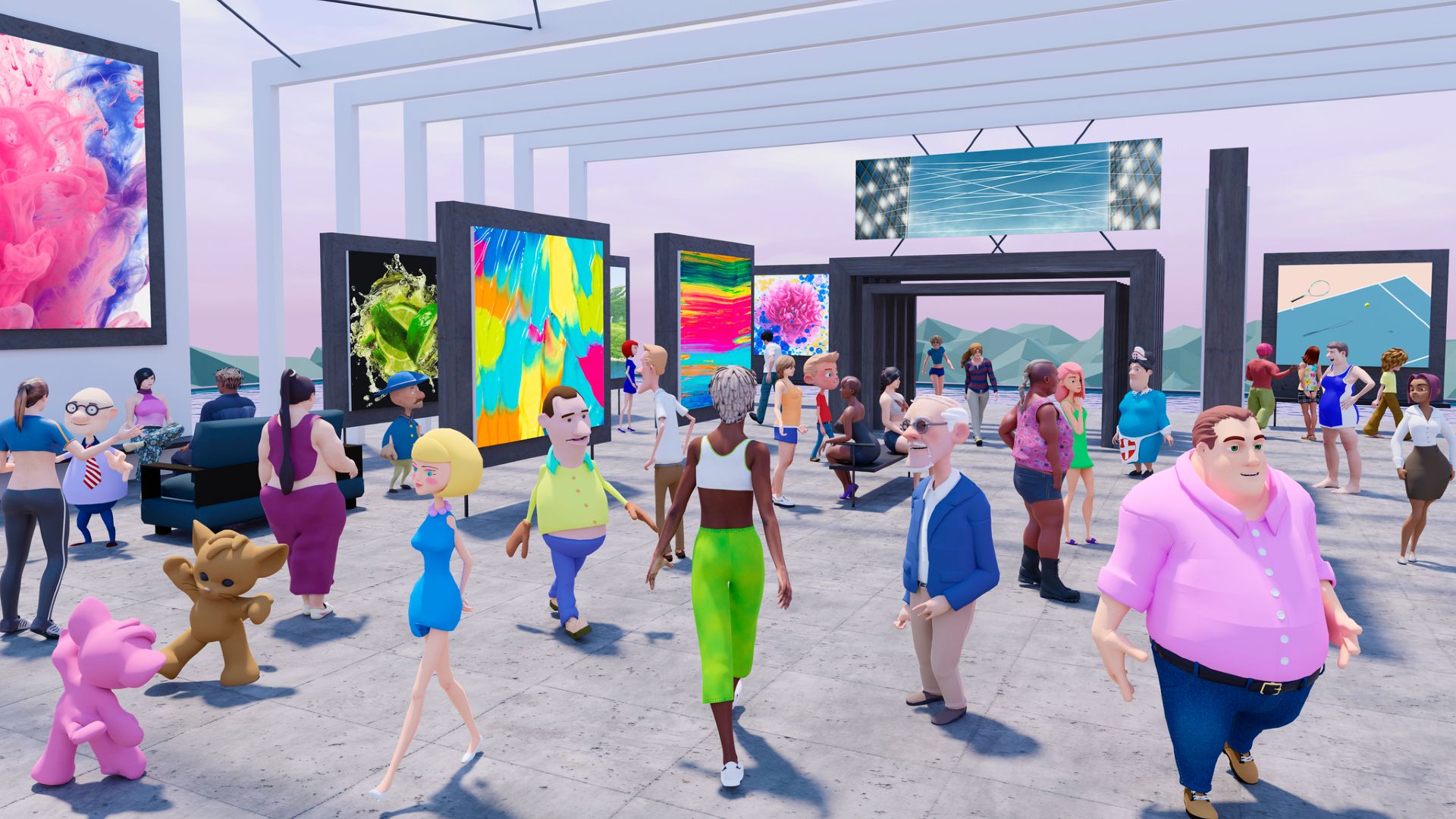
The metaverse did not die. It just became embarrassed by its own name.
That may sound blunt, but it is the most honest way to describe what has happened over the last few years. The grand 2021 version of the metaverse promised a persistent 3D internet where we would work, shop, play, learn and socialize through headsets and avatars. That version became too expensive, too clumsy and too early for ordinary users. But the underlying ideas did not disappear. They moved into other products with better names.
Today, companies prefer phrases like spatial computing, mixed reality, AI glasses, digital twins, immersive collaboration, virtual worlds and real-time 3D platforms. Those terms sound more practical and less like a corporate dream board. But many of them are still metaverse ideas, only stripped of the hype and rebuilt around specific use cases.
Meta is the clearest example. The company once made the metaverse its identity, even changing its name from Facebook to Meta. But its Horizon Worlds strategy has shifted sharply. In a developer update, Meta said it is separating Quest VR from Worlds and shifting the focus of Worlds to be almost exclusively mobile. The Verge described the move as Meta VR metaverse ditching VR.
That sounds like retreat, and in one sense it is. Meta has had to accept that most people do not want to put on a headset just to hang out in a social space. But it is also a practical correction. Roblox and Fortnite already proved that large virtual worlds can work when they are easy to access, social by default and available on devices people already use. Meta now wants Horizon Worlds to compete more directly with that model instead of forcing the whole idea through VR hardware first.
The important thing is that Meta has not abandoned the concept of digital spaces. It has abandoned the assumption that the headset has to be the front door. That is a major lesson for the whole industry. The metaverse failed when it demanded too much behavioural change. It survives when it fits into habits people already have.
Apple understood this early, at least in its language. It never sold Vision Pro as a metaverse device. It called it spatial computing. That branding was not cosmetic. Apple wanted to distance itself from Meta failed vocabulary and put the focus on a computer that surrounds the user rather than a cartoon universe people must enter. Apple is now expected to move further into smart glasses, with The Verge reporting that privacy may become a key differentiator for its first glasses.
That privacy angle matters because wearable computing will make the next version of the metaverse more sensitive. A headset used at home is one thing. Glasses worn in public are another. Cameras, microphones, location data, facial recognition and AI assistants can easily turn spatial computing into a surveillance concern. Apple appears to understand that if it wants people to accept smart glasses, it has to make the product feel less creepy than earlier attempts.
This is also why Apple latest AI and services strategy connects to the metaverse story. We recently looked at how Siri AI could become part of Apple services business. If Apple eventually builds smart glasses around Apple Intelligence, maps, Vision Pro software, iCloud and privacy, it will not call that the metaverse. But it will still be blending digital information into the physical world.
Roblox is the other side of the story. It is not elegant, and it is not always safe enough for children, but it is one of the strongest examples of a consumer metaverse that actually works. Users create worlds, buy digital goods, attend events, socialize, play games and move through a virtual economy. The company just had a rough market reaction after earnings, with The Wall Street Journal reporting slower expected bookings and revenue growth. But the platform still reported 123 million daily active users and rising engagement hours.
That is why Roblox should be taken seriously even when the stock struggles. The metaverse was never going to arrive first as a boardroom VR meeting. It was always more likely to arrive through games, creators, children, digital identity and virtual economies. Roblox may have business problems, safety problems and monetization pressure, but it has something Meta struggled to create: habitual use.
The industrial version is even less flashy but probably more commercially durable. Nvidia Omniverse, Siemens digital twins, Dassault Systemes, Microsoft Mesh and other real-time 3D platforms are building metaverse-like systems for factories, warehouses, engineering teams and infrastructure planning. TechTarget current list of metaverse platforms shows how much of the category has moved into industrial simulation, enterprise collaboration and spatial computing.
This version does not need avatars dancing in virtual offices. It needs a manufacturer to simulate a factory before building it. It needs an energy company to model equipment. It needs a logistics firm to train workers in a digital environment. It needs engineers in different countries to inspect the same 3D model. That is less glamorous than the old metaverse pitch, but it is much easier to justify with a budget.
AI is now the missing piece that makes the revived metaverse more useful. Generative AI can create 3D assets, build environments, power non-player characters, translate speech, personalize experiences and help users control spatial systems with natural language. Meta has already been talking about AI-generated games and experiences. Google, Apple, Nvidia and others are all moving toward interfaces where AI helps make digital worlds easier to create and navigate.
This is where the old metaverse idea becomes more realistic. One reason early virtual worlds felt empty was that they were hard to build and maintain. If AI can generate worlds, characters, objects and interactions faster, the cost of creating immersive environments drops. That does not solve adoption on its own, but it removes one of the biggest supply-side problems.
Africa should watch this carefully, not because everyone needs VR headsets, but because spatial computing could matter in education, training, engineering, healthcare, tourism and industrial development. A mining company can train workers in simulated environments. A university can teach anatomy or engineering through 3D models. A tourism board can create immersive previews of cultural sites. A city can use digital twins for planning. These are more practical than asking millions of people to buy expensive headsets just to attend virtual concerts.
The access problem remains. Devices are still costly. Internet quality is uneven. Local content creation capacity is limited. Most African markets will not be early mass adopters of premium spatial hardware. But mobile-first virtual worlds, AI-generated learning environments and enterprise digital twins could still find useful niches if they solve real problems rather than chasing hype.
The real lesson is that the metaverse was never one product. It was a bundle of ideas: persistent digital spaces, virtual identity, 3D interfaces, digital ownership, real-time collaboration, gaming economies and mixed reality. The bundle collapsed under its own marketing. The useful parts survived.
So no, the metaverse did not die. The word became toxic, the timelines became unrealistic and the headset-first vision lost momentum. But the pieces are everywhere: Meta turning Horizon mobile, Apple preparing spatial glasses, Roblox running a living virtual economy, Nvidia pushing industrial digital twins, and AI making immersive content cheaper to create.
The next metaverse will not announce itself with a keynote and a new corporate logo. It will arrive quietly as features inside phones, glasses, games, factories, classrooms and AI tools. And because nobody will be calling it the metaverse, more people may actually use it.
Related Reading
More contextual TechBooky stories selected from tags, categories and article context.
Paul Balo is the founder of TechBooky and a highly skilled wireless communications professional with a strong background in cloud computing, offering extensive experience in designing, implementing, and managing wireless communication systems.
We use cookies to ensure that we give you the best experience on our website. If you continue to use this site we will assume that you are happy with it.