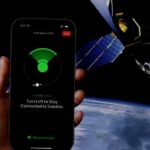
Airtel Africa and Starlink have taken their satellite-to-mobile partnership from promise to commercial deployment, and DR Congo is the first African market to get it.
The service has gone live in the Democratic Republic of Congo, allowing Airtel customers with compatible smartphones to connect in areas without traditional terrestrial network coverage. TechAfrica News reports that the launch supports light-data applications such as WhatsApp messaging and SMS, without customers needing a separate satellite phone, dish or special device.
That last point is why the story matters. Starlink is already known for satellite broadband terminals, but direct-to-mobile connectivity is a different proposition. The idea is that a standard compatible smartphone can connect through satellite coverage when terrestrial towers are unavailable or impractical. For a country as large and difficult to connect as DR Congo, that can be more than a convenience feature.
The launch follows the broader Airtel Africa and SpaceX partnership announced in December 2025, when the companies said they would introduce Starlink Direct-to-Cell satellite connectivity across Airtel Africa’s 14 markets. A Space in Africa report at the time said the service was expected to begin in 2026, starting with selected data applications and text messaging, subject to country-level regulatory approvals.
DR Congo becoming the first commercial market is important because it gives the partnership a real African test case. The country has vast rural areas, challenging terrain, security complications and infrastructure gaps that make normal mobile network expansion expensive and slow. Satellite-to-mobile will not replace towers, fibre and terrestrial backhaul, but it can extend the edge of coverage where building conventional infrastructure is difficult.
Airtel’s rollout also gives Africa a front-row seat in the global race around direct-to-device satellite connectivity. Mobile operators, satellite companies and regulators are all trying to work out how space-based coverage should complement ground networks. If it works well, it could help with emergency communication, rural commerce, logistics, public services, mobile money access and basic messaging in places that often fall outside reliable coverage maps.
There are limits. The first phase is not full broadband on every phone in every village. The service is described as supporting light-data use and messaging, and customers will need compatible devices. Capacity, pricing, weather, spectrum rights, battery life and regulatory rules will all shape how useful it becomes in practice.
Still, the direction is clear. We have written about how satellite and space infrastructure are moving deeper into mainstream technology, including the debate around space-based data centres and the compute race. Connectivity is the more immediate version of that same shift: using space infrastructure to solve earthly digital problems.
For Airtel Africa, this strengthens its position as more than a traditional mobile operator. It gives the company a story around coverage, resilience and digital inclusion at a time when telecoms are trying to prove they can still lead the next phase of Africa’s digital economy. For Starlink, it provides a route into mobile customers without asking every user to buy satellite equipment.
The bigger question is what happens after DR Congo. If the service performs well and regulators in other markets move quickly, Airtel could bring satellite-to-mobile connectivity to more of its African footprint. That would not close the continent’s digital divide overnight, but it could make coverage less dependent on whether a tower is nearby. For millions of people living beyond reliable terrestrial networks, that alone would be a major step forward.
Related Reading
More contextual TechBooky stories selected from tags, categories and article context.
Paul Balo is the founder of TechBooky and a highly skilled wireless communications professional with a strong background in cloud computing, offering extensive experience in designing, implementing, and managing wireless communication systems.
We use cookies to ensure that we give you the best experience on our website. If you continue to use this site we will assume that you are happy with it.