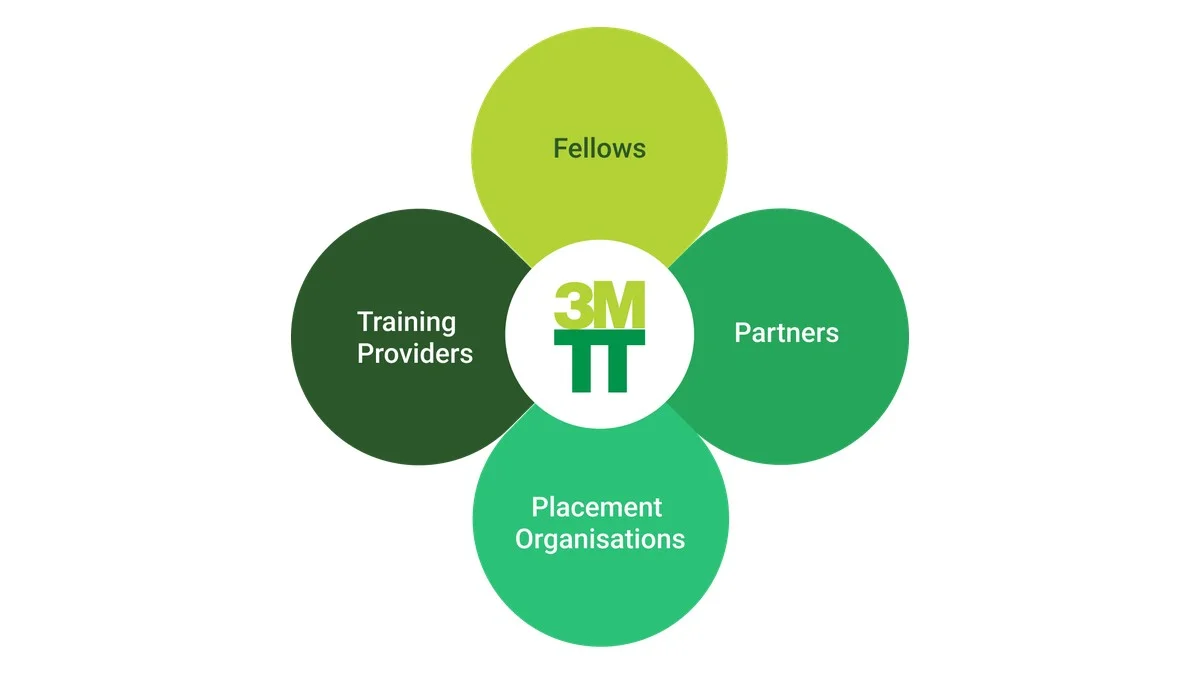
Nigeria has opened a new delivery network for its 3 Million Technical Talent programme, with about N4 billion in partner funding tied to verified training and employment outcomes for Cohorts 5 and 6. The Federal Ministry of Communications, Innovation and Digital Economy announced the plan on 11 November. This is funding for delivery partners, not a cash grant that individual trainees can claim.
The ministry wants organisations that can recruit, train and support Nigerians into real economic opportunities. Its model puts weight on results that can be checked, rather than counting enrolments alone. That distinction is important for a programme that began with an ambitious headline target of three million technical workers. The next test is whether training translates into paid work and stronger local technology capacity.
The Delivery Network has two routes. A membership track is open to organisations that want to join the wider 3MTT partner community. A funded Cohort 5 track is for eligible delivery proposals, led by a Nigeria-registered operating organisation. According to the ministry, the funded application window closes at 23:59 West Africa Time on 30 November. Membership applications remain open and are reviewed quarterly. Details and the application route are available on the official 3MTT Delivery Network site.
The N4 billion figure is an envelope of partner support linked to verified results across Cohorts 5 and 6. It should not be described as money already disbursed, a per-trainee stipend or a guaranteed award for every applicant. The ministry has not said in its announcement how much each successful organisation will receive. Prospective partners need to examine the eligibility criteria and evidence requirements before submitting a proposal.
The ministry says 1.8 million people have registered for 3MTT since 2023. It reports that 179,000 fellows have been trained through four cohorts and DeepTech, while more than 300,000 people have benefited through its wider community. More than 200 organisations have partnered with the initiative across Nigeria’s states and the Federal Capital Territory. Those figures show reach, but the funded network is designed to answer the more difficult question of what happens after a learner completes a course.
Employers tend to judge skills through projects, practical assessments and evidence of work, not a certificate alone. Regional access matters too. A scheme that reaches applicants outside the largest cities will need reliable training partners, equipment, connectivity and links to businesses able to hire or commission graduates. TechBooky has previously covered training partnerships linked to 3MTT, part of a wider effort to connect digital skills with demand.
The delivery model creates an opportunity for universities, startups and training organisations, but it also raises a measurement challenge. Placements should be real, sustained and independently verifiable, rather than short-lived matches that look impressive only in a report. Publishing clear outcome data by region and skill area would help the public judge whether the N4 billion commitment is creating the jobs and businesses it is intended to support.
For applicants, the immediate next step is to use the official portal and check which track fits their organisation. For prospective trainees, this announcement does not replace the main 3MTT registration process. The larger story is whether Nigeria can turn a mass skills drive into a dependable pipeline of technical work.
Related Reading
More contextual TechBooky stories selected from tags, categories and article context.
We use cookies to ensure that we give you the best experience on our website. If you continue to use this site we will assume that you are happy with it.