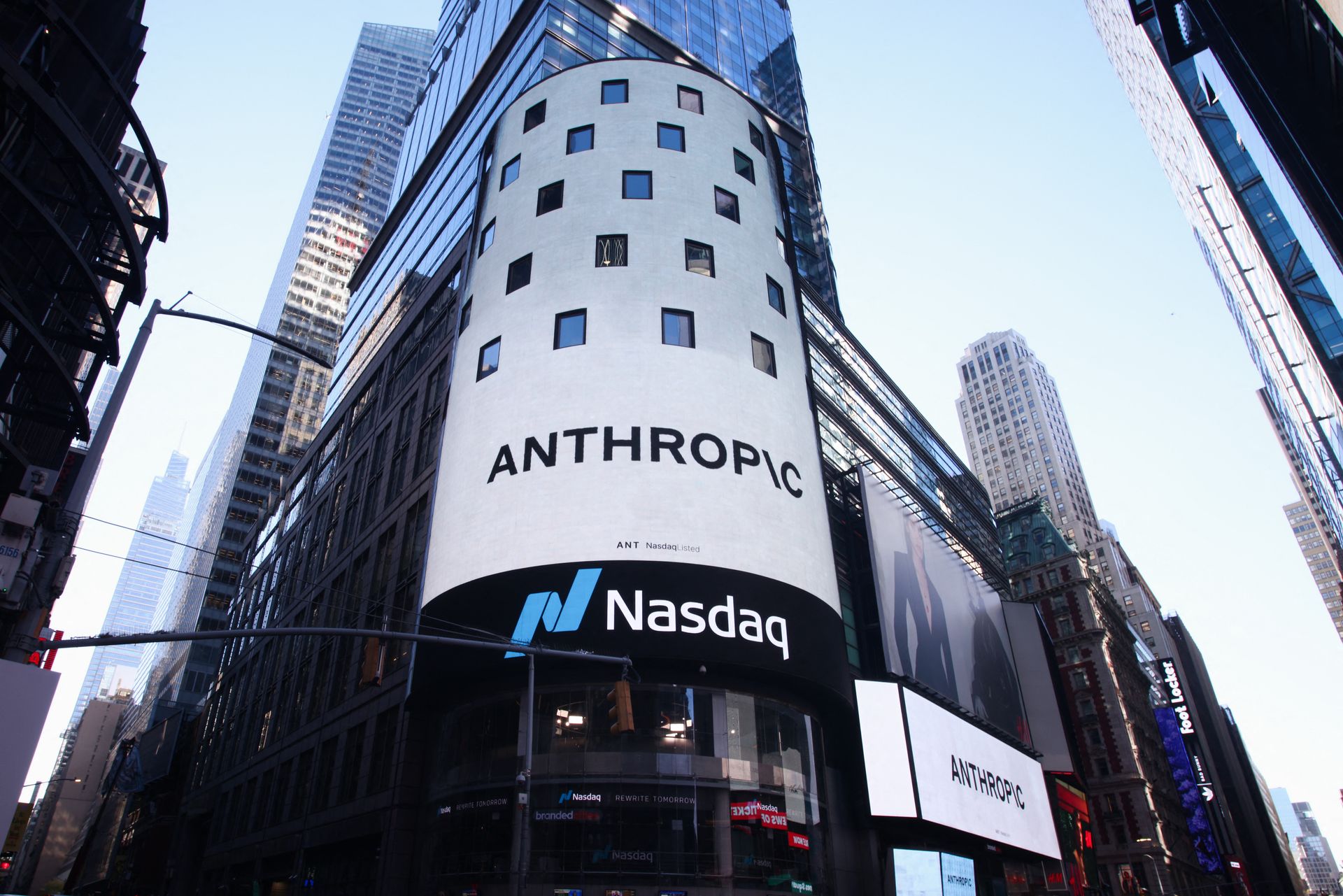
Anthropic shares ended their first trading day well above their IPO price, but the early excitement cooled sharply before the close. The Claude developer opened at $111.50 on Thursday, 34% above its $83 offer price, and finished at $97.17. That is a strong debut for investors allocated shares at the offer, even as the retreat from the opening price underscored a more cautious mood around AI stocks.
The contrast matters. A headline focused only on the opening surge would miss the intraday reversal, while calling the offering a failure would ignore the gain from the issue price. The session suggested investors still want exposure to leading AI companies, but are becoming more selective about the price they pay.
Anthropic began trading on Nasdaq under the ticker ANT on 19 November. The company said on Friday that it had closed its initial public offering of 1.127 billion shares at $83 each, including the underwriters’ full exercise of their option to buy additional shares. That brings the final share count above the 980 million initially sold, according to AP’s account of the flotation.
The stock’s $111.50 opening was an immediate vote of confidence. Its $97.17 close still represented a gain of roughly 17% over the offer price, but was about 13% below the opening trade. The distinction between those two comparisons is important for readers assessing the deal. Investors who bought at the IPO price and those who bought as trading opened had very different first-day experiences.
The listing arrived during a difficult session for technology shares. Reuters reported that Wall Street ended sharply lower as the debut failed to lift broader enthusiasm for AI stocks. That does not establish that Anthropic caused the sell-off. It does show that even a closely watched flotation could not reverse the market’s concerns about lofty valuations and heavy AI spending.
For Anthropic, the public-market test is only beginning. Investors will now be able to compare its growth, losses, computing costs and funding needs against the valuation implied by its share price. Trading over the next several weeks will say more about durable demand than a single opening print.
TechBooky covered the $83 pricing before trading began. The new development is how the shares performed once public investors could buy and sell them. A premium to the offer remains intact, but the fading first-day surge makes this a more nuanced story than an IPO-day victory lap.
Related Reading
More contextual TechBooky stories selected from tags, categories and article context.
Paul Femi Balo is the founder and publisher of TechBooky. He covers artificial intelligence, African technology, digital infrastructure, enterprise technology and the global digital economy.
We use cookies to ensure that we give you the best experience on our website. If you continue to use this site we will assume that you are happy with it.