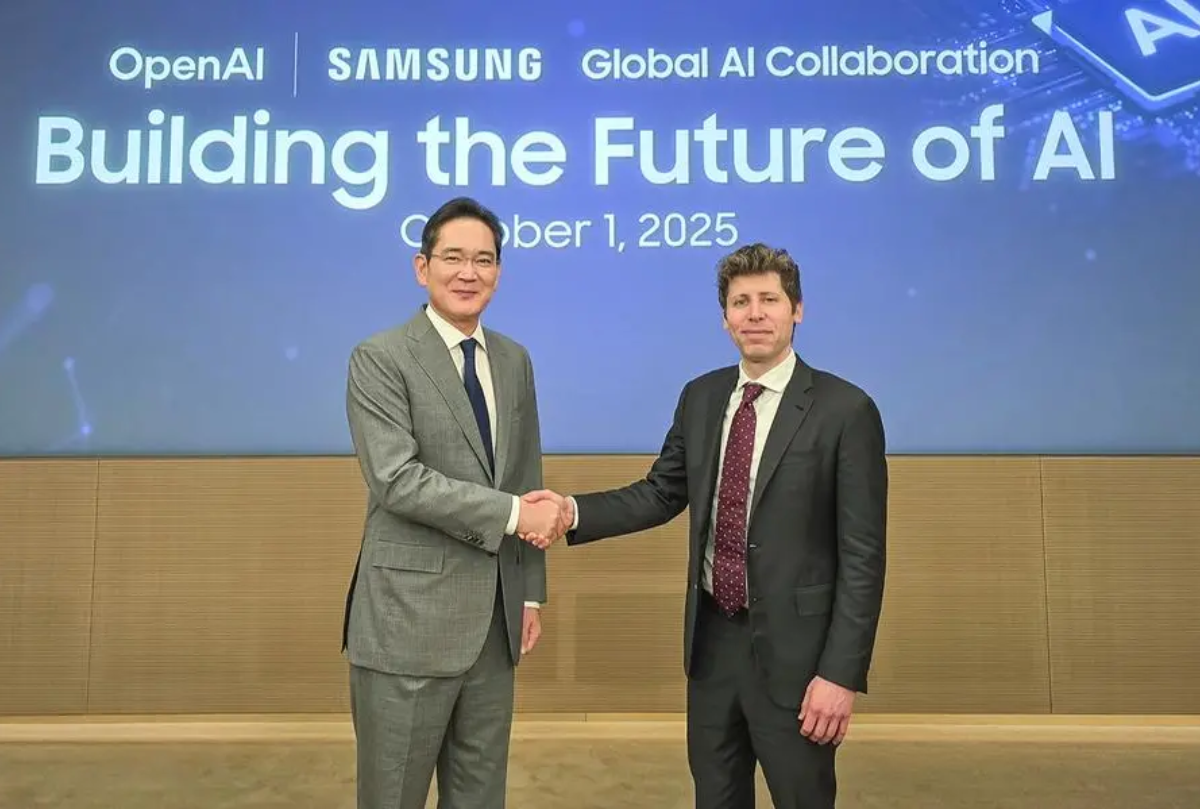
Samsung is seeking a larger role in the AI infrastructure boom, with its IT services arm reportedly in early talks to host OpenAI and Anthropic in data centres. The Financial Times reported the discussions on Sunday, 15 November. Neither a tenancy agreement nor the size, location or price of any proposed arrangement has been announced.
The distinction matters. Samsung SDS already works with both AI developers in other capacities, but an existing partnership is not evidence that either has committed to occupy a Samsung facility. For now, the new development is a report of talks as the South Korean group tries to assemble a broader offer spanning construction, operation, chips and power-related equipment.
Samsung Electronics is a major supplier of memory used in AI systems. The wider Samsung group also has construction, engineering and IT services businesses. Linking those capabilities could give AI companies a single counterpart for much of the data-centre build-out, rather than separate deals for the building, equipment and operation. That is the strategy the FT describes, not a finished customer contract.
There is a confirmed foundation for part of the OpenAI relationship. In October 2025, OpenAI announced agreements with Samsung companies to assess additional AI data-centre capacity in South Korea. The partners also discussed advanced memory supply under the Stargate infrastructure initiative. Those exploratory agreements did not specify a completed centre or a binding tenant commitment.
Samsung SDS has separately established a partnership with Anthropic to expand enterprise use of Claude. Again, selling or deploying AI software is distinct from leasing large amounts of computing space to the model developer. Combining the relationships could be commercially attractive, but it would require fresh agreements.
OpenAI and Anthropic need more computing capacity to train and run increasingly capable models. Securing a data-centre tenant could provide Samsung SDS with a large external customer and help justify capital-intensive infrastructure. For the AI developers, an additional supplier could diversify where capacity is built and how it is financed.
The practical hurdles are significant. AI facilities require reliable electricity, cooling, high-speed networking and large volumes of processors and memory. A proposal has to match a customer’s technical needs and timetable, obtain necessary approvals and make financial sense. Early talks can continue, change direction or end without a deal. Samsung has not disclosed a capacity figure or opening date tied specifically to either prospective tenant.
The reported push fits a wider contest to turn AI demand into infrastructure revenue. TechBooky has reported on Vodacom’s search for AI data-centre partners in Africa, illustrating how operators in different markets are looking beyond connectivity alone. Samsung’s advantage would be the breadth of its industrial group, but that breadth still has to become a deliverable service.
Readers should watch for a signed contract, named site, confirmed power capacity and a timeline for operation. Until then, the FT report signals Samsung’s ambition and possible demand from two leading AI labs, not a completed OpenAI or Anthropic data-centre deal.
Related Reading
More contextual TechBooky stories selected from tags, categories and article context.
Paul Femi Balo is the founder and publisher of TechBooky. He covers artificial intelligence, African technology, digital infrastructure, enterprise technology and the global digital economy.
We use cookies to ensure that we give you the best experience on our website. If you continue to use this site we will assume that you are happy with it.