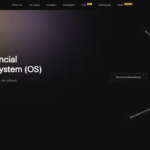
Busha is moving beyond its original crypto exchange identity with the launch of Signal by Busha, a licensed prediction-market product that brings one of the internet more controversial financial ideas into Nigerias regulated fintech conversation.
In a partner announcement carried by Disrupt Africa, Busha said Signal will allow users to take positions on real-world outcomes through a regulated platform. The company is framing prediction markets as a way for African users to participate in a global shift where information, probability and finance are beginning to overlap.
Prediction markets are simple in concept but complicated in practice. Users trade contracts based on whether an event will happen. That event could involve politics, sports, economics, technology or public policy. In theory, market prices reflect crowd expectations and can become a forecasting signal. In reality, the model raises questions around gambling, consumer protection, market manipulation, settlement rules and who gets to decide what counts as a clear outcome.
That is why the word licensed matters in this story. Busha is already known as a Nigerian digital-assets company, and its own website describes it as an SEC-licensed digital assets provider. The company was also among the early firms to receive approval-in-principle under Nigerias Securities and Exchange Commission digital asset rules. That regulatory positioning gives Busha a stronger base than a prediction product launched casually outside the system.
Still, regulation will decide how far this can go. A prediction market can look like a financial market, a betting product, a research tool or a civic information platform depending on the design. That ambiguity is exactly why global regulators are paying more attention to the sector. Platforms like Kalshi and Polymarket have shown that event contracts can attract serious trading interest, but they also show how sensitive these markets become around elections, conflict, public health and financial outcomes.
For Nigeria, the question is sharper because fintech adoption is already high and consumer risk is real. Millions of users are comfortable with wallets, transfers, crypto products, betting apps and mobile-first finance. A prediction market could find an audience quickly, but that also means the product must be careful about disclosure, limits, dispute resolution and how events are selected.
The best version of Signal would not just be another speculative product. It could help users think in probabilities, track expectations around business and public events, and create data that analysts can read alongside polls, surveys and market reports. But that only works if markets are well-designed, liquid enough to mean something and settled transparently.
There is a reason prediction markets are receiving new attention now. AI, social media and fragmented news have made reliable signals harder to read. People want tools that summarise what the crowd thinks, not only what commentators say. But markets can also be wrong, manipulated or distorted by thin liquidity. A price is not truth. It is only a signal created by the people willing and able to trade.
The caution is that innovation in African fintech now has to mature faster than before. Regulators, banks and users are less willing to accept vague promises. If Busha can make Signal transparent, compliant and useful beyond speculation, it could open a new category in Nigerian fintech. If not, prediction markets may quickly run into the same trust and regulatory questions that have followed crypto and online betting.
For now, Signal by Busha is worth watching because it shows where African fintech is heading next. The market is no longer only about moving money. It is increasingly about turning information, identity, assets and expectations into financial products. That is exciting, but it also raises the bar for responsibility.
Related Reading
More contextual TechBooky stories selected from tags, categories and article context.
Paul Balo is the founder of TechBooky and a highly skilled wireless communications professional with a strong background in cloud computing, offering extensive experience in designing, implementing, and managing wireless communication systems.
We use cookies to ensure that we give you the best experience on our website. If you continue to use this site we will assume that you are happy with it.