TechBooky AI Assistant
👋 Welcome to TechBooky AI Assistant

I can help with:
🔎 Tech News
🤖 AI Topics
💻 Gadgets
☁️ Cloud
✍️ Guest Posts
📢 Advertising
🔗 Backlinks
📩 Newsletter
  • AI Search
  • Cryptocurrency
  • Earnings
  • Enterprise
  • About TechBooky
  • Submit Article
  • Advertise With TechBooky
  • Contact Us
TechBooky
  • African
  • AI
  • Metaverse
  • Gadgets
Generic selectors
Exact matches only
Search in title
Search in content
Post Type Selectors
Search in posts
Search in pages
  • African
  • AI
  • Metaverse
  • Gadgets
Generic selectors
Exact matches only
Search in title
Search in content
Post Type Selectors
Search in posts
Search in pages
TechBooky
Generic selectors
Exact matches only
Search in title
Search in content
Post Type Selectors
Search in posts
Search in pages
Home General Science

China Approves First Brain Implant for Commercial Use

Paul Balo by Paul Balo
March 13, 2026
in Science
Share on FacebookShare on Twitter
Share this story

Send it to someone who should read it.

f Facebook X X in LinkedIn wa WhatsApp tg Telegram @ Email
In Brief
  • China has approved its first implantable brain-computer interface (BCI) device for commercial use, marking a major step forward in the country’s push to compete in the...
  • The implantable system approved in China is designed to help patients with spinal cord injuries regain motor function, particularly the ability to move their hands or...
  • These signals are then decoded by software and translated into commands that can control devices such as robotic gloves or computer interfaces.

China has approved its first implantable brain-computer interface (BCI) device for commercial use, marking a major step forward in the country’s push to compete in the rapidly evolving neurotechnology industry. 

The approval allows a device developed by Chinese neurotechnology company Neuracle to be used clinically, making it one of the first brain implants in the country cleared for broader commercial application. 

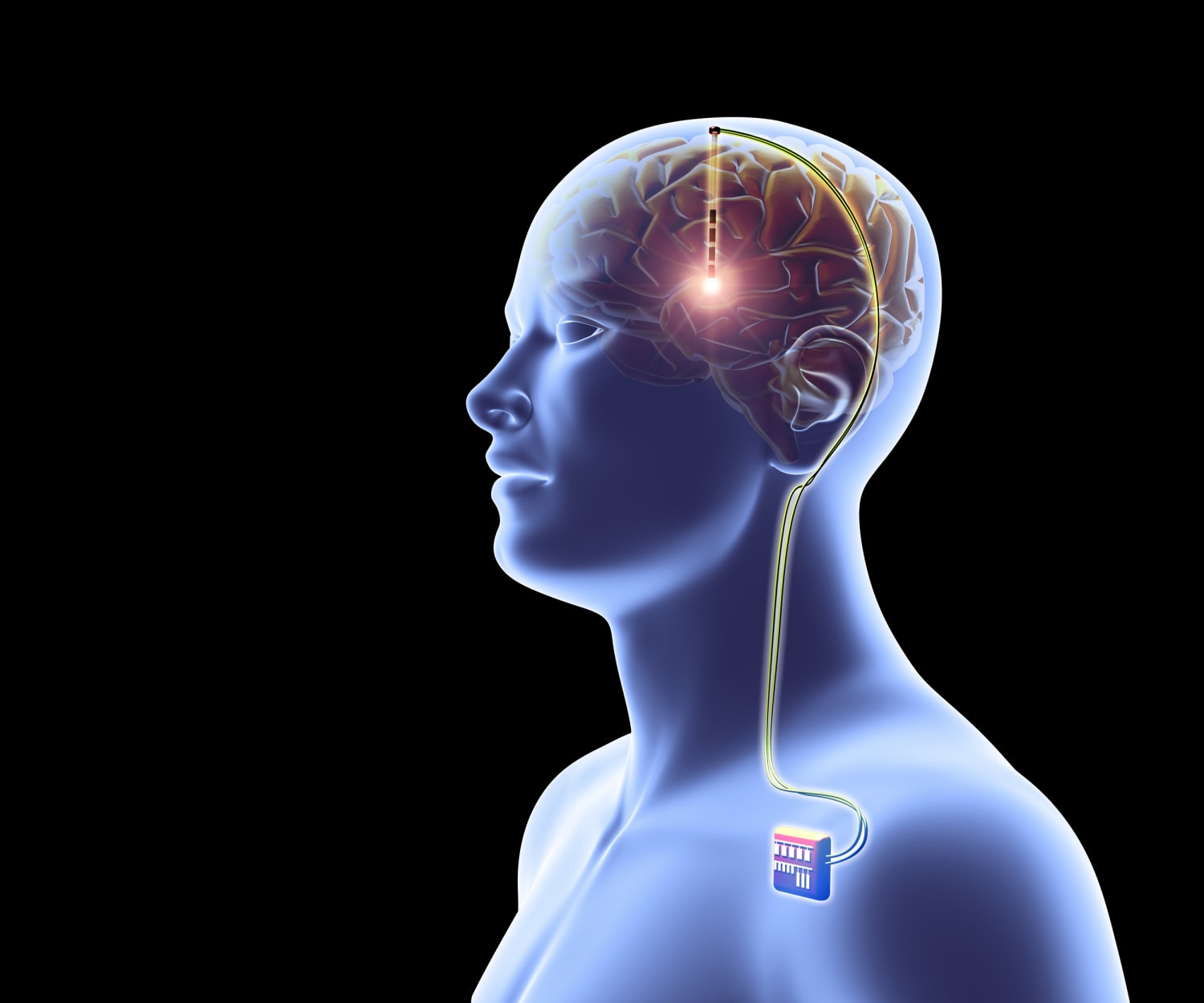
Brain-computer interface systems work by translating electrical signals from the brain into commands that can control external devices such as computers, prosthetics, or robotic limbs.

The implantable system approved in China is designed to help patients with spinal cord injuries regain motor function, particularly the ability to move their hands or control assistive devices. 

The technology works by placing small electrodes in the brain that capture neural signals related to movement. These signals are then decoded by software and translated into commands that can control devices such as robotic gloves or computer interfaces.

Early testing of the device has reportedly involved dozens of patients, with engineers fine-tuning the system to adapt to each individual’s unique neural patterns. 

The regulatory approval underscores China’s growing ambition to become a leader in brain-computer interface technology, an area that has attracted significant investment worldwide.

Also worth reading
Huawei’s Chip Push Shows China Is Building Around US Curbs Huawei Trial Could Reopen The US-China Tech War Microsoft’s China Retreat Redraws Big Tech’s AI Map China Review Of Palo Alto Networks Deepens Tech-Security Split DeepSeek’s Implied US$52bn Valuation Shows China’s AI Race Is Not Slowing Apple Intelligence Gets China Approval With Alibaba’s Qwen AI Inside

The field has gained global attention partly due to companies like Neuralink, which has been developing implantable chips designed to allow humans to interact directly with computers using neural signals.

China has been accelerating its own efforts, supported by government initiatives and research programs aimed at developing next-generation neurotechnology and brain-inspired computing systems. 

Researchers say the country now has multiple clinical trials underway for brain-computer interfaces, exploring both invasive implants and non-invasive wearable systems.

Brain-computer interface technology is widely seen as one of the most promising frontiers in medical and computing innovation.

Beyond restoring mobility to patients with paralysis, future applications could include:

  • Helping people with neurological disorders communicate
  • Enabling control of prosthetic limbs through thought
  • Allowing humans to interact directly with computers or augmented-reality systems

China’s approval of a commercial brain implant represents an important milestone in turning this research into real-world medical treatments.

As the technology advances, companies and governments around the world are racing to develop safer and more capable neural interfaces that could redefine how humans interact with machines.

Related Reading

More contextual TechBooky stories selected from tags, categories and article context.

  • neuralink
    Elon Musk's Neuralink Gets Green Light For First…
  • hero-image.fill.size_1200x675
    Apple Intelligence Gets China Approval With…
  • Xiaomi-1024x619
    Xiaomi Targets Yearly Chip Launches and AI Assistant…
  • NanoClaw-fouders-2
    NanoClaw Creators Launch NanoCo AI With $12m
  • Screenshot-2024-02-01-170725
    Tesla Set To Launch Its Full Self-Driving Technology…
  • baidu-joins-chinas-openclaw-frenzy-with-new-ai-agents
    Baidu, Tencent Boost AI Push Amid OpenClaw Boom
  • gaming controller
    Game-Changer: The Latest Breakthroughs in Gaming…
  • baidu
    Baidu's Ernie 4.0 AI Model to Power Apple's Chinese…
Keep Reading Smarter

Search TechBooky with AI

Use TechBooky's AI Search to explore the context behind this story and related coverage across the site.

Try AI Search
More On This Topic
Science
Follow TechBooky

Follow TechBooky for more technology stories and newsroom updates.

f Facebook X X in LinkedIn ig Instagram wa WhatsApp

Tags: brain implantchina
Paul Balo

Paul Balo

Paul Balo is the founder of TechBooky and a highly skilled wireless communications professional with a strong background in cloud computing, offering extensive experience in designing, implementing, and managing wireless communication systems.

Search TechBooky
Open TechBooky AI Search Try the AI Assistant

BROWSE BY CATEGORIES

Receive top tech news directly in your inbox

subscription from
Loading

Freshly Squeezed

  • Trezor Says 347,000 Users Were Targeted After Brevo Breach September 11, 2026
  • Fidji Simo Joins Nscale Board As AI Cloud IPO Talk Grows September 11, 2026
  • Matt Mullenweg Says He Is Back In Control At Automattic September 11, 2026
  • Meta’s Community Notes Test Raises Latin America Alarm September 11, 2026
  • OpenAI Faces Senate Questions Over Hugging Face AI Breach September 11, 2026
  • FairMoney’s 30M Users Show Nigeria’s Banking Shift September 11, 2026
  • California Puts New Guardrails On AI Chatbots For Kids September 11, 2026
  • Adobe’s AI Growth Still Leaves Wall Street Unsure September 11, 2026
  • OpenAI Brings ChatGPT To Wall Street Analyst Work September 11, 2026
  • Oracle Cloud Revenue Jumps 121% As AI Demand Pays Off September 11, 2026
  • OpenAI Pauses $200 Pro Signups As Astra Hits Compute Limits September 11, 2026
  • Anthropic Says It Foiled Claude Misuse In Cyberattacks And Surveillance September 10, 2026

Browse Archives

September 2026
M T W T F S S
 123456
78910111213
14151617181920
21222324252627
282930  
« Aug    

Quick Links

  • About TechBooky
  • Advertise With TechBooky
  • Contact us
  • Submit Article
  • Privacy Policy
Generic selectors
Exact matches only
Search in title
Search in content
Post Type Selectors
Search in posts
Search in pages
  • African
  • Artificial Intelligence
  • Gadgets
  • Metaverse
  • Tips
  • AI Search
  • About TechBooky
  • Advertise With TechBooky
  • Submit Article
  • Contact us

© 2025 Designed By TechBooky Elite

Discover more from TechBooky

Subscribe now to keep reading and get access to the full archive.

Continue reading

We use cookies to ensure that we give you the best experience on our website. If you continue to use this site we will assume that you are happy with it.