OpenAI is taking ChatGPT deeper into one of the industries that has both the money and the anxiety to move quickly on artificial intelligence: financial services.
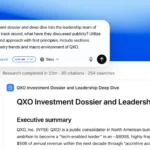
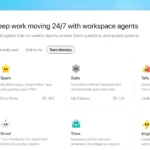
The company has launched ChatGPT for Financial Services, a version of ChatGPT Work built for banks, investment firms and other financial institutions. OpenAI says the product is powered by GPT-6 Astra and connects to financial data providers and enterprise systems so analysts can research companies, build models, prepare client materials and move between documents, spreadsheets and presentations with less manual work.
The launch is notable because OpenAI is not pitching the tool as a general chatbot with a finance label pasted on it. The company says Morgan Stanley and Evercore are design partners, while data and workflow integrations include names such as Daloopa, PitchBook, LSEG News, Crunchbase, S&P Capital IQ, MSCI, Dow Jones Factiva, Moody’s, Box, Preqin and FactSet. That tells you the target user is not someone casually asking for stock tips. It is the analyst, banker or adviser who spends hours gathering information before turning it into a decision or a deck.
Financial firms are attractive AI customers because their work is rich in documents, models, compliance reviews and repetitive research. They also have strict controls around data, client confidentiality and internal approvals. OpenAI appears to understand that, which is why the product comes with enterprise features such as single sign-on, role-based access, retention controls, encryption and the default position that business data is not used to train OpenAI models.
This is also where the competitive pressure is heading. The first wave of workplace AI tools helped users write emails and summarize documents. The next wave is trying to sit inside industry-specific workflows. In finance, that means market data, filings, earnings notes, risk documents and internal client history. TechBooky recently looked at how OpenAI is exploring new revenue lines as the cost of running frontier AI keeps rising.
There will still be questions around hallucinations, audit trails and accountability. No serious bank will want a model inventing numbers inside a financial model or misreading a company filing without a human catching it. But if OpenAI can make the system reliable enough for supervised analyst work, this could become one of the clearer examples of AI moving from experiment to core workplace infrastructure.
For Wall Street, the pitch is speed. For OpenAI, the prize is stickiness. Once a tool sits inside the daily research and deal-making workflow of a financial institution, it becomes much harder to replace.
Related Reading
More contextual TechBooky stories selected from tags, categories and article context.
Paul Femi Balo is the founder and publisher of TechBooky. He covers artificial intelligence, African technology, digital infrastructure, enterprise technology and the global digital economy.
We use cookies to ensure that we give you the best experience on our website. If you continue to use this site we will assume that you are happy with it.