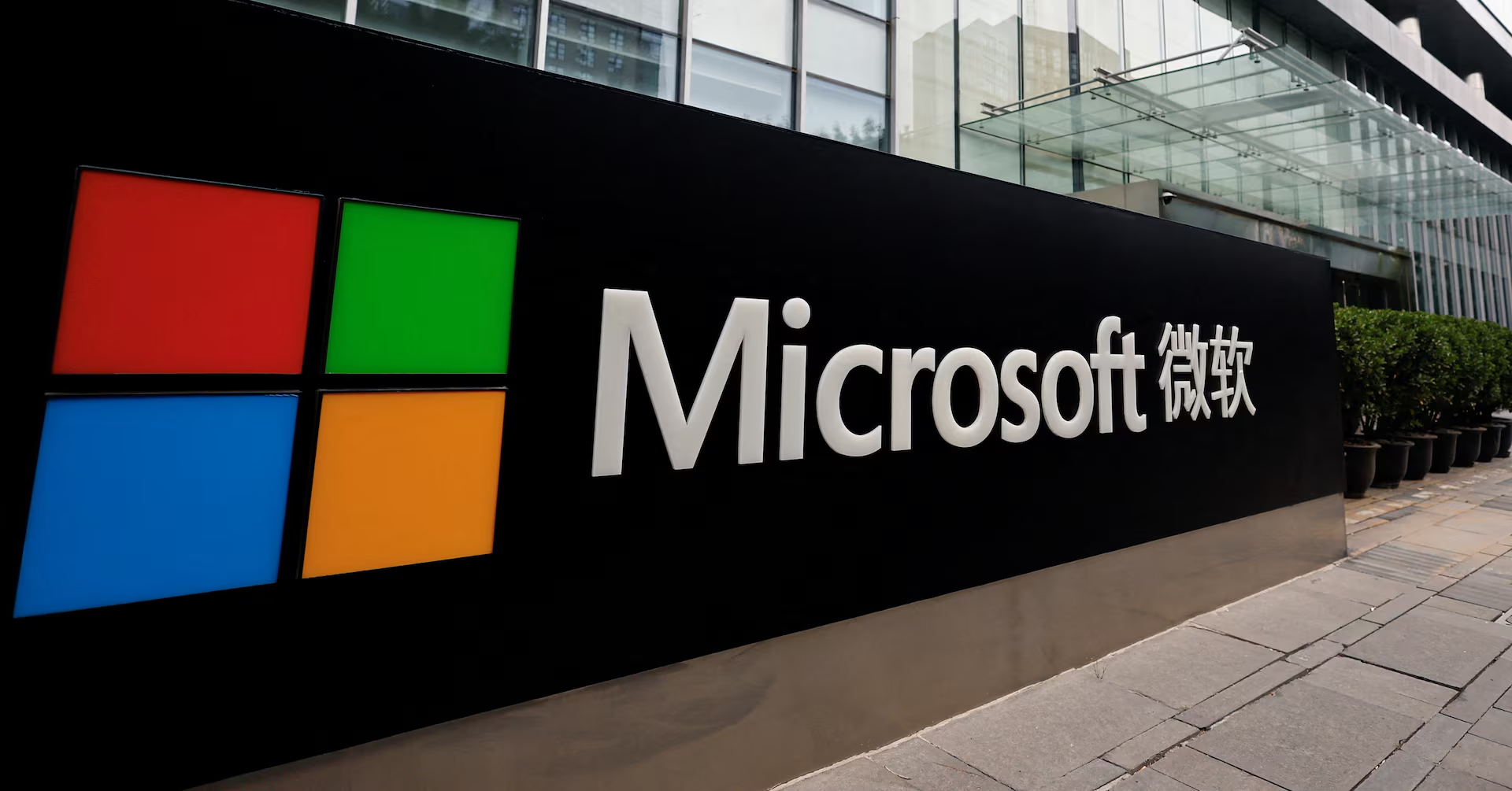
Microsoft is not walking out of China with a dramatic goodbye note. What it appears to be doing is quieter, slower and probably more important: shrinking the parts of the business that no longer justify the political and regulatory risk while keeping the cloud and AI window open.
A Reuters investigation, republished by Investing.com, says Microsoft has shut at least 15 branch offices and joint ventures in China over the past five years, based on corporate filings. The report also says the company considered leaving China in 2023 because some executives believed the risk had become too high for the level of economic return.
That return is the line that explains the whole story. Microsoft said in 2024 that China accounted for just 1.5 percent of its global revenue. For a company whose cloud and AI businesses are now central to Wall Street’s view of its future, China is no longer the prize it once looked like. It is a small revenue contributor attached to a very large geopolitical problem.
Microsoft insists it has no current plan to exit China, and that is believable. The point is not that the company has closed the door. The point is that the door is no longer wide open. Beijing’s push for domestic software, Washington’s export controls on advanced technology and the growing competitiveness of local Chinese AI and productivity tools have all changed the calculation.
This is a remarkable turn because Microsoft once took the opposite view from Google. When Google pulled back from China in 2010 over censorship and cyberattack concerns, Microsoft stayed. It believed the market was too important to leave. More than a decade later, the company is not making Google’s old decision publicly, but it is moving in that direction operationally.
The AI boom is what keeps Microsoft from fully walking away. Reuters says the company’s remaining China-linked business is now helped by Chinese companies such as ByteDance and Shein that need Azure and Western cloud infrastructure to operate outside China. In other words, Microsoft is not mainly betting on selling deeper into China’s domestic market. It is helping Chinese companies go global.
That is a strange but valuable position. A Chinese company expanding into Europe, the U.S., the Middle East or Africa may still need cloud infrastructure, security tools, developer services and AI systems that global customers and regulators recognize. Microsoft can serve that demand without being as exposed to the most sensitive parts of the mainland market.
The pressure from Chinese AI companies makes the story even sharper. We have written about why China may win parts of the AI race, and the recent momentum around Z.ai’s GLM-5.3, DeepSeek and Kimi shows why U.S. companies can no longer assume China needs them the way it once did. Local models are becoming cheaper, stronger and more politically acceptable inside China.
Microsoft still has advantages. Azure is a serious global cloud platform, Microsoft 365 remains deeply embedded in enterprises, GitHub is critical to developers and Copilot gives the company a direct way to turn AI into productivity software. The problem is that those advantages are easier to monetize globally than inside a market where technology procurement is increasingly tied to national security.
There is a lesson here for Big Tech more broadly. Apple is shifting more iPhone production toward India. Tesla keeps facing questions about how exposed it is to China. Nvidia’s chip business is shaped by export controls. Google is largely absent from the Chinese consumer market. Microsoft was one of the rare U.S. giants that tried to make long-term accommodation work, and even it is now scaling back.
For Africa and other emerging markets, this matters because it shows how the AI and cloud map is being redrawn. Countries will increasingly ask whether their infrastructure depends too heavily on foreign platforms, foreign chips or foreign models. China is answering that question with domestic substitution. The U.S. is answering it with export controls. Everyone else will have to decide how much digital sovereignty they can afford.
So the headline is not simply that Microsoft is leaving China. It is more nuanced than that. Microsoft is reducing its China footprint because the domestic opportunity has become smaller and riskier, but AI and cloud demand from Chinese firms going global still gives it a reason to stay. That may become the new Big Tech playbook in China: less presence, more caution and a business model built around the parts of China that need the rest of the world.
Related Reading
More contextual TechBooky stories selected from tags, categories and article context.
Paul Balo is the founder of TechBooky and a highly skilled wireless communications professional with a strong background in cloud computing, offering extensive experience in designing, implementing, and managing wireless communication systems.
We use cookies to ensure that we give you the best experience on our website. If you continue to use this site we will assume that you are happy with it.