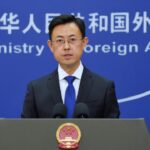
China is moving its AI governance ambitions from proposal to institution-building. Twenty-nine countries have signed an agreement to establish the World AI Cooperation Organization, an intergovernmental body first proposed by China as a development-focused alternative in the increasingly crowded global AI governance landscape.
The agreement, signed in Shanghai, includes China, Russia, Belarus, Serbia, Cuba, Brazil, Venezuela and more than twenty other countries. The new body is expected to focus on AI cooperation, capacity building and wider access to AI development, especially for countries outside the dominant U.S.-Europe policy orbit.
This is not just a diplomatic ceremony. AI governance is becoming a contest over who writes the rules, who gets access to compute and models, and whose values define responsible development. China is trying to create a forum where the Global South and countries sceptical of Western-led AI frameworks have a stronger institutional voice.
The world already has AI governance activity through the United Nations, OECD-linked processes, the G7, standards bodies and regional policy frameworks. But many of those forums either reflect Western priorities or move slowly through broad consensus. China’s proposed organisation is trying to occupy a different space: sovereignty, development and wider participation.
That framing will appeal to countries that worry AI regulation could become another form of technological gatekeeping. If safety rules are written mainly by wealthy countries that already control the best chips, cloud platforms and frontier models, developing economies may fear being locked into dependence.
The African angle is important. Nigeria’s presence in global AI governance conversations, including Bosun Tijani’s role on the ITU AI for Good Global Commission, shows that African countries want a say in AI’s direction. The question is which forums will actually shape access, standards and investment.
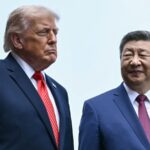
China’s move comes as the United States, Europe and China are each pushing different versions of AI governance. The U.S. approach is shaped by private frontier labs, national security concerns and competition with China. Europe is leaning on regulation and market rules. China is presenting itself as a champion of inclusive AI development and state-led coordination.
Those positions overlap in some places, especially around safety risks, but they diverge on control, openness, surveillance, data, export restrictions and political values. A China-backed AI cooperation body could become another venue where those differences are formalised.
The risk is fragmentation. If AI governance splits into competing blocs, companies may face conflicting rules, and developing countries may be pressured to choose between ecosystems. The opportunity is that more countries get a seat at the table instead of receiving AI rules after they have already been written elsewhere.
The credibility of the World AI Cooperation Organisation will depend on what it actually does. Does it fund AI capacity building? Does it support compute access for developing countries? Does it create standards? Does it coordinate model safety evaluations? Or does it become mainly a geopolitical signal?
For African governments, the practical test will be whether the organisation helps close real gaps: skills, infrastructure, affordable compute, local-language models, data governance and public-sector AI capacity. Symbolic inclusion is useful, but the continent needs concrete support.
AI governance is no longer only a policy debate. It is becoming infrastructure, diplomacy and industrial strategy at the same time. China’s new agreement shows that the global AI rulebook will not be written in one room, by one bloc, or on one set of assumptions.
Related Reading
More contextual TechBooky stories selected from tags, categories and article context.
Paul Femi Balo is the founder and publisher of TechBooky. He covers artificial intelligence, African technology, digital infrastructure, enterprise technology and the global digital economy.
We use cookies to ensure that we give you the best experience on our website. If you continue to use this site we will assume that you are happy with it.