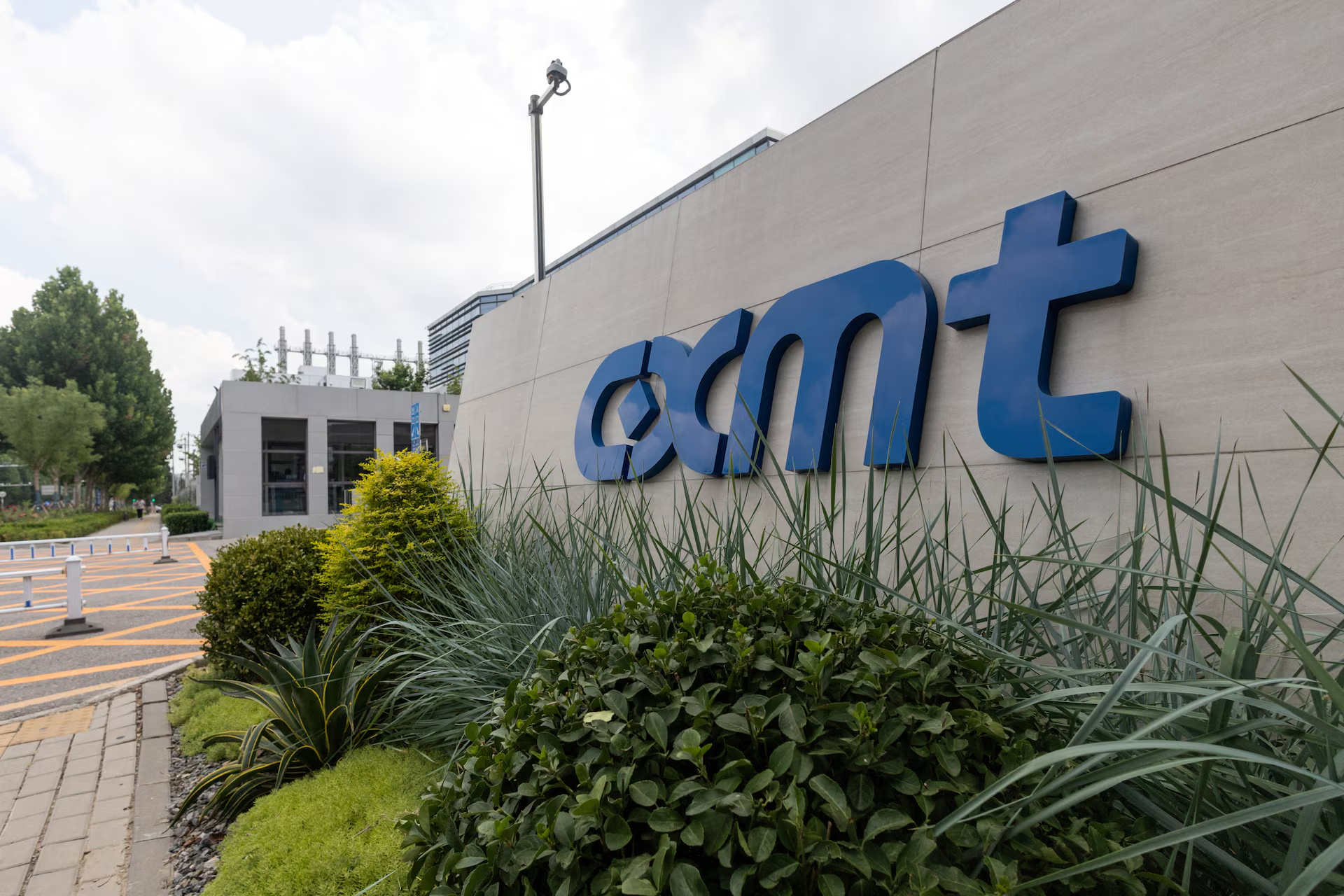
China’s ChangXin Memory Technologies, better known as CXMT, is reportedly preparing to enter the NAND flash memory market, a move that would widen its challenge to Samsung and push China’s semiconductor ambitions into another strategically important corner of the industry.
CXMT has built its name around DRAM, the high-speed memory used by computers, smartphones and AI servers. NAND is different. It stores data even when power is removed and sits inside solid-state drives, phones, data centres and an expanding range of connected devices.
According to a Reuters report carried by MarketScreener, CXMT plans to establish a research and development production line at a new Beijing facility. The company has also held discussions with possible customers, including an AI storage startup. A timetable for commercial output has not been confirmed, so this is better read as a serious strategic move than an immediate product launch.
The timing matters. AI infrastructure is consuming more memory and storage, while manufacturers are directing capacity toward the most profitable products. Industry participants expect tight NAND supply to persist into at least 2027. That gives a new supplier an opening, but entering the market is not the same as matching its leaders on yield, reliability and cost.
Samsung remains a formidable rival, alongside SK Hynix and Micron. CXMT would also meet a domestic competitor in Yangtze Memory Technologies, or YMTC, which has already established itself as China’s leading NAND producer. The contest will therefore be as much about manufacturing discipline as national policy.
For Beijing, the broader objective is clear. China wants a deeper domestic technology stack that can support cloud platforms, data centres and models such as Alibaba’s expanding Qwen family without depending as heavily on foreign components. Memory is less glamorous than a flagship AI model, but no serious AI system runs without it.
CXMT still has to prove that it can move from an R&D line to dependable mass production. If it succeeds, the significance will extend beyond another Chinese chip company entering a crowded market. It would give China more control over the storage layer of its AI economy and place fresh pressure on Samsung at a moment when memory has become one of the industry’s most valuable bottlenecks.
Related Reading
More contextual TechBooky stories selected from tags, categories and article context.
Paul Balo is the founder of TechBooky and a highly skilled wireless communications professional with a strong background in cloud computing, offering extensive experience in designing, implementing, and managing wireless communication systems.
We use cookies to ensure that we give you the best experience on our website. If you continue to use this site we will assume that you are happy with it.