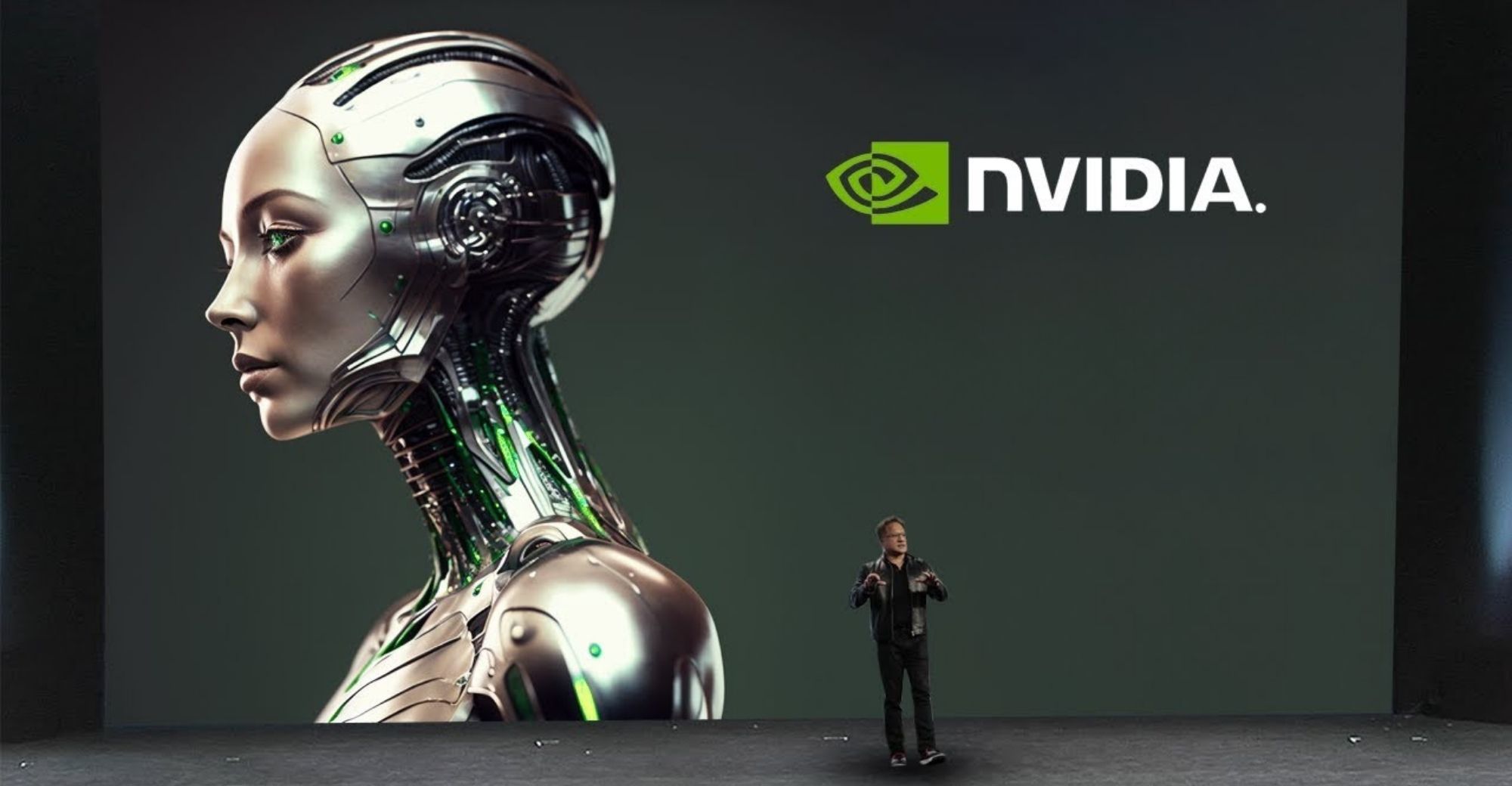
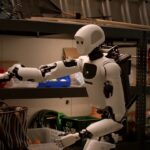
Nvidia’s AI story is starting to move from data centres into machines that can see, move and act. The company has spent the last few years becoming the engine of the chatbot and AI cloud boom, but its next big market may be robots, vehicles and drones.
The Wall Street Journal reports that Nvidia’s physical AI business already generates about $10 billion a year and that Jensen Huang believes it could grow tenfold over the next decade. The important part is not only the revenue number. It is the direction. Nvidia wants to be the platform layer for machines that bring AI into the physical world.
Physical AI is the term Nvidia uses for systems that do more than generate text, images or code. These systems need to understand space, movement, sensors, physics and real-world constraints. A warehouse robot, self-driving car, delivery drone or humanoid assistant cannot simply produce a clever answer. It has to act safely in a messy environment.
That makes the stack more demanding. Nvidia is not only selling chips. It is combining hardware, simulation tools, developer software, robotics models and edge computing platforms. GR00T, Cosmos and Jetson are part of that wider effort to make Nvidia’s ecosystem the default toolkit for companies building intelligent machines.
China is central to the story because it is already one of the world’s strongest manufacturing bases for robots, electric vehicles and industrial automation. Even with U.S. restrictions on the most advanced AI training chips, Nvidia can still sell some robotics and automotive systems into China. That leaves a lane open for business at a time when other parts of the China chip relationship are under pressure.
The strategy is smart, but it is not risk-free. If Nvidia becomes too important to China’s robotics supply chain, Washington may eventually look more closely at these products too. The same national-security logic that hit AI training chips could expand if physical AI begins powering autonomous machines at scale.
For China, Nvidia’s tools are useful because they speed up development. But Beijing is also trying to build domestic alternatives across chips, memory and AI systems. We have already seen China’s CXMT benefit from the AI memory crunch, and Chinese open-weight models have shown that the country can compete with cheaper, widely distributed AI systems.
The bigger market lesson is that AI is leaving the screen. Chatbots made AI visible to consumers, but robots and autonomous machines could make AI visible in factories, logistics, transport, agriculture, security and healthcare. That is a much larger industrial story than asking a model to write a memo.
For Africa, this is worth watching early. Robotics may sound distant when many markets are still solving power, broadband and cloud infrastructure, but agriculture, mining, ports, warehouses and manufacturing will eventually feel the impact. If physical AI becomes cheap enough, the question will be who owns the platforms and who only imports the machines.
Nvidia’s strength is that it sits at the centre of both AI compute and AI tooling. Its latest earnings show how much money is already flowing through the data-centre side. If the company can repeat even part of that dominance in robotics, the AI race will expand from software platforms into the physical economy.
Related Reading
More contextual TechBooky stories selected from tags, categories and article context.
Paul Balo is the founder of TechBooky and a highly skilled wireless communications professional with a strong background in cloud computing, offering extensive experience in designing, implementing, and managing wireless communication systems.
We use cookies to ensure that we give you the best experience on our website. If you continue to use this site we will assume that you are happy with it.