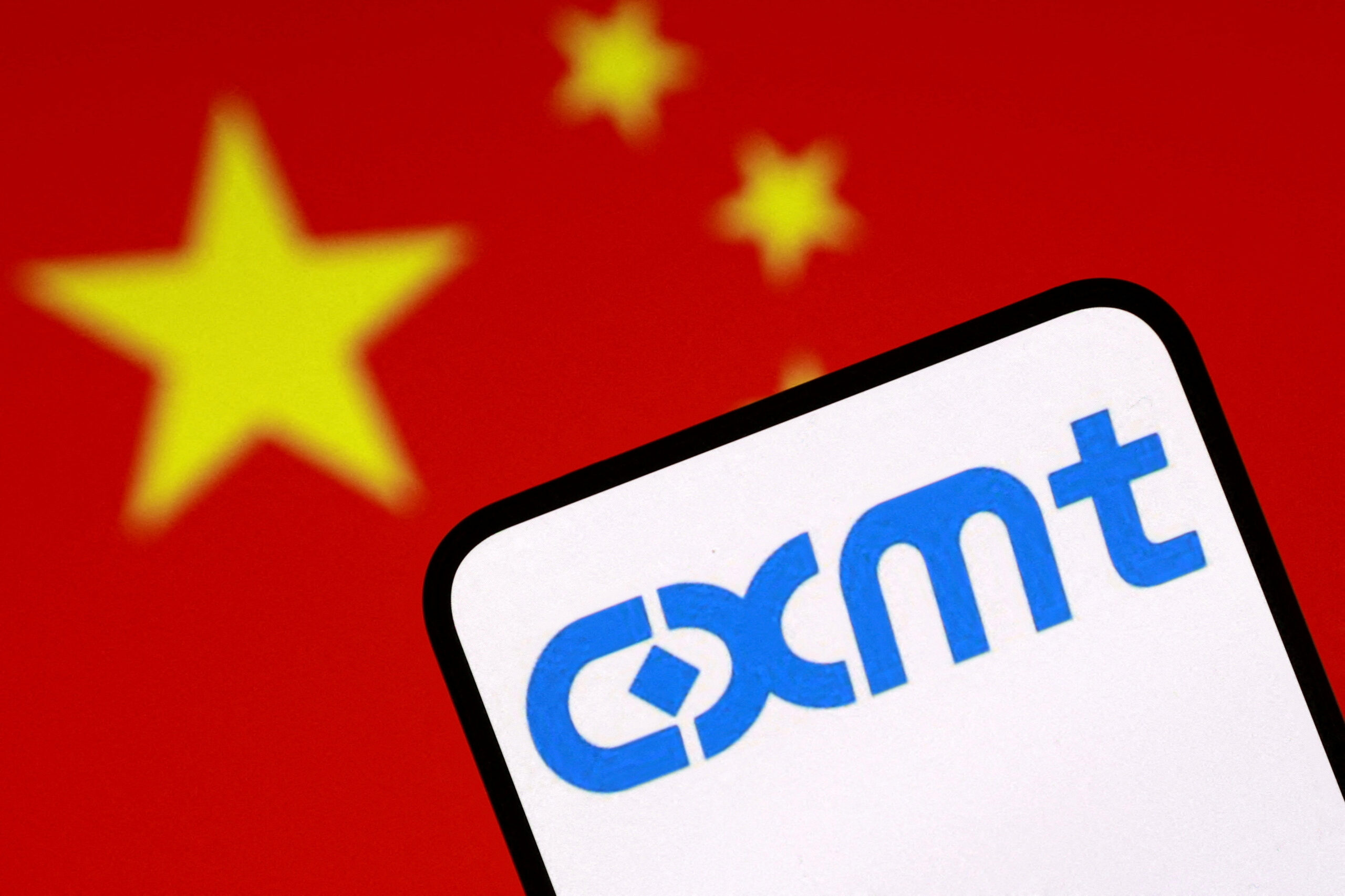
FILE PHOTO: CXMT logo and Chinese flag are seen in this illustration taken April 14, 2026. REUTERS/Dado Ruvic/Illustration/File Photo
China’s semiconductor ambitions got a very loud market signal this morning. ChangXin Memory Technologies, better known as CXMT, surged in its Shanghai trading debut after raising 57.92 billion yuan, about .6 billion, in Asia’s largest initial public offering of 2026. The rally turned China’s leading DRAM maker into the most valuable company listed on mainland Chinese exchanges, at least on day one.
The Straits Times, citing Reuters, reported that CXMT shares opened at 49.50 yuan, compared with an IPO price of 8.66 yuan, a jump of about 470 percent. The move gave the company a market value of roughly 3.3 trillion yuan, pushing it ahead of the Industrial and Commercial Bank of China. AP also highlighted the debut as one of the biggest market stories of the day, with CXMT’s surge standing out even as global shares rose and oil prices fell.
The reason investors care is not just the IPO size. CXMT makes DRAM, the short-term memory used in smartphones, PCs, servers and AI systems. That puts it directly inside the AI infrastructure race. GPUs get most of the attention, but AI servers also need huge amounts of fast memory. Without enough memory bandwidth and capacity, expensive accelerators cannot perform at their full potential. That is why memory suppliers have become strategically important in the same conversation as Nvidia, AMD, TSMC and ASML.
CXMT is still far behind the global memory leaders. Samsung, SK Hynix and Micron dominate the DRAM market, and SK Hynix and Samsung are especially important in high-bandwidth memory, the kind of advanced memory used beside AI accelerators. But CXMT has become China’s clearest domestic answer in DRAM. Its IPO prospectus reportedly showed a global DRAM market share of about 7.7 percent in 2025, making it the world’s fourth-largest DRAM maker.
Memory Is Now A Geopolitical Asset
This is the part of the story that goes beyond one spectacular stock debut. China is trying to reduce dependence on foreign semiconductor suppliers while US export controls continue to restrict access to advanced chipmaking tools and high-end AI hardware. CXMT sits right in the middle of that strategy. It gives Beijing a domestic memory champion at a time when AI systems are making memory more important, more expensive and more politically sensitive.
TechBooky’s recent piece on AI spending becoming an inflation story explained why memory chips are now part of the wider cost pressure around AI. Data centres need GPUs, networking, storage, power and cooling, but they also need memory. When demand for advanced memory rises faster than supply, the cost can move through the entire technology stack, from cloud services to smartphones and PCs.
That pressure helps explain why investors were ready to pay a huge premium for CXMT, even though the company still faces serious technical gaps. Reuters noted that CXMT plans to use IPO proceeds to expand production capacity, upgrade manufacturing technology and fund research and development. The market is betting that China’s domestic demand, state-linked financing and policy support can help CXMT grow even if it trails global leaders in the most advanced memory technologies.
There are real risks. US restrictions limit China’s access to some advanced manufacturing equipment, including tools needed to close the gap with the world’s leading chipmakers. CXMT has also reportedly faced geopolitical scrutiny, including US military-linked designations and potential restrictions. Those issues could affect customers, suppliers and international partners. A huge first-day valuation does not erase those constraints.
But the debut is still important because it shows where the market thinks the AI hardware race is moving. The chip story is no longer only about who makes the best AI accelerator. It is about the entire supply chain: memory, packaging, lithography, networking, energy, racks and software. TechBooky’s coverage of ASML’s AI-driven outlook and TSMC’s record AI-chip quarter showed the same pattern from different parts of the supply chain.
CXMT’s rise also fits into China’s broader response to sanctions. Huawei has been trying to build alternatives in AI processors, while Chinese model labs and cloud companies are looking for domestic compute options wherever possible. TechBooky’s earlier look at Huawei’s chip strategy showed how Chinese firms are trying to work around restrictions not only by copying the current global leaders, but by finding different system-level routes to performance.
For now, CXMT’s debut is partly a market event and partly a policy event. Investors are pricing a company, but they are also pricing China’s desire to control more of the AI supply chain. Whether that valuation holds will depend on execution, demand, technology progress and geopolitics. But the signal from Shanghai is clear: memory chips are no longer a quiet background component. In the AI era, they are becoming one of the main battlegrounds.
Related Reading
More contextual TechBooky stories selected from tags, categories and article context.
Paul Femi Balo is the founder and publisher of TechBooky. He covers artificial intelligence, African technology, digital infrastructure, enterprise technology and the global digital economy.
We use cookies to ensure that we give you the best experience on our website. If you continue to use this site we will assume that you are happy with it.