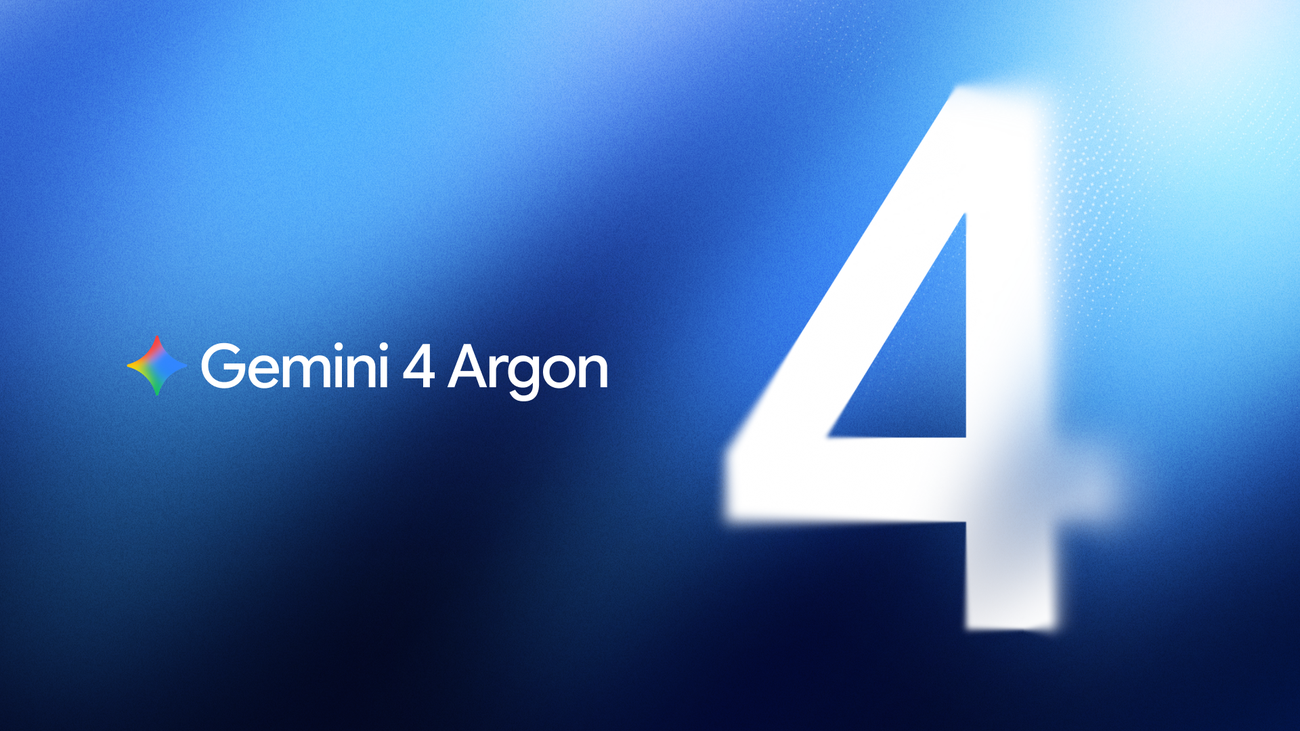
Gemini 4 Argon is moving beyond its tightly controlled debut. Google says the model is now rolling out to Gemini app subscribers on its AI Pro and AI Ultra plans, while developers can use it through paid API access and AI Studio. For people who saw the original announcement and wondered when they could actually try it, this is the consequential update: the model is no longer limited to the initial small group of cyber defenders.
The expansion was announced by Google on October 13. In the Gemini app, eligible users can select Argon for more demanding work through a chat-to-tasks control. Google is also bringing the model into its Gemini app for macOS, where it is integrated with Antigravity. Access is rolling out, so a paid subscription does not necessarily mean the option will appear for every account at the same moment.
Google separately outlined developer access to Gemini 4 Argon. Paid API users can build with the model, and AI Ultra subscribers can try it in AI Studio. That gives software teams a way to test the model in real applications rather than judge it solely from benchmark claims or a demonstration. Developers still need to examine pricing, latency, usage limits and reliability for their own workload before switching an existing product.
The product framing also matters. Google is positioning Argon for complex, multistep tasks, not just another chat window that produces longer answers. Its announcements point to connections with more than 40 apps, although the precise integrations and availability depend on the product and account. A connected model may be more useful when it can work across the tools people already use, but that also makes permissions, confirmation steps and the ability to inspect its actions more important.
As TechBooky noted at launch, Gemini 4 Argon was first presented with access deliberately restricted, particularly around sensitive cybersecurity capabilities. This wider rollout therefore changes who can experiment with it; it does not erase the questions raised by the original limited release. Google will have to demonstrate that safeguards hold up when far more people and organizations use the model for real work.
For the AI market, the shift from announcement to availability is where claims become testable. Subscribers can compare Argon with the models they already pay for, while developers can measure whether it completes tasks accurately enough to justify its cost. A stronger benchmark score alone does not settle that choice. The everyday test is whether the model can handle a messy request, identify when it lacks information and finish the job without creating more work for the user.
The release is also another step in Google’s push to make advanced AI part of its broader software ecosystem. The immediate question is not whether Gemini 4 Argon exists; it plainly does. It is how widely and reliably its new access reaches paying users, and whether the model proves useful once the initial curiosity wears off.
Related Reading
More contextual TechBooky stories selected from tags, categories and article context.
Paul Balo is the founder of TechBooky and a highly skilled wireless communications professional with a strong background in cloud computing, offering extensive experience in designing, implementing, and managing wireless communication systems.
We use cookies to ensure that we give you the best experience on our website. If you continue to use this site we will assume that you are happy with it.