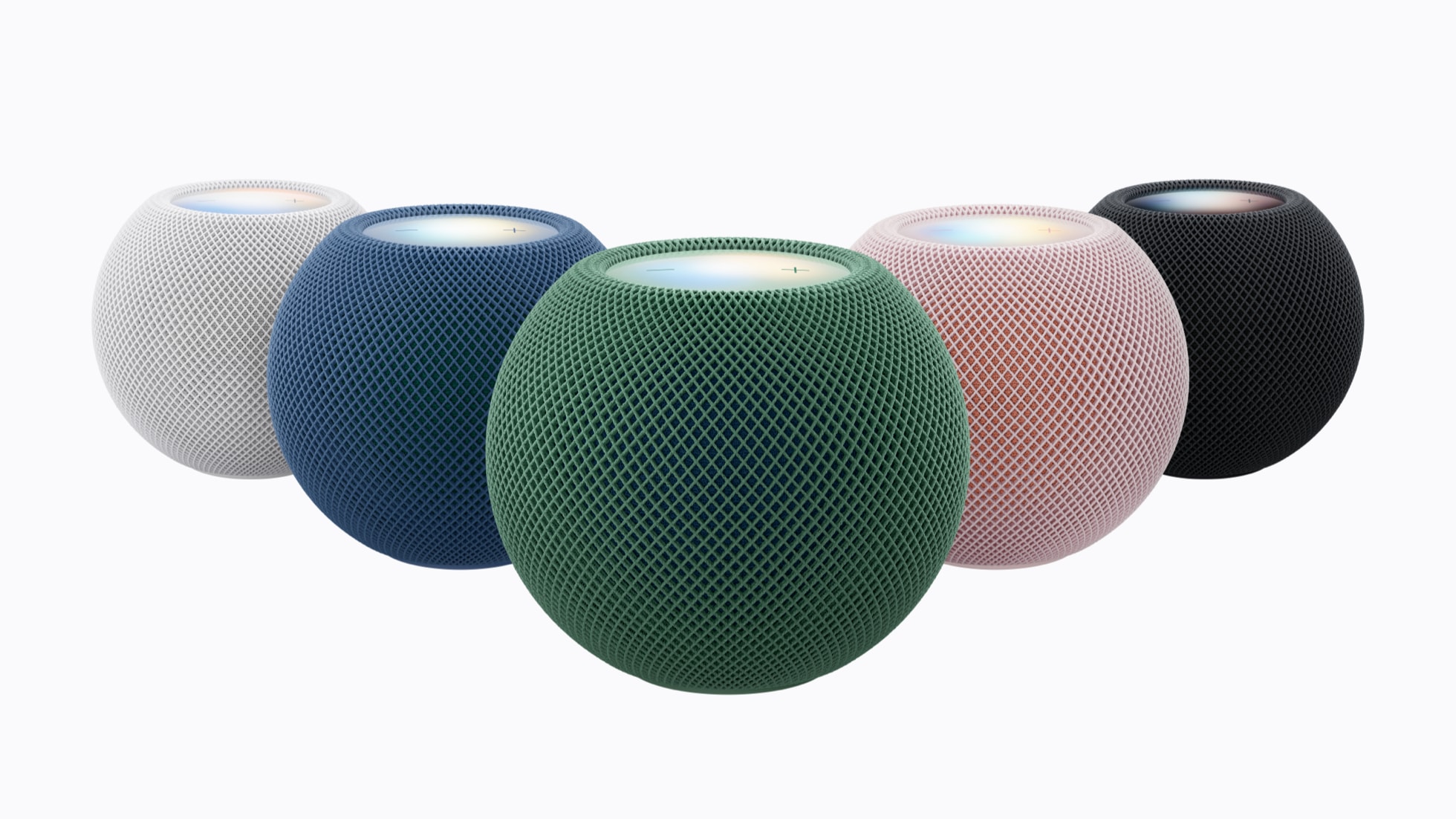
The $149 HomePod mini 2 is Apple’s newest attempt to make a speaker the everyday doorway into its smart home. Announced on October 13, the device gets an S10 chip, a reactive light display and a more ambitious Siri AI experience. But buyers should note one important distinction: the new conversational assistant is coming in a later software update, not necessarily when the speaker arrives on October 30.
Apple is taking preorders now in pink, green, blue, white and midnight. The company says computational audio tunes the compact speaker in real time, while a new Sound Glow effect pulses across its top surface in step with music and can match the colours of album artwork. It is a visible change, but the bigger bet is that a small speaker can become a useful control point for the whole household.
Apple says the upgraded assistant will support more natural back-and-forth conversations, broader knowledge and richer music discovery. It will be able to use personal context from a paired Apple Intelligence-enabled iPhone or iPad for tasks such as finding a song mentioned in a message or setting a reminder linked to a calendar event. The speaker can recognise up to six household voices, although personal-context features depend on the right phone or tablet and software settings.
Once Siri AI is enabled on a supported HomePod mini, Apple says people without an AI-capable iPhone or iPad can still use its general knowledge, conversations and improved music discovery. The company has not given a specific date for that future update. It says English support is planned for the US, Australia, Canada, India, New Zealand, Singapore, South Africa and the UK. For now, treating Siri AI as an immediate, universal buying reason would be premature.
HomePod mini 2 can operate by itself, as a stereo pair or across rooms. Four of the new speakers can also form a surround-sound setup with the fourth-generation Apple TV 4K, with automatic positioning and calibration. That is a more serious entertainment proposition, but four $149 speakers make the cost of the complete arrangement considerably higher than the entry price suggests.
As a home hub, the speaker can run automations and let owners control compatible accessories from outside the house. Apple also points to smoke and carbon monoxide alarm recognition, which can send a notification to an iPhone, iPad or Apple Watch. It is a listening feature, not a replacement for a certified alarm. The product is therefore as much about household infrastructure as music playback.
That becomes clearer beside Apple Home Collection, the accessories lineup announced the same day. Apple worked with LG Electronics and Schneider Electric on indoor and outdoor cameras, a video doorbell, a smart lock, thermostats and sensors. The pitch is one-tap iPhone setup and management in the Home app without separate accessory accounts. This is a collaboration with established device makers, not a claim that Apple alone manufactured every camera and thermostat.
The products will begin arriving in December, with some following in early 2027. In the US, the LG indoor camera starts at $199.95 and the video doorbell at $249.95; the smart lock starts at $349.95. Regional availability differs: Apple lists the cameras for the US, Canada and UK, but the lock and thermostats for the US and Canada. Recorded camera history requires a supported iCloud+ plan, so the absence of a separate camera subscription does not mean cloud storage has no cost.
Apple is trying to make the pieces reinforce one another. A doorbell can chime through a HomePod, cameras feed the Home app and the speaker answers voice commands. TechBooky previously covered how Apple’s EnergyKit work aims to make home energy decisions more useful. The question now is whether this tighter package is convenient enough to persuade buyers to assemble a full Apple home, especially when the headline AI feature still has to arrive in software.
Related Reading
More contextual TechBooky stories selected from tags, categories and article context.
Paul Balo is the founder of TechBooky and a highly skilled wireless communications professional with a strong background in cloud computing, offering extensive experience in designing, implementing, and managing wireless communication systems.
We use cookies to ensure that we give you the best experience on our website. If you continue to use this site we will assume that you are happy with it.