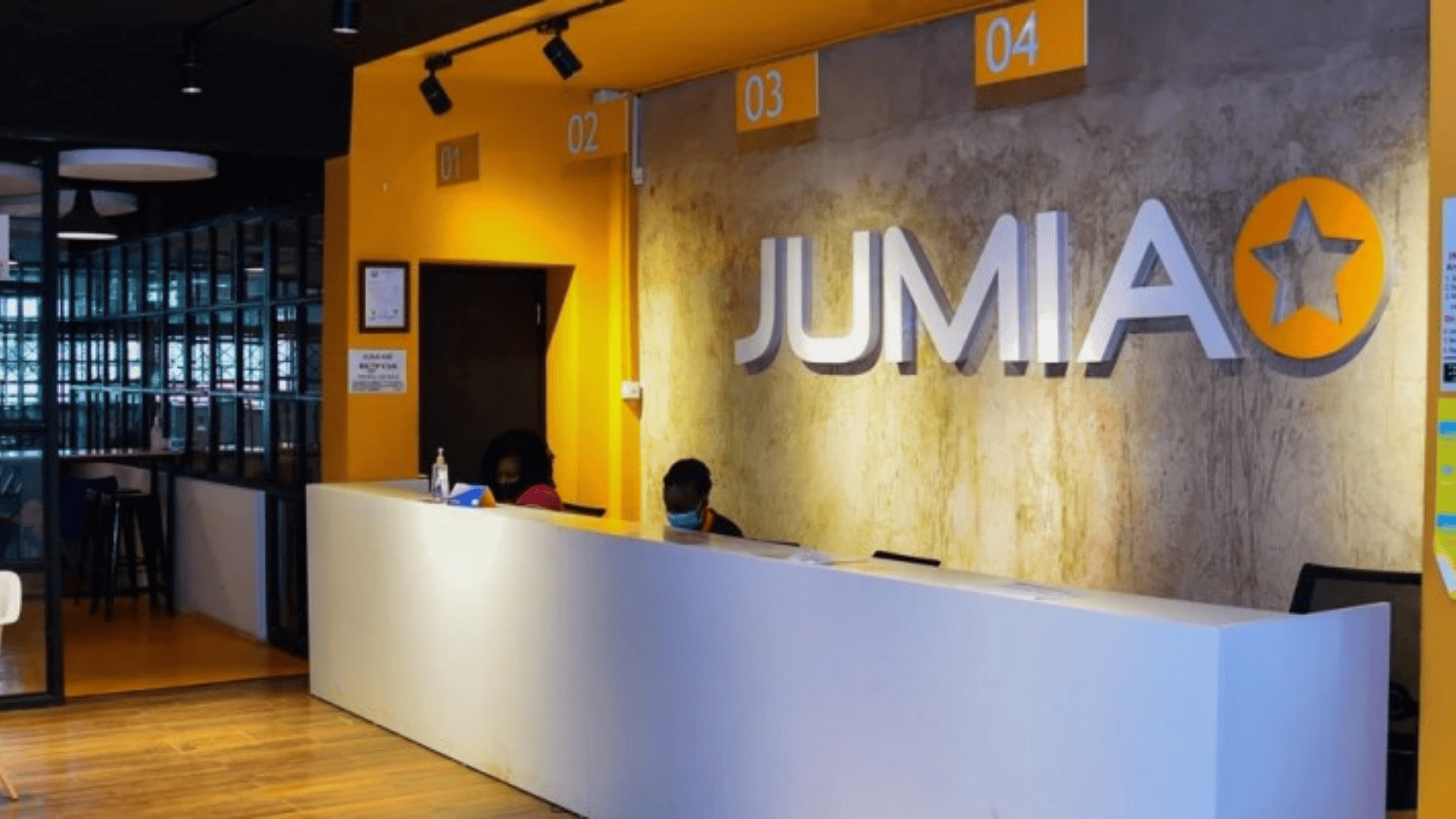
Jumia has raised $50 million in fresh equity, giving Africa’s best-known e-commerce company more room to keep pushing toward profitability after years of painful restructuring.
In its Q2 2026 results and capital raise announcement, Jumia said the round is anchored by a $25 million investment from the International Finance Corporation, the private-sector arm of the World Bank Group. Axian, one of Jumia’s largest shareholders, and other investors are also participating.
The transaction will see investors purchase about 9.1 million American depositary shares at $5.52 per ADS, producing expected gross proceeds of $50 million. Jumia says the deal is expected to close in the second half of August 2026, subject to customary conditions.
The timing matters because Jumia is trying to show that African e-commerce can become sustainable after years of questions about logistics costs, consumer spending power, payment behaviour and thin marketplace economics. The company says Q2 revenue rose 14 percent year-on-year to $52 million, while adjusted EBITDA loss narrowed 36 percent to $8.7 million.
Jumia is targeting adjusted EBITDA breakeven and positive free cash flow in the fourth quarter of 2026, with full-year adjusted EBITDA profitability expected in 2027. That is the line investors care about. Jumia has survived the hype cycle, the downturn and several rounds of strategic narrowing. Now it has to prove the business model can generate cash.
The IFC investment is important beyond the money. A World Bank Group-linked investor gives Jumia development-finance credibility at a time when the company wants to strengthen logistics, digital payments and marketplace infrastructure across core African markets. Axian’s participation also reinforces support from an existing strategic shareholder with telecom and digital-infrastructure interests across Africa.
African e-commerce has always been harder than the early pitch made it sound. Delivery networks are fragmented, addresses can be inconsistent, cross-border logistics are complex, cash-on-delivery creates risk and consumers are price-sensitive. Jumia has spent years cutting markets, reducing losses and focusing on a narrower path to profit.
That is why this raise should not be read as a return to reckless growth. It looks more like survival capital with a profitability target attached. The company is not being rewarded for simply being Africa’s Amazon. It is being funded to prove that a leaner African e-commerce model can work.
We have been tracking the wider funding recovery across the continent, including how Africa-focused startups raised $3.3 billion in H1 2026. Jumia’s raise fits that selective recovery. Capital is available, but investors want clearer paths to profitability and infrastructure value.
For African consumers and merchants, Jumia still matters because it remains one of the few pan-African e-commerce brands with public-market visibility. If it can reach breakeven, it could reset confidence in the sector. If it cannot, investors may become even more cautious about marketplace models on the continent.
The $50 million raise gives Jumia time. It does not solve the hard part by itself. The hard part is turning logistics, payments, merchants and consumers into a business that can grow without burning through capital. That remains the real test for African e-commerce.
Related Reading
More contextual TechBooky stories selected from tags, categories and article context.
Paul Balo is the founder of TechBooky and a highly skilled wireless communications professional with a strong background in cloud computing, offering extensive experience in designing, implementing, and managing wireless communication systems.
We use cookies to ensure that we give you the best experience on our website. If you continue to use this site we will assume that you are happy with it.