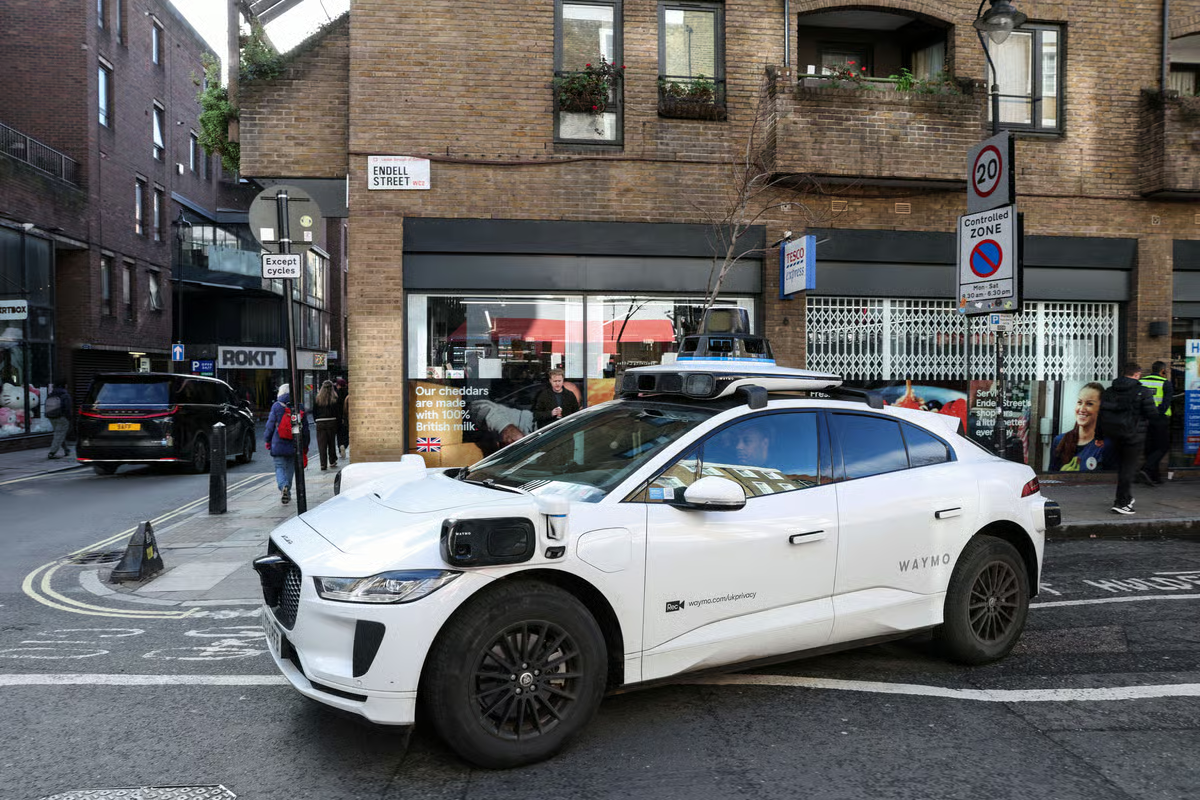
Waymo wants to bring its driverless ride-hailing service to London, but there is an important difference between the company’s ambition and a launch. Its September 24 Vision for London sets out the case for operating in the capital. Passenger rides would still require approval from the UK Department for Transport and consent from Transport for London.
That makes this an unusually consequential test of the UK’s approach to autonomous vehicles. Waymo already operates commercial driverless rides in parts of the United States. London, however, has its own rules, densely packed streets, cyclists, pedestrians and a transport network that works very differently from most American cities. The question is not simply whether the cars can drive. It is whether a regulator and a city transport authority are satisfied they can do so safely as a public service.
Waymo’s proposal argues that driverless cars could expand access for some passengers, complement public transport and create UK jobs. It also cites its US safety record, including a claimed reduction in serious and fatal injury crashes in the areas where it has operated. Those figures are drawn from Waymo’s own operating data. They should not be treated as proof that the same result will automatically follow on London roads.
The regulatory path matters. As Waymo itself acknowledges, a passenger service needs national permission for automated passenger operations as well as TfL’s local consent. Until both are secured, any testing or preparations should not be confused with an open-to-the-public robotaxi business. Waymo has not given Londoners a date on which they can download an app and book a fully driverless journey.
There is a business race here too. British startup Wayve is pursuing a different approach, developing self-driving technology for partners rather than running a Waymo-style fleet itself. Wayve’s recent funding round brought fresh attention to possible London robotaxi deployments. It underlines why the capital has become a prize for companies trying to prove autonomous driving can work beyond carefully chosen US markets.
For passengers, the useful questions are practical. Where would rides actually be available? How would the service handle unusual roadworks, emergency vehicles or a passenger who needs assistance? What data would its cars collect on public streets, and how would incidents be investigated? Waymo’s announcement makes a case for its technology, but those issues belong in the approval process, not in marketing copy alone.
If Waymo clears the UK and London hurdles, the city could become one of the most visible international tests for commercial robotaxis. Until then, the headline is a plan with a regulatory route, not a service people can use today.
Related Reading
More contextual TechBooky stories selected from tags, categories and article context.
Paul Balo is the founder of TechBooky and a highly skilled wireless communications professional with a strong background in cloud computing, offering extensive experience in designing, implementing, and managing wireless communication systems.
We use cookies to ensure that we give you the best experience on our website. If you continue to use this site we will assume that you are happy with it.