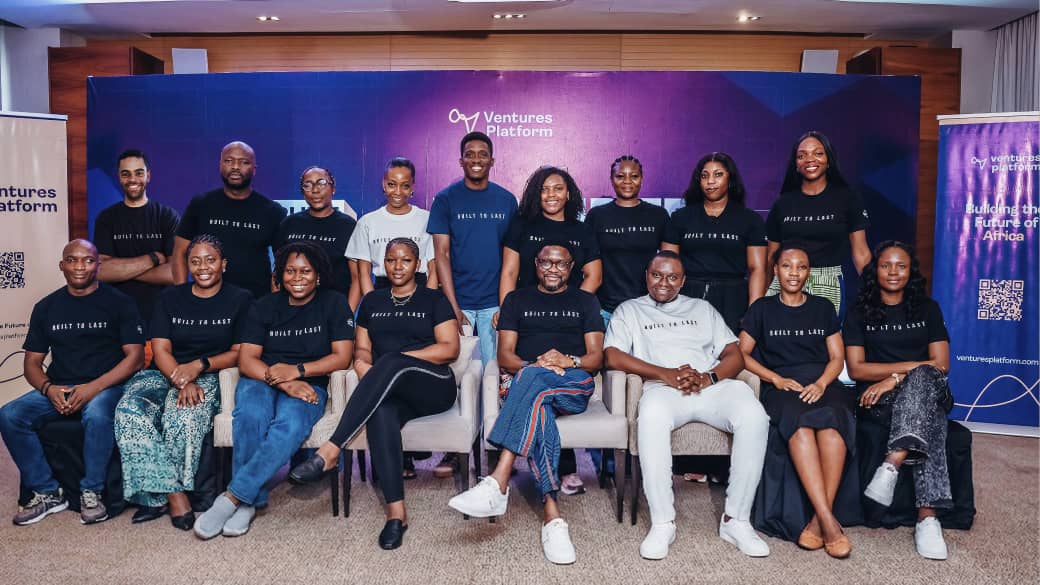
Ventures Platform has closed its second institutional fund at $84 million, and the timing says as much about African venture capital as the amount raised.
The firm said in its official announcement that VP Pan-African Fund II exceeded its original $75 million target. New institutional backers include EBRD, Norfund, Alphatron and Ashesi University Foundation, while existing LPs include IFC, British International Investment, Proparco, Standard Bank, iDICE and others.
That is a meaningful close in a tougher African funding environment. The easy-money phase of global venture capital is over, and African founders have had to raise in a market where investors are asking harder questions about margins, governance, follow-on capital, exits and whether companies can survive beyond growth headlines.
Ventures Platform says the fund will back pre-seed, seed and Series A companies across the continent, with capacity to support later rounds for stronger portfolio companies. The firm has already built a portfolio that includes names such as Moniepoint, PiggyVest, OmniRetail, Raenest and Seamless Technologies.
The important shift is geographic and strategic. Ventures Platform started with deep Nigerian roots, but Fund II is more Pan-African by design. That matters because the best startup opportunities on the continent are increasingly regional. Fintech, logistics, healthcare, SaaS, climate, commerce and AI-enabled services often need to cross borders to become large enough.
This fund also reflects a more mature African VC conversation. The old pitch was often built around population, mobile adoption and underbanked markets. Those are still relevant, but investors now want more proof. They want to see disciplined founders, clearer revenue models, stronger compliance, better operations and a path to liquidity.
AI will be part of that story, but not as a decoration. African startups cannot simply add AI to a pitch deck and expect capital. The stronger opportunity is where AI changes the cost of serving markets: cheaper customer support, better risk scoring, automated logistics, language access, health triage, legal tools, farmer advisory systems and back-office automation for small businesses.
This connects with a broader TechBooky argument around AI access. Africa should not only consume foreign AI tools. It should build companies that use AI to solve local infrastructure and service-delivery problems. That requires capital, but it also requires local judgement about markets that global investors often misunderstand.
The new fund does not solve Africa’s venture slowdown by itself. Funding remains uneven, exits are still difficult, and many startups are still operating in markets with currency pressure, regulatory uncertainty and weak infrastructure. But a successful $84 million close shows that serious institutional capital is still available for managers with a clear thesis and a credible track record.
For founders, the message is direct. Capital has not disappeared, but it has become more demanding. The next wave of African startups will need to prove not only that the market is large, but that their companies can become durable businesses inside it.
Related Reading
More contextual TechBooky stories selected from tags, categories and article context.
Paul Balo is the founder of TechBooky and a highly skilled wireless communications professional with a strong background in cloud computing, offering extensive experience in designing, implementing, and managing wireless communication systems.
We use cookies to ensure that we give you the best experience on our website. If you continue to use this site we will assume that you are happy with it.