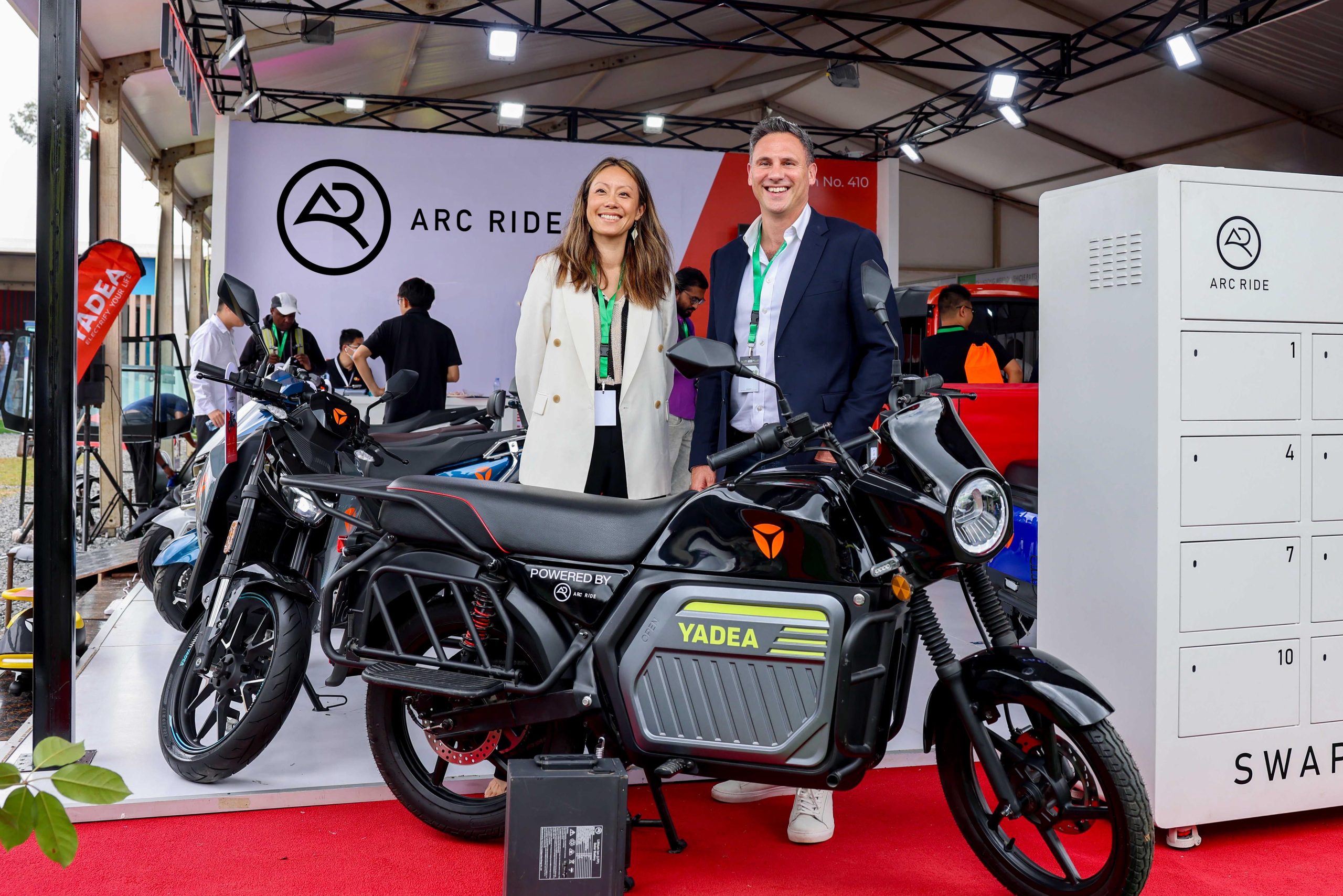
Kenya’s electric mobility market has received another serious vote of confidence. ARC Ride has secured $33.3 million in financing to expand its battery-swapping infrastructure and electric mobility platform, a raise that says investors are still willing to back African transport infrastructure when the model solves a real cost problem.
Disrupt Africa reports that the round will help ARC Ride accelerate rollout across sub-Saharan Africa, while Finsmes says the company plans expansion across markets including Kenya, Ghana, South Africa and other African countries. The company already describes itself as focused on electric mobility and battery swapping through its own platform.
The battery-swapping point is important. In many African cities, electric motorcycles make more sense than electric cars because motorcycles are already central to delivery, commuting and informal transport. But charging time, battery cost and grid reliability can slow adoption. Swapping reduces waiting time and can make the economics easier for riders who need their vehicles on the road all day.
Kenya is a logical market for this kind of infrastructure. It has a growing clean-energy base, a strong motorcycle economy and a technology ecosystem comfortable with mobile payments and asset financing. The opportunity is not only to sell vehicles. It is to build the charging and battery layer that makes fleets reliable enough for everyday work.
This is why ARC Ride’s raise should not be treated as just another startup funding headline. The company is trying to solve a physical infrastructure problem, not simply launch an app. That makes execution harder, but it also creates a more defensible business if the network becomes dense enough.
Africa’s EV story will not look exactly like Europe’s or America’s. In richer markets, the focus is often private cars and highway charging. In African cities, the early opportunity may be two-wheelers, three-wheelers, delivery fleets and public-transport support. That means smaller vehicles, swappable batteries and financing models could matter more than luxury EV launches.
The risk is that infrastructure businesses burn cash before the market is ready. Battery stations need utilisation. Vehicles need maintenance. Riders need financing that does not trap them in unsustainable repayment cycles. Regulators also need to support standards so the market does not fragment into incompatible battery systems.
Still, ARC Ride’s new funding is encouraging because it points to a practical African climate-tech path. The continent does not need EV adoption to be a lifestyle badge. It needs electric mobility to reduce fuel dependence, lower operating costs and make urban transport more resilient. If ARC Ride can prove that battery swapping works at scale, Kenya could become one of the region’s most important EV infrastructure testbeds.
Related Reading
More contextual TechBooky stories selected from tags, categories and article context.
Paul Femi Balo is the founder and publisher of TechBooky. He covers artificial intelligence, African technology, digital infrastructure, enterprise technology and the global digital economy.
We use cookies to ensure that we give you the best experience on our website. If you continue to use this site we will assume that you are happy with it.