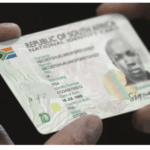
Kenya is advancing talks on a national digital identity authentication platform, and the most important word in the discussion is not digital. It is trust.
ICT and Digital Economy Cabinet Secretary William Kabogo met with a delegation from IN Groupe to discuss a trusted and interoperable digital identity ecosystem, according to an August 21 report. The goal is to help Kenyans securely access government and private-sector services using a trusted digital identity.
Digital ID can make government services faster and reduce duplication across public systems. It can also support banking, SIM registration, tax services, education, health, social protection and digital public infrastructure. If designed well, it becomes a foundation for the digital economy.
Kenya has strong reasons to move in this direction. The country already has a large mobile-money economy, a mature tech ecosystem and an active government digitization agenda. A better identity layer could reduce friction across services and make public systems more efficient.
But digital ID is not just an engineering project. Kenya’s history with digital identity has included legal challenges, privacy concerns and questions about exclusion. Civil society groups have warned in the past that identity systems can deepen inequality if people are locked out because of documentation, vetting, errors or weak redress mechanisms.
That is why trust, procurement discipline and interoperability matter. A national digital ID system must be secure, but it must also be understandable to citizens. People need to know what data is collected, who can access it, how errors are fixed, how abuse is prevented and whether services remain available to people who face registration barriers.
IN Groupe’s role is notable because the company has worked on identity, documents and trust infrastructure in other markets. Its Nexus unit previously described work with Kenya’s ICT Authority around national public key infrastructure, a trust layer used to secure digital services and transactions.
This connects to the wider African digital public infrastructure conversation. Governments want digital IDs, payment rails, cloud services and citizen portals, but the quality of implementation will decide whether citizens experience inclusion or surveillance. We recently wrote about Nigeria’s local cloud push becoming an AI sovereignty issue, and identity belongs in that same sovereignty debate.
The private-sector angle is also important. If a trusted digital ID can be used across banks, telcos, fintechs and online services, onboarding becomes easier and fraud controls may improve. But that also increases the risk of over-centralization if the system is poorly governed.
Kenya’s digital ID talks are therefore worth watching carefully. The opportunity is real: faster services, stronger authentication and better digital access. The risk is also real: exclusion, privacy abuse and public mistrust. The difference will come down to governance as much as technology.
Related Reading
More contextual TechBooky stories selected from tags, categories and article context.
Paul Balo is the founder of TechBooky and a highly skilled wireless communications professional with a strong background in cloud computing, offering extensive experience in designing, implementing, and managing wireless communication systems.
We use cookies to ensure that we give you the best experience on our website. If you continue to use this site we will assume that you are happy with it.