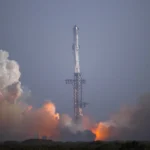
Europe’s attempt to build a serious alternative to SpaceX has gained fresh momentum. The Exploration Company has reportedly raised $450 million in Series C funding, one of the largest space-technology rounds in Europe, as governments and investors look for more independent access to orbit.
Sifted says the Franco-German company raised the money to advance reusable space capsules, while Dealroom describes the round as Europe’s biggest space Series C. The company is focused on space transport systems that can move cargo and eventually support more reusable orbital logistics.
The SpaceX comparison is inevitable, but it should be used carefully. SpaceX is far ahead in launch cadence, reusable rockets, Starlink and government contracts. The Exploration Company is not about to replace it. The more realistic point is that Europe does not want to remain dependent on one American company for critical parts of its space future.
That concern has become sharper as satellites, defence, communications, navigation and climate monitoring become more strategic. Space is no longer just scientific prestige. It is infrastructure. Countries that cannot launch, service or move payloads on their own terms will have less control over military systems, broadband capacity, earth observation and commercial space services.
This is also where the story touches Africa. We recently wrote about how France is looking at Nigeria’s space ambitions as Europe looks beyond US dependence. If Europe builds more independent space transport, African space agencies and satellite companies could eventually have more partners beyond SpaceX, China and traditional government launch providers.
The hard part is execution. Reusable spacecraft require deep engineering, testing, regulation, launch partnerships and a lot of patient capital. Space companies can raise money quickly when strategic urgency is high, but hardware timelines are unforgiving. One failed test can delay a programme for months or years.
Still, the direction is important. AI, cloud, defence and satellite networks are all becoming linked. Space capacity will shape communications, data collection and even future data-centre ideas. That is why Europe’s latest space funding round should not be treated as a niche aerospace story. It is part of the larger argument over who controls the next layer of digital infrastructure.
Related Reading
More contextual TechBooky stories selected from tags, categories and article context.
Paul Femi Balo is the founder and publisher of TechBooky. He covers artificial intelligence, African technology, digital infrastructure, enterprise technology and the global digital economy.
We use cookies to ensure that we give you the best experience on our website. If you continue to use this site we will assume that you are happy with it.