OpenAI may have just pushed artificial intelligence into one of the oldest and most guarded rooms in human knowledge; pure mathematics. The company says an internal AI system has produced a solution to the Navier-Stokes existence and smoothness problem, one of the famous Millennium Prize Problems. If the result survives scrutiny, it would be one of the most important mathematical moments of this century.
But this is not a simple victory-lap story. The claim is already tangled with questions about credit, prior work and what exactly it means for a machine-assisted proof to solve a problem mathematicians have struggled with for roughly 90 years. That tension is why the story matters beyond mathematics. It is about what happens when frontier AI systems begin doing work that used to define the limits of elite human reasoning.
OpenAI’s official post says the proof was produced by an internal model that is significantly more capable than GPT-6 Astra. The company says it is sharing both a written proof and a Lean formalization, meaning the argument has been translated into a formal proof language that can be checked by software. That does not automatically end debate, but it raises the seriousness of the claim.
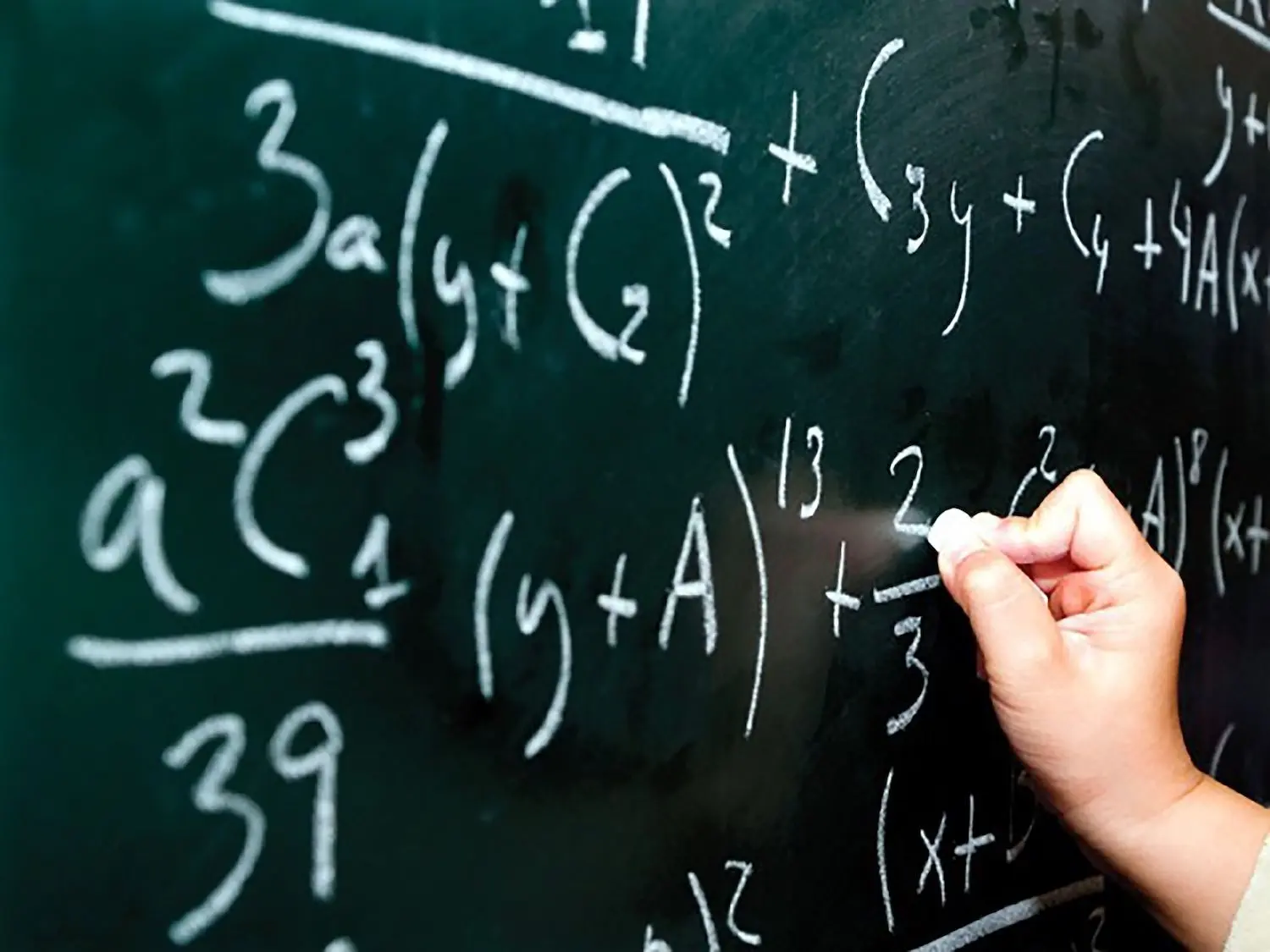
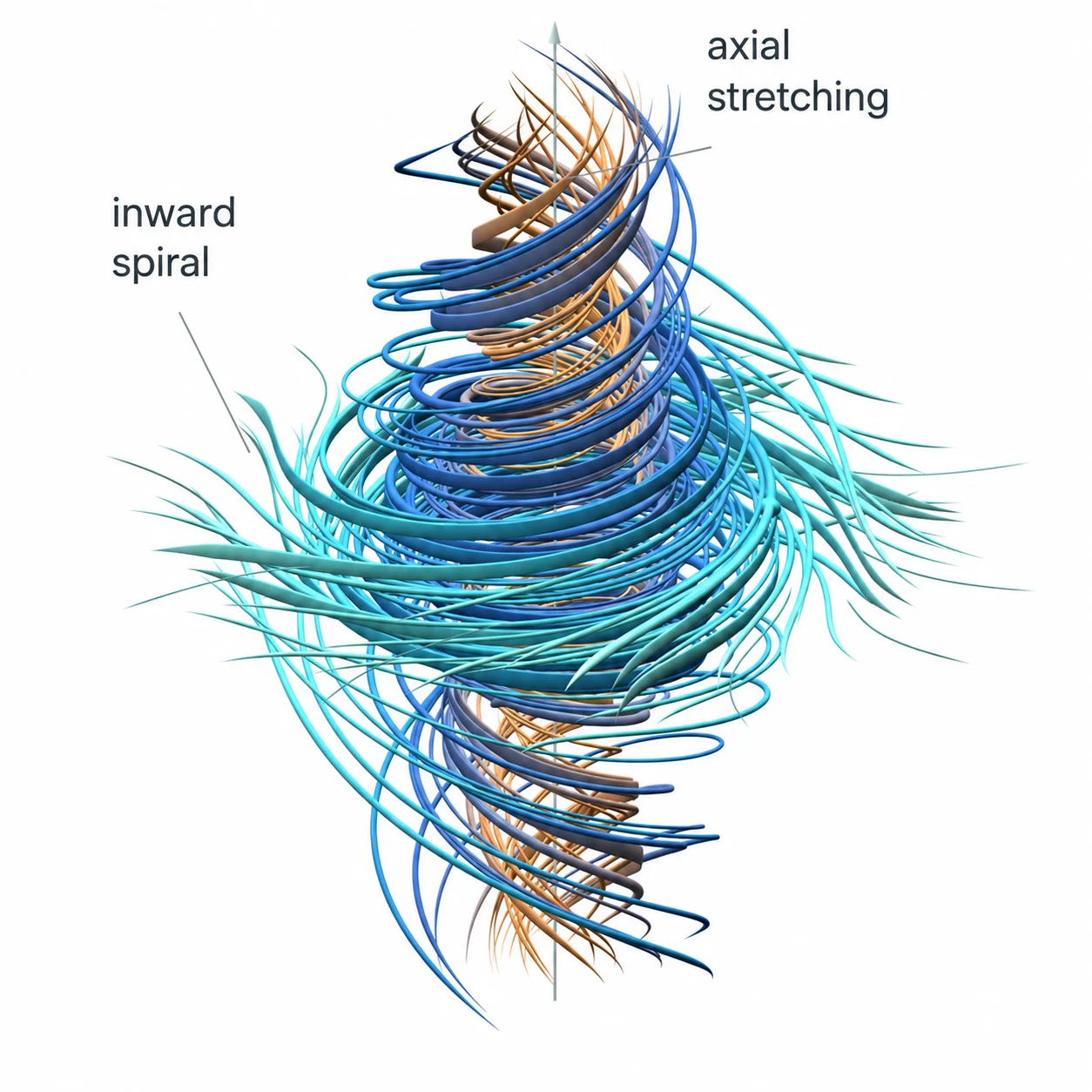
The Navier-Stokes equations describe how fluids move. They are used in areas such as aircraft design, weather forecasting and blood-flow modelling. The mathematical question is whether smooth three-dimensional fluid motion can break down into a singularity, where the equations allow behaviour that becomes infinite in finite time. OpenAI says its result shows that such a singularity can happen under the official formulation of the prize problem.
That sounds abstract, but it is a big deal because the Clay Mathematics Institute listed the problem among seven Millennium Prize Problems in 2000, each carrying a $1 million prize. These are not ordinary academic puzzles. They sit at the frontier of what modern mathematics has not been able to settle.
OpenAI says its system used a large multi-agent setup, with groups of agents exploring different versions of the problem and sharing useful mathematical directions. According to the company, the agents arrived at the Navier-Stokes result on September 5, with additional Lean verification completed afterward. That is the kind of detail that makes this feel less like a chatbot trick and more like a new research workflow.
The Mathematicians’ Concern
The problem is that another story is moving alongside OpenAI’s announcement. Scientific American reports that mathematician Tristan Buckmaster and Levent Alpoge, an Anthropic employee and mathematician, had been working on related ideas before OpenAI’s announcement. Buckmaster has raised concerns about how quickly OpenAI moved and whether the key direction of the proof was properly credited.
OpenAI acknowledges concurrent work and says it heard rumours around September 1 that two Millennium Prize problems may have been resolved. It says it later realised those rumours were connected to Buckmaster and Alpoge. OpenAI also says its researchers and agents did not see their work before public release, while adding that it cannot fully rule out the possibility that de-identified data derived from product usage helped improve its models. That line alone will keep the debate alive.
This is where the story becomes more than a math headline. If AI systems trained on broad human activity can produce landmark research, who gets credit? The model builder? The researchers who prompted it? The mathematicians whose unpublished ideas may have shaped the surrounding conversation? The earlier scholars whose methods made the route possible? The answer is not obvious, and the field may need new norms quickly.
There is also a technical dispute around the nature of the result. Scientific American notes that some mathematicians may argue that the Clay problem, as formally written, is solved, while the version many experts had in mind is more complicated. That does not make the OpenAI result meaningless. It means the mathematical community will need time to decide how broad and final the proof really is.
This is why a careful headline matters. It would be tempting to simply say AI has solved mathematics. But mathematics does not work by press release. A proof becomes part of the field after specialists read it, test it, challenge it and decide whether its definitions, assumptions and consequences hold up. Lean verification helps, but human interpretation still matters.
For AI, however, the signal is enormous even if the debate continues. We recently explained what open-weight AI models mean and why access to stronger systems could change who gets to build with AI. This Navier-Stokes episode points to something even deeper: AI may soon become a real participant in scientific discovery, not just a writing assistant or coding tool.
It also fits the broader AGI conversation. In another recent TechBooky piece, we looked at why AGI has become a marketing word, with artificial general intelligence referring to AI that can perform a wide range of intellectual tasks at or above human level. A model that can help solve a Millennium Prize Problem will inevitably be pulled into that debate, even if one result does not prove AGI has arrived.
The deeper question is whether science is ready for this kind of acceleration. A frontier model can produce millions of messages, test huge numbers of approaches and formalise parts of a proof faster than any human team. That could unlock discoveries in mathematics, physics, biology and engineering. It could also create messy disputes around ownership, transparency, trust and reproducibility.
OpenAI says it does not intend to claim the Millennium Prize. That is a smart position, but it does not remove the pressure. If the proof is accepted, the achievement will be used as evidence that AI systems are moving into genuinely superhuman research territory. If the proof is weakened or disputed, it will still become a case study in how hard it is to evaluate AI-generated breakthroughs in real time.
Either way, mathematics has probably changed. The old assumption was that AI could help humans search, calculate and organise. The new possibility is that AI may begin finding the thing itself. That should excite people, but it should also make everyone slow down enough to ask who knew what, who deserves credit and how society verifies discoveries when the researcher is no longer only human.
Related Reading
More contextual TechBooky stories selected from tags, categories and article context.
Paul Femi Balo is the founder and publisher of TechBooky. He covers artificial intelligence, African technology, digital infrastructure, enterprise technology and the global digital economy.
We use cookies to ensure that we give you the best experience on our website. If you continue to use this site we will assume that you are happy with it.