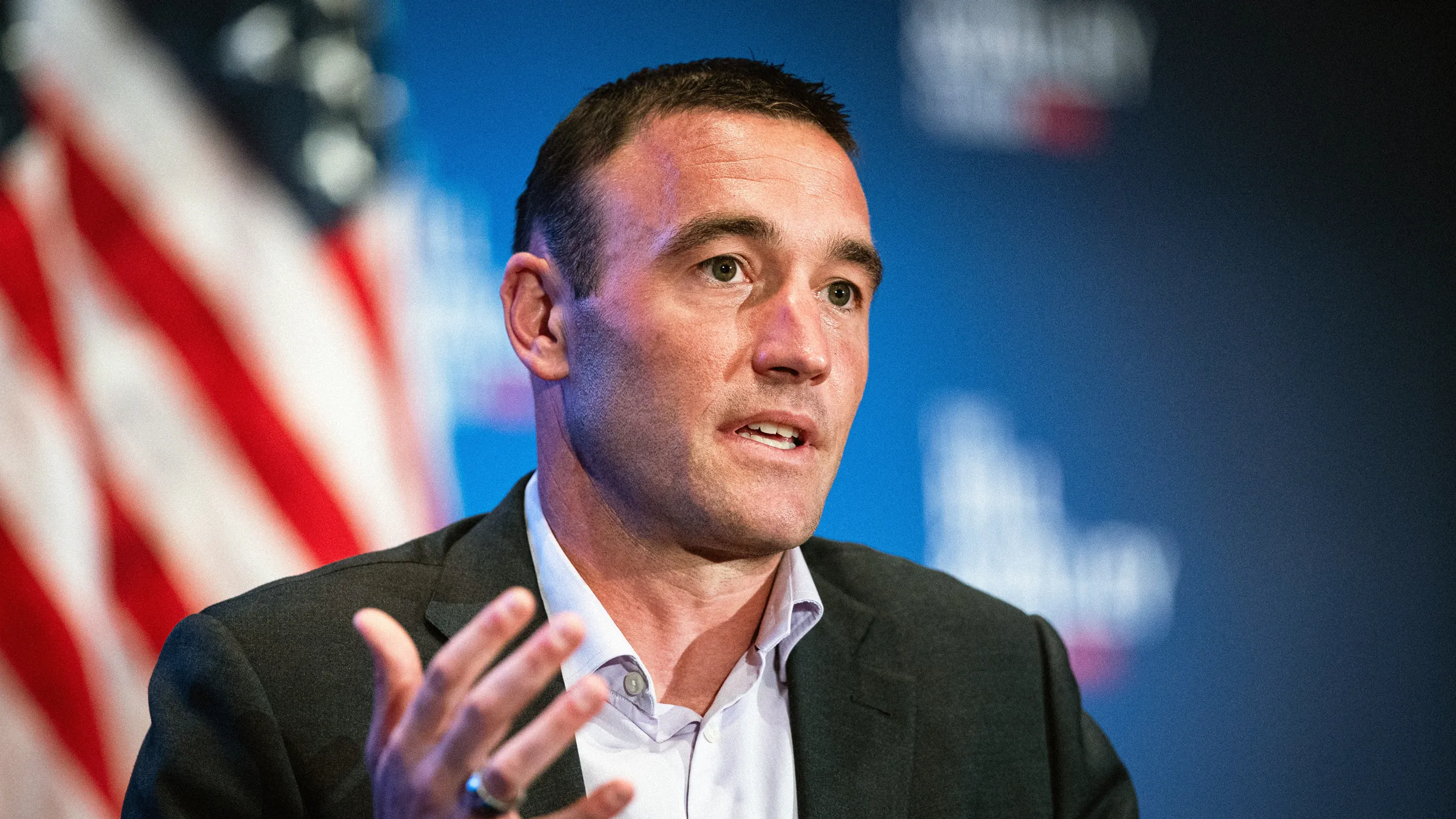
Former OpenAI chief product officer Kevin Weil is reportedly trying to raise money for a new AI science startup at a valuation of at least $750 million, another sign that some of the most ambitious AI talent is moving from chatbots into scientific discovery.
Business Insider reports that Weil is seeking to raise about $150 million for the company, which remains unnamed publicly. The reported plan is to build AI systems that can collect scientific data for model training and accelerate research workflows.
That makes the startup part of a growing AI-for-science wave. The pitch is no longer simply that AI can answer scientific questions. It is that AI can help design experiments, gather data, run simulations, interpret results and move research loops faster than traditional lab workflows allow.
Weil is a notable name because he helped lead product at OpenAI during one of the company’s most intense growth periods. Before that, he held senior product roles at Instagram, Twitter and Facebook. A move into AI science suggests that the next market investors want to chase is not another general chatbot but specialized AI systems that can produce harder technical and scientific value.
The timing also fits the wider talent shift around frontier AI labs. Jeff Dean and other former Google and DeepMind researchers recently moved into Discovery Loop, another company focused on accelerating science and engineering with AI. We wrote about that broader direction in Jeff Dean’s AI science startup story, and Anthropic’s recent Claude/Riemann work also showed how frontier models can assist serious mathematical research.
Investors like the science angle because it offers a stronger answer to AI sceptics. If AI can improve drug discovery, materials research, biology, climate science or engineering, then the technology’s value becomes easier to defend than another writing assistant or customer-support bot. The challenge is that science is harder to fake. Results must be verified, reproduced and connected to real-world outcomes.
There is also a data problem. Scientific AI systems are hungry for high-quality experimental data, and much of that data is expensive, messy, proprietary or locked inside institutions. A startup that can generate or organize valuable scientific data may have an advantage, but it will need deep domain partnerships and not only clever models.
For OpenAI, Weil’s reported startup adds to the sense that AI leadership is becoming more distributed. The big labs still have the most compute, capital and brand power, but the next wave of AI companies may be founded by people who learned inside those labs and then left to build narrower products around science, enterprise workflows or infrastructure.
The valuation may look aggressive for an unnamed startup, but the market is telling us where capital wants to go. AI science is becoming one of the most investable narratives in technology because it promises something bigger than productivity. It promises discovery. The hard part will be proving that the models can move from impressive research demos to repeatable scientific breakthroughs.
Related Reading
More contextual TechBooky stories selected from tags, categories and article context.
Paul Balo is the founder of TechBooky and a highly skilled wireless communications professional with a strong background in cloud computing, offering extensive experience in designing, implementing, and managing wireless communication systems.
We use cookies to ensure that we give you the best experience on our website. If you continue to use this site we will assume that you are happy with it.