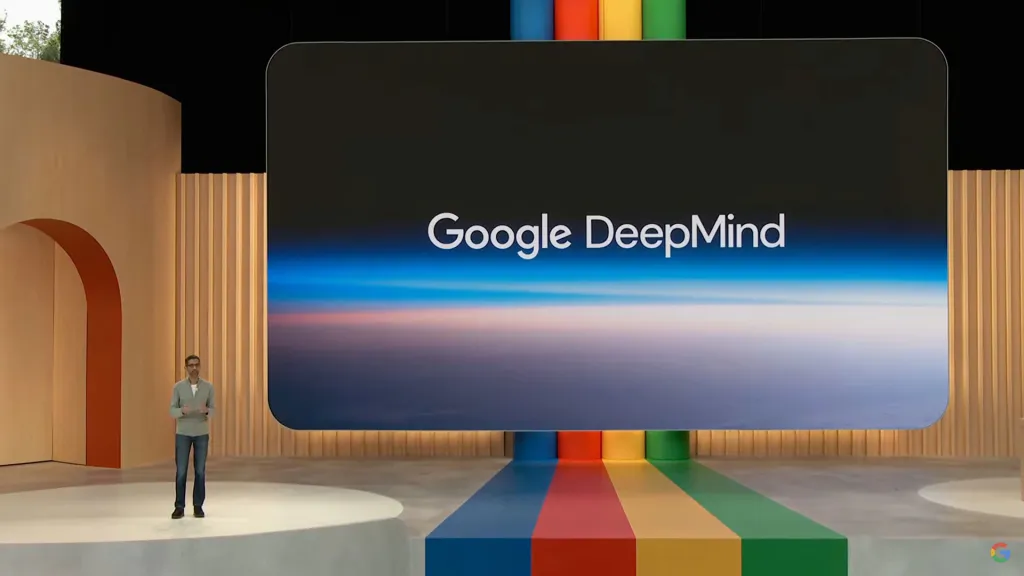
Google DeepMind has reportedly dismantled the team behind AlphaFold, one of the most important and respected AI systems ever built. That is a major shift because AlphaFold was not just another Google research project. It was the system that helped turn AI into a serious scientific tool by predicting protein structures in minutes instead of years.
The Financial Times reported that most of the AlphaFold team has been reassigned to other work, including Gemini-related projects and Alphabet’s drug-discovery company Isomorphic Labs, while some researchers have left. Several of the original authors have moved on, including John Jumper, who joined Anthropic.
The move does not mean AlphaFold itself disappears. Its scientific impact remains huge, and Isomorphic Labs continues to work on drug discovery using related technology. But the end of the dedicated AlphaFold team shows how Google is reorganising around a broader AI strategy. The company appears to be pulling more research talent into systems that can support Gemini and general scientific automation, rather than keeping breakthrough teams as separate islands.
That is understandable from Google’s point of view. The AI race has changed. OpenAI, Anthropic, Meta and Chinese labs are pushing hard on frontier models, coding agents and scientific AI. Google cannot afford to treat its best research groups as museum pieces, even when those groups produced world-changing work. It wants more of that talent pointed at products and platforms that can compete across the whole AI market.
There is still a risk in the shift. AlphaFold became powerful partly because it was focused. It solved a hard scientific problem with a specialised team and a clear mission. Folding that culture into a broader Gemini-led strategy may accelerate new tools, but it could also dilute the kind of deep research discipline that made AlphaFold special in the first place.
TechBooky’s recent article on Claude Opus 5 and Anthropic’s price-performance push looked at the commercial side of the same talent war. Frontier AI labs are now competing for researchers, compute, safety credibility and enterprise customers at the same time. AlphaFold’s restructuring shows that even Nobel-level scientific AI is not immune to that pressure.
The bigger lesson is that AI labs are moving from isolated breakthroughs to platform battles. AlphaFold proved AI could change biology. Google’s next challenge is to prove that its broader AI systems can keep producing scientific value while also competing commercially with the fastest-moving labs in the world.
Related Reading
More contextual TechBooky stories selected from tags, categories and article context.
Paul Balo is the founder of TechBooky and a highly skilled wireless communications professional with a strong background in cloud computing, offering extensive experience in designing, implementing, and managing wireless communication systems.
We use cookies to ensure that we give you the best experience on our website. If you continue to use this site we will assume that you are happy with it.