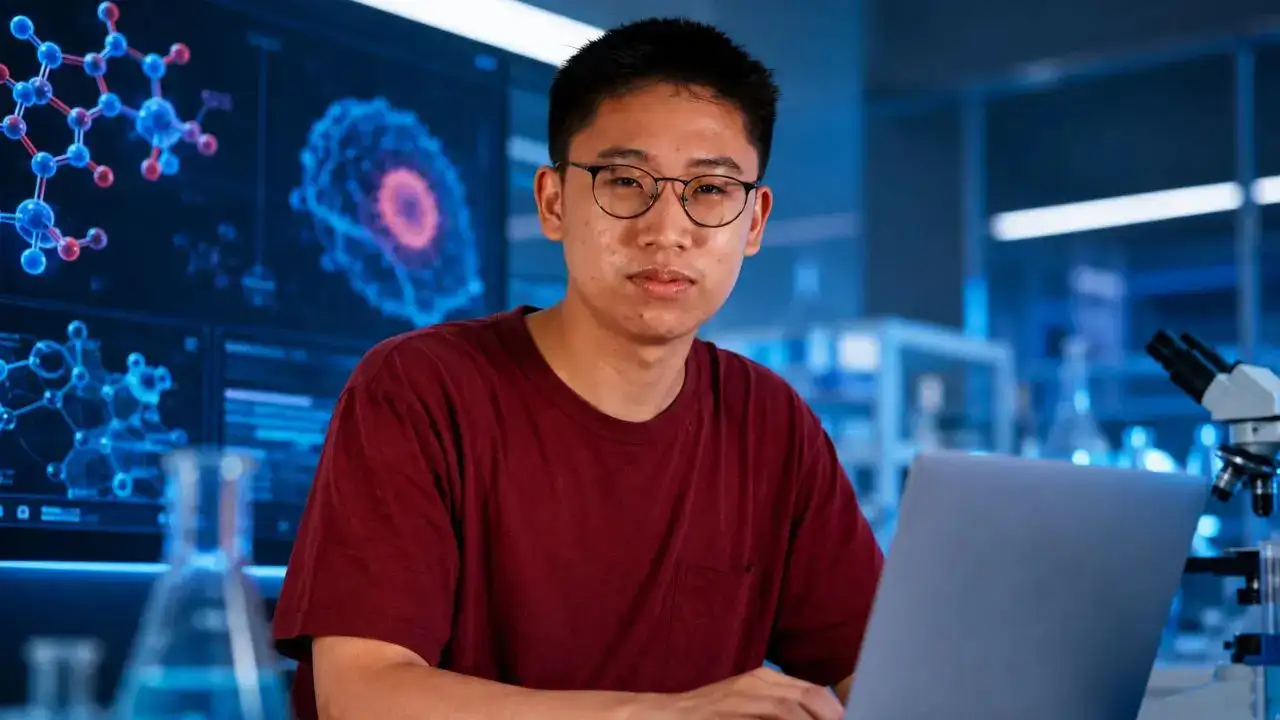
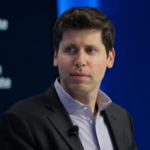
The rush to apply frontier AI to science is producing another eye-catching startup story. OpenAI researcher Miles Wang is reportedly leaving the company to build an AI drug discovery startup that could be valued at about $2 billion before it has even fully stepped into public view.
TechCrunch reported that Wang is in talks to raise roughly $200 million, with Lightspeed in discussions to lead the round. Several other OpenAI researchers are expected to join the company. Wang disputed the reported funding figures and description of the company, but did not provide alternate numbers.
That caveat matters. This is still a developing funding story, not a completed financing announcement. But even the discussions show how strongly venture investors are pricing the idea that AI can speed up life sciences research. Drug discovery has become one of the areas where investors can imagine frontier models moving from chat and code into something far more valuable.
The reported company may focus partly on finding new uses for existing drugs, including medicines that already passed safety testing or previously failed trials. That is a practical angle because repurposing approved drugs can sometimes move faster than discovering entirely new compounds from scratch.
This funding interest is not happening in isolation. Chai Discovery recently raised $400 million at a $3.8 billion valuation, while Google DeepMind spinout Isomorphic Labs raised $2.1 billion earlier this year. The message from investors is clear: if AI can make drug discovery even moderately faster or less wasteful, the commercial upside could be enormous.
OpenAI has also been moving in this direction. TechBooky covered the launch of GPT-Rosalind for drug discovery and genomics, a specialised reasoning model aimed at helping researchers work through biology, chemistry and experimental design. Wang’s reported startup plans fit that broader move from general AI tools into domain-specific scientific intelligence.
Still, biotech is not consumer software. A model can suggest targets, generate hypotheses or help researchers search the literature, but drugs still need validation, safety testing, clinical trials, manufacturing and regulatory approval. The path from a promising AI idea to an approved medicine is long, expensive and full of failure.
That is why the valuation is both exciting and uncomfortable. It shows serious belief in AI-native science, but it also shows how quickly capital is chasing scarce frontier-lab talent. Investors are betting not only on a company, but on the idea that researchers trained inside OpenAI can carry frontier-model methods into biology and create a new kind of biotech business.
If the bet works, AI drug discovery could become one of the most important applications of the current AI cycle. If it disappoints, it will join a long history of expensive biotech promises that looked better in funding decks than in clinical data.
Related Reading
More contextual TechBooky stories selected from tags, categories and article context.
Paul Femi Balo is the founder and publisher of TechBooky. He covers artificial intelligence, African technology, digital infrastructure, enterprise technology and the global digital economy.
We use cookies to ensure that we give you the best experience on our website. If you continue to use this site we will assume that you are happy with it.