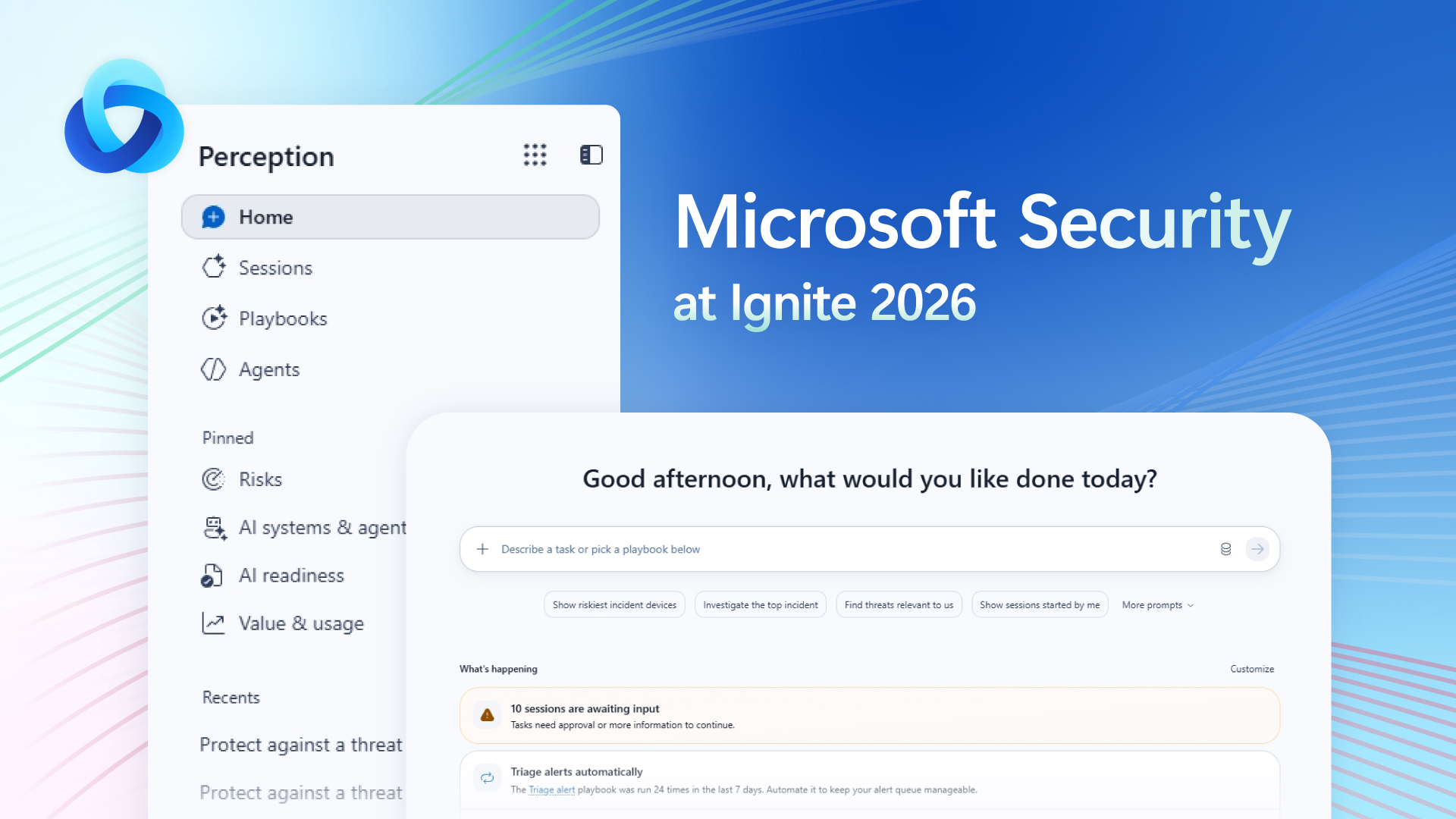
Microsoft is expanding Perception, its platform for using AI agents in cyber defence, as security teams face more alerts and vulnerabilities than they can realistically review by hand. The Ignite update covers alert triage, attack investigation, external threat intelligence, authorised web testing and remediation planning.
The central promise is to help analysts spend less time sorting routine signals and more time making decisions about genuine threats. Microsoft says its Triage Agent can examine alerts and provide context, while an Attack Investigation Agent can reconstruct a possible attack across endpoints, identity, email, cloud resources and other activity. The latter can recommend next steps such as containing an account or isolating a device. These are recommendations in a security workflow, not evidence that a machine can replace incident responders.
Perception is being extended beyond Microsoft’s own telemetry. The company says specific agents can now reason over signals from Okta, AWS and Salesforce, depending on the agent. Its Threat Intelligence Agent can turn external research and advisories into structured findings, and a detection agent can propose rules for a customer’s environment. Microsoft says suggested detections are tested against historical data and reviewed by analysts before activation.
That review step matters. Automatically generated detection rules can produce false alarms or miss an attack if the context is wrong. Security teams need visibility into the evidence behind a recommendation, the source of its intelligence and the limits of the agent’s authority. Adding third-party data also raises integration and access-control questions that buyers should resolve before enabling broad automation.
Microsoft also described a Web App Pen Test Agent for authorised assessments of applications, including authentication, APIs and business logic. Its related protection workflow can use those findings to recommend mitigations such as web application firewall rules while permanent fixes are prepared. The company reported a 31% average task-solve rate in one benchmark with Incalmo. That figure is a vendor-reported result for a defined test, not a universal measure of real-world protection.
The new features sit alongside Microsoft’s MDASH code-scanning work and MAI-Cyber models. Perception’s larger significance is the attempt to connect discovery, prioritisation and response in one system. Whether that reduces risk will depend on evidence quality, safe permissions and a human team’s ability to challenge the agent’s conclusions.
Related Reading
More contextual TechBooky stories selected from tags, categories and article context.
We use cookies to ensure that we give you the best experience on our website. If you continue to use this site we will assume that you are happy with it.