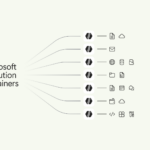
Microsoft is giving organisations more ways to contain AI agents that work across files, apps and services on Windows. At Ignite on 17 November, the company announced expanded Microsoft Execution Containers, built-in identity support through Entra and policies that let administrators govern agent activity on devices.
The shift reflects a practical problem. An agent that can read a document and answer a question is relatively easy to supervise. One that can open apps, edit files, use credentials and trigger other tools needs a defined boundary. Microsoft is trying to make those boundaries part of the operating system and management stack, rather than leaving every developer to build them alone.
Microsoft says the new containment features in Microsoft Execution Containers are designed to give agents a more restricted place to run. OpenAI and Meta are already building on the technology, according to the company. Agent identity through Entra should help distinguish a software agent from the person or application that deployed it, while Agent 365 policies are intended to give IT teams a central place to manage what those agents can do.
Windows 365 for Agents is another part of the approach. It provides cloud-hosted computing for agent workloads, which could give enterprises more control than allowing a tool to operate directly on an employee’s primary PC. That does not eliminate risk. Teams still need to decide which data the agent can reach, how long permissions last, what actions require human approval and what logs are retained.
The Windows announcement also includes changes that are not limited to AI. Microsoft says its endpoint security platform and Windows administrator protection are generally available. The endpoint platform lets security providers move some critical protection out of the kernel, where a failure can have system-wide consequences. Administrator protection lets users operate with standard privileges until a particular task requires elevation.
For businesses, the question is whether these controls work consistently across different agents and applications. A clear identity and an isolated environment are useful only if staff can see what the agent did, revoke its access and recover from mistakes. Microsoft has set out the direction at Ignite; deployment guidance and independent testing will show how much protection the new controls provide in daily work.
Related Reading
More contextual TechBooky stories selected from tags, categories and article context.
We use cookies to ensure that we give you the best experience on our website. If you continue to use this site we will assume that you are happy with it.