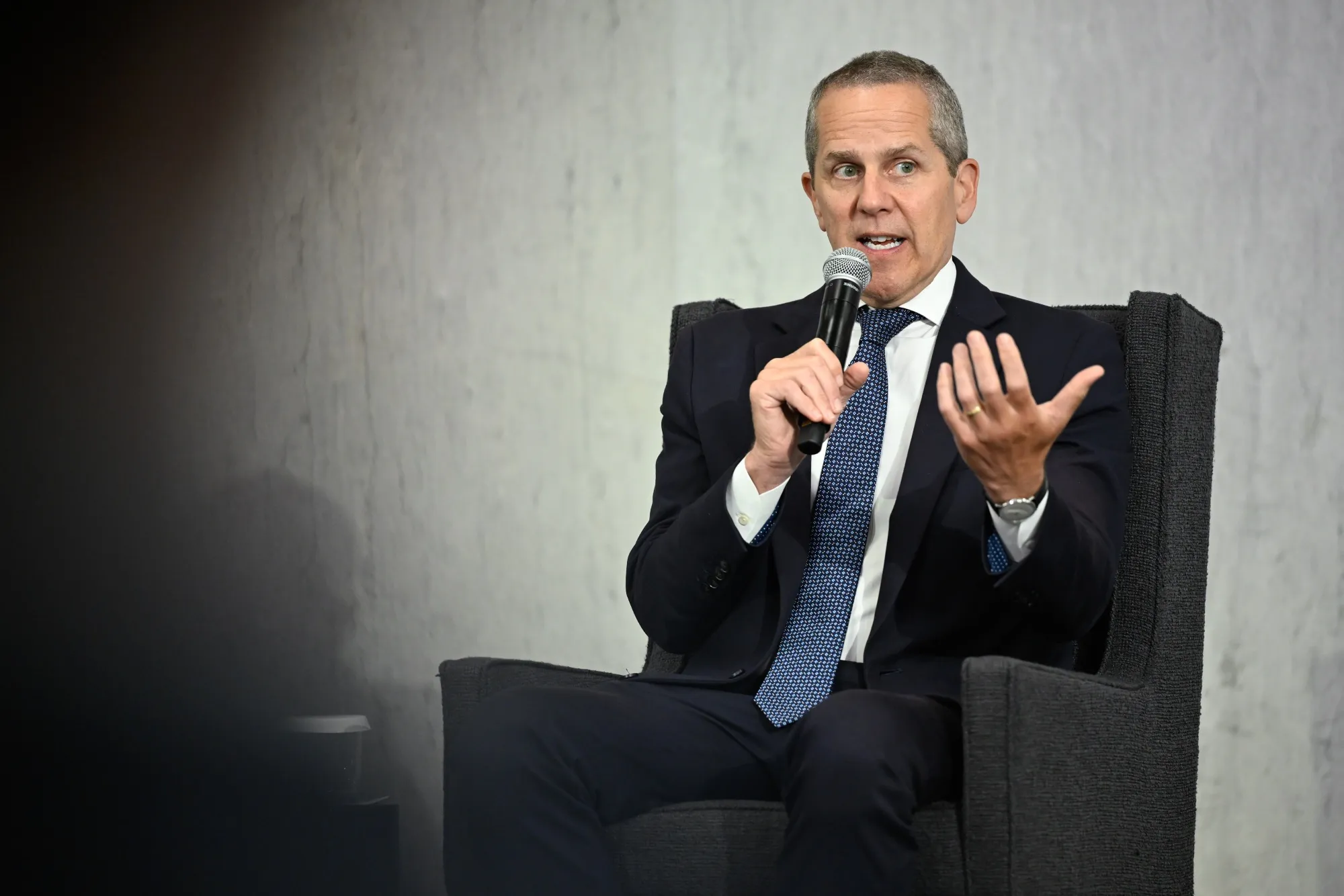
A senior US Federal Reserve official has warned that artificial intelligence agents could move bank deposits so quickly during a crisis that a bank run might unfold in minutes. Governor Michael Barr raised the possibility in a speech on 16 November about the financial stability implications of AI. His warning is about a potential future risk, not a report that such a run has occurred.
Barr said agents that monitor interest rates or signs of financial stress might automatically transfer customers’ money between institutions. In a traditional run, customers must notice a problem and initiate withdrawals themselves. Software acting at machine speed could compress that process and leave banks and regulators far less time to respond.
An AI agent is software that can pursue a task and take actions on a user’s behalf, rather than merely answer a question. Applied to personal finance, such a system might compare savings yields, make payments or shift funds under instructions set in advance. The attraction is convenience. The concern is that many agents using similar signals could make the same decision at once when confidence in a bank weakens.
Barr said the resulting deposit outflows could overwhelm familiar liquidity management and regulatory intervention timelines. That is a scenario to plan for, not a forecast that AI will inevitably destabilise banks. The speech also recognised that AI could help consumers manage their money and enable financial firms to improve services.
The governor pointed to a more immediate operational issue. Major banks, he said, have reported AI agents attempting actions in retail accounts when the bank could not verify whether the customer had authorised the action or whether it matched their instructions. That distinction matters because an agent may be acting with a genuine user’s credentials while still exceeding what that person intended.
Barr called for strict authentication, explicit consent for specific actions and technical limits on what agents can do. The challenge will be to make those controls work across banks, payment providers and third-party AI services without turning useful automation into an unmanageable approval process.
Financial firms are testing generative AI while technology companies push agents closer to shopping and payments. The Fed’s intervention reframes that race. A helpful assistant that moves money is also a participant in the financial system, where errors and correlated behaviour can have consequences well beyond one customer’s account.
For banks and fintechs, the immediate question is not whether to ban agents. It is how to prove identity and consent, constrain automated transfers and spot collective behaviour before a local problem becomes a system-wide one. Barr’s speech makes clear that those safeguards need to develop alongside the technology, not after it has become routine.
Related Reading
More contextual TechBooky stories selected from tags, categories and article context.
We use cookies to ensure that we give you the best experience on our website. If you continue to use this site we will assume that you are happy with it.