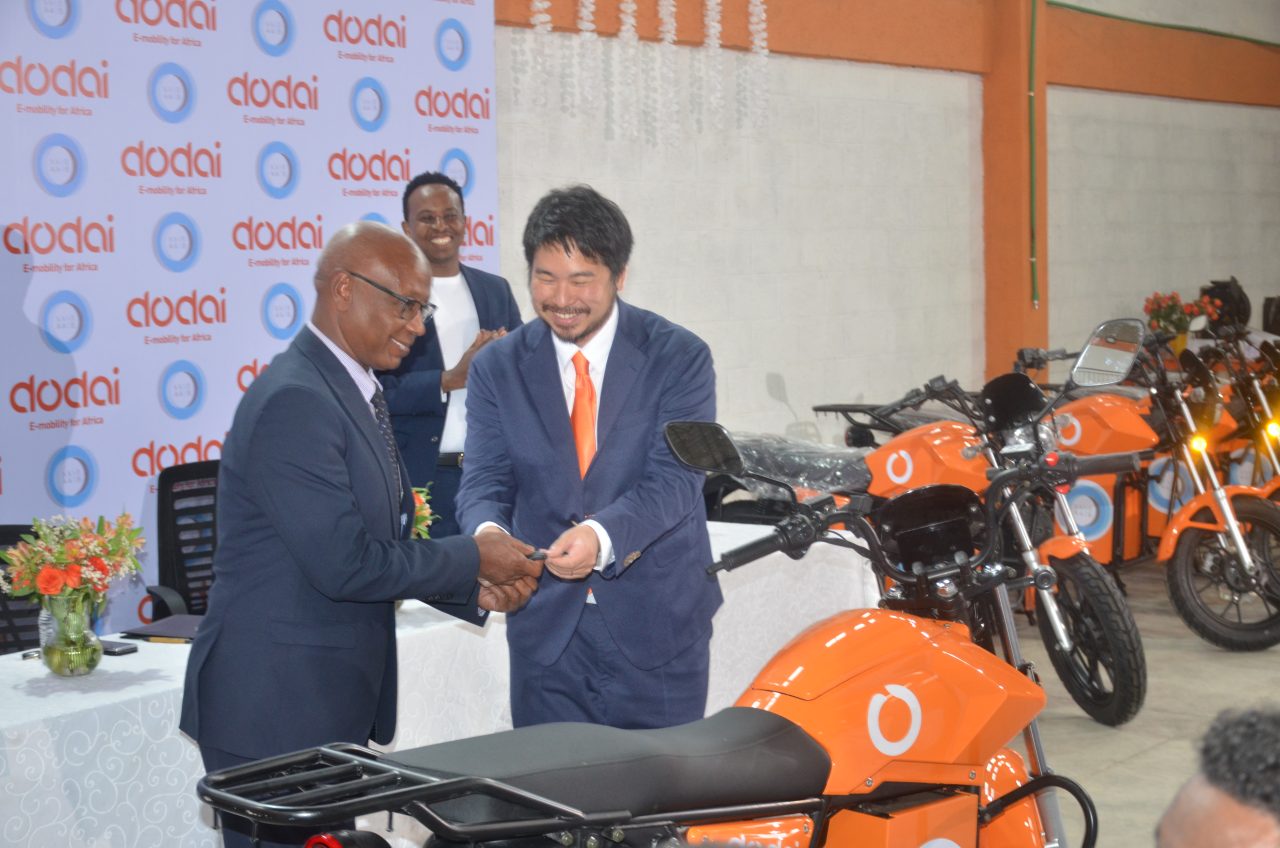
Ethiopian electric-mobility company Dodai has added $3 million to its Series A financing, taking the round to $16 million. The extension brings in Tokyo Gas through its Acario investment subsidiary and Singapore-based Kaneto Capital Management, according to Launch Base Africa.
The new funding follows the $13 million Series A TechBooky reported in April. It is an extension of that round, not a separate $16 million raise on top of the earlier financing. Tokyo Gas separately confirmed its investment on 16 November, although its announcement did not disclose the size of its individual contribution.
Dodai assembles and sells electric two-wheelers in Addis Ababa and runs stations where riders exchange depleted batteries for charged ones. The model targets a practical obstacle for delivery and commercial riders. Charging a vehicle for hours means time away from work, while a swap can get a rider back on the road more quickly.
Tokyo Gas says roughly 2,500 Dodai electric motorbikes are in use and the company operates around 10 battery-swap stations. Those are the investor’s current figures. Earlier reports referred to more than 2,000 deployed vehicles, so the higher number suggests progress, but a vehicle count alone does not establish that the network is profitable or that utilisation is high at every site.
The Japanese energy company says it was attracted by Dodai’s ability to build a functioning local operation and by the potential to combine mobility with battery and power management. It also points to an internet-connected battery management system that tracks use and charge status. Tokyo Gas has not announced a specific joint product or a timeline for expanding beyond Ethiopia.
The extension gives Dodai more room to expand its fleet and station network, but scale will depend on how reliably those stations serve riders throughout a working day. Station density, battery availability, maintenance and electricity supply all affect whether a swap-based motorbike is a better commercial proposition than a petrol alternative.
The company’s earlier plan called for 30 swapping stations and 3,000 users in Addis Ababa within a year, followed by much larger ambitions across African cities. Those remain targets, not completed deployments. The latest announcement provides a clearer measure of the business today, with about 10 stations and 2,500 bikes, rather than evidence that all planned infrastructure is already in place.
For Ethiopia’s electric-mobility sector, the investment is also a sign of international interest in the services that make vehicles usable at scale. Vehicles can be imported or assembled more quickly than a dependable charging network can be built. Dodai’s wager is that owning both sides of that experience will help it retain riders and support daily delivery work.
The next meaningful indicators will be new stations opened, active riders, swap volumes and the economics of running the network. The $16 million Series A is a financing milestone. Whether it becomes a durable transport business will be decided on Addis Ababa’s streets.
Related Reading
More contextual TechBooky stories selected from tags, categories and article context.
Paul Femi Balo is the founder and publisher of TechBooky. He covers artificial intelligence, African technology, digital infrastructure, enterprise technology and the global digital economy.
We use cookies to ensure that we give you the best experience on our website. If you continue to use this site we will assume that you are happy with it.