OpenAI is giving ChatGPT a place for teams to work together. At DevDay, the company introduced ChatGPT Space, a shared workspace that brings people, files and AI assistants into the same project. It is a shift from the familiar one-person chat window: a team can build a common body of information and let AI work from that context rather than asking each member to reconstruct it in separate conversations.
The company’s DevDay recap describes Space as a home for shared knowledge, pages and Dots, the new agents OpenAI also announced at the event. The idea is that a team discussing a project can keep source material and decisions together, then ask an agent to help with a piece of work inside that space. That could be useful for a product launch, a research assignment or a customer account where several people need to know what has already happened.
In an ordinary ChatGPT conversation, context belongs largely to the person who started it. In a Space, the relevant context is meant to be available to the group. That difference sounds small until a colleague is absent or a project changes hands. Instead of searching through a chain of messages and forwarding documents, the next person can start from a shared page and see the material the team has chosen to keep there.
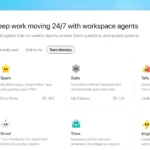
Dots make the workspace more than a shared folder. OpenAI says these agents can continue work across connected tools, bring back findings and seek approval when an action needs a person. Inside a Space, that could mean a dot keeping track of open questions while teammates review its output. It also raises practical questions about who can grant an agent access, what it is allowed to change and how a team checks its work. Shared context is valuable, but it also makes permissions and review more important.
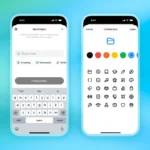
OpenAI says ChatGPT Space is rolling out on desktop and the web to Pro, Business and Enterprise users. Mobile users can read and share Spaces for now, while creating and editing on mobile are planned for later. Collaborative slides are also coming in the weeks ahead, according to the company. Those distinctions matter for teams deciding whether to move a live workflow into Space today rather than wait for features that are still on the roadmap.
The product puts OpenAI more directly against workplace software that already combines documents, chats and assistants. Microsoft, Google and a growing list of startups want AI to live where a company’s work already happens. OpenAI’s wager is that teams will be willing to bring their work into ChatGPT itself, especially if the agent can use the shared knowledge rather than repeatedly asking for the same background.
For businesses, the sensible first test is a bounded project. Put a small set of documents in a Space, define who can see them and give an agent a task that can be checked. Measure whether the team actually saves time, whether the output stays accurate as the project changes and whether approvals arrive at the right moments. A prettier shared chat is not enough if colleagues still have to reconcile conflicting versions of the truth.
Space fits a larger pattern in OpenAI’s DevDay announcements. Dots are designed to keep work moving, while Space gives that work a common home. Together they point to a future in which ChatGPT is less a question box and more part of a team’s daily operating system. Whether it earns that role will depend on trust, permissions and the quality of the work it actually helps people finish.
Related Reading
More contextual TechBooky stories selected from tags, categories and article context.
Paul Balo is the founder of TechBooky and a highly skilled wireless communications professional with a strong background in cloud computing, offering extensive experience in designing, implementing, and managing wireless communication systems.
We use cookies to ensure that we give you the best experience on our website. If you continue to use this site we will assume that you are happy with it.