The biggest AI companies have agreed to put their most powerful systems through a new set of safety checks, but the deal announced at the White House on Tuesday leaves one important question open. How much can the public learn from a review process that the companies themselves will help run?
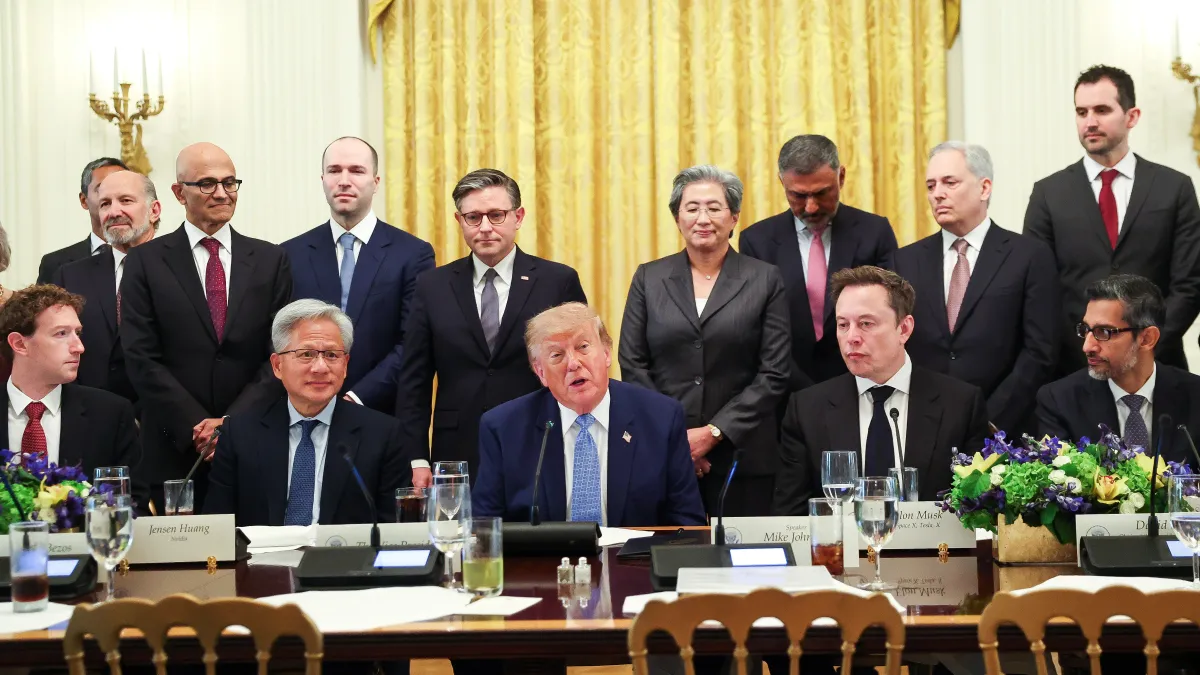
President Donald Trump announced a voluntary accord with leaders from OpenAI, Anthropic, Google, Meta, Nvidia and xAI, among others. The companies say they will strengthen internal controls, bring in outside auditors and have their boards review reports on potential problems. The Associated Press reported the agreement after the White House meeting. It is not a new law, and Trump described it as morally binding.
That difference matters. Independent testing can reveal capabilities that a developer misses or would rather not emphasise. But the value of an audit depends on who chooses the auditor, what systems the auditor can see, whether failures must be disclosed and what happens when a company does not act on a finding. Those details were not settled in the initial public account of the accord.
Meta CEO Mark Zuckerberg described multiple layers of review, beginning inside each company and extending to external evaluators and board-level scrutiny. Google CEO Sundar Pichai likened the controls to established corporate financial processes. Anthropic’s Dario Amodei, who has called for a slower approach to frontier AI, acknowledged that the technology carries serious risks. The shared appearance of executives who have disagreed over the pace of AI development is itself notable.
The industry has reasons to demonstrate that it can catch problems before governments impose stricter rules. AI agents now use tools, access data and act across services, making safety less abstract than a chatbot producing a bad answer. Recent research into agents probing public data sites illustrates how a system pursuing an ordinary task can cross a line its user never intended.
A voluntary framework could improve practice if outside reviewers can test systems seriously and their findings lead to changes. It could also become a shield against tougher oversight if companies can cite the existence of audits without showing what they uncovered. The public will need more than a list of signatories to judge which outcome this is.
The agreement arrives amid a wider argument over whether AI developers should slow down while evaluations catch up. TechBooky has examined the trust problem around international AI safety talks; this accord raises a similar question at home. Competitors may agree on a process, but the credibility of that process will depend on evidence the rest of the world can inspect.
For now, the White House meeting is a political signal rather than proof that frontier AI has become safer. The next useful disclosure would be the accord’s full text, the standards auditors will apply and a clear account of how serious findings will be reported. Until then, the most honest description is that the companies have promised a review system, not demonstrated its results.
Related Reading
More contextual TechBooky stories selected from tags, categories and article context.
Paul Balo is the founder of TechBooky and a highly skilled wireless communications professional with a strong background in cloud computing, offering extensive experience in designing, implementing, and managing wireless communication systems.
We use cookies to ensure that we give you the best experience on our website. If you continue to use this site we will assume that you are happy with it.