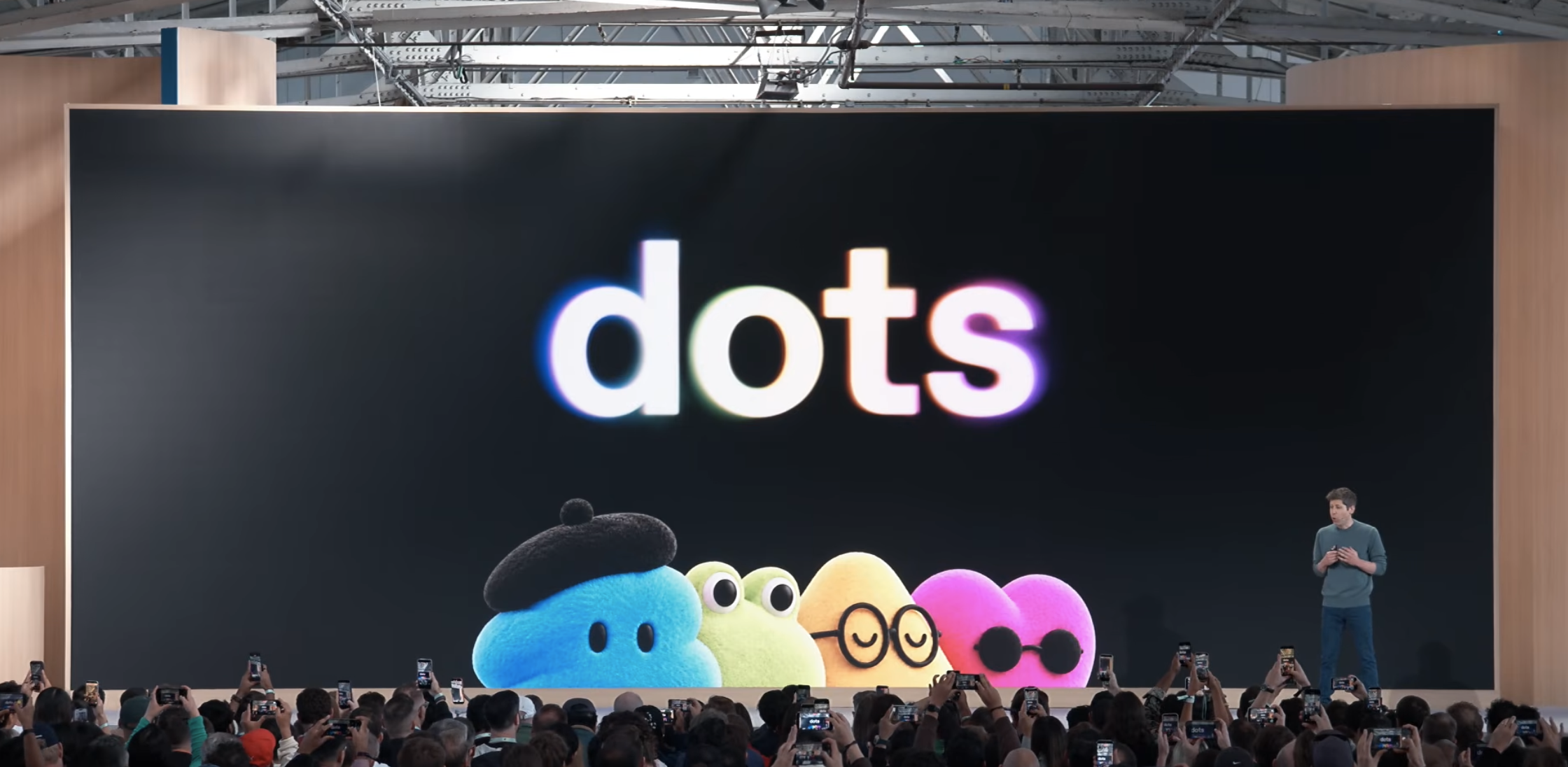
OpenAI used its DevDay conference on Tuesday to introduce Dots, always-on AI agents designed to keep working after a conversation ends. A user gives a dot a goal, connects the apps it needs and sets boundaries for what it may do. The agent can then research, prepare documents, analyse information or follow a project over time, returning when it needs a decision rather than waiting for another prompt.
That is a larger promise than a chatbot answering questions. In OpenAI’s account, each dot runs on its own cloud computer and is powered by GPT-6 Astra. It can use a browser and connected services, while carrying context between ChatGPT, Slack and Microsoft Teams. A developer might ask one to investigate recurring customer complaints and bring back tested fixes; a business owner might use one to prepare an invoice and approve it before sending.
The important word is approve. An agent with access to a company’s email, files and applications could do useful work, but it could also make a costly mistake. OpenAI says users choose which apps a dot may access, can inspect its activity and can set rules requiring approval for particular actions. Background research is limited to read-only tools. The company also says some sensitive steps, such as changing a password, remain with the person, not the agent.
Those controls deserve scrutiny in real use, not just on a launch stage. The more an assistant learns about a person and the more systems it can reach, the harder it becomes to treat an error as a harmless wrong answer. A badly chosen action might send information to the wrong recipient, change a record or create work that someone must undo. OpenAI acknowledges that Dots can make mistakes and tells users to review consequential work.
The launch also sharpens the rivalry with Meta, which has been pushing its Muse agent across consumer services and business tools. Both companies are betting that the next important AI interface will not be a blank chat box but an assistant that remembers goals and takes action. For OpenAI, Dots are a way to make ChatGPT a continuing presence in daily work rather than a place people visit only when they need an answer.
Access is limited for now. OpenAI says Dots are rolling out in eligible markets to ChatGPT Pro and Business Premium users, with an administrator-enabled beta for Enterprise, Education and Healthcare customers. The first dot is included in eligible plans, while deeper work comes with usage allowances. The company has not announced a general free rollout or a date for every country. One dot per person is the starting point; teams of specialist dots remain a longer-term ambition.
The timing matters. As OpenAI’s Astra launch made clear, more capable AI is being judged by the work it can complete, not only by benchmark scores. Dots will face an even more practical test. People must be able to understand what the agent is doing, stop it when necessary and trust that the time it saves is greater than the time spent checking its work.
Related Reading
More contextual TechBooky stories selected from tags, categories and article context.
Paul Balo is the founder of TechBooky and a highly skilled wireless communications professional with a strong background in cloud computing, offering extensive experience in designing, implementing, and managing wireless communication systems.
We use cookies to ensure that we give you the best experience on our website. If you continue to use this site we will assume that you are happy with it.