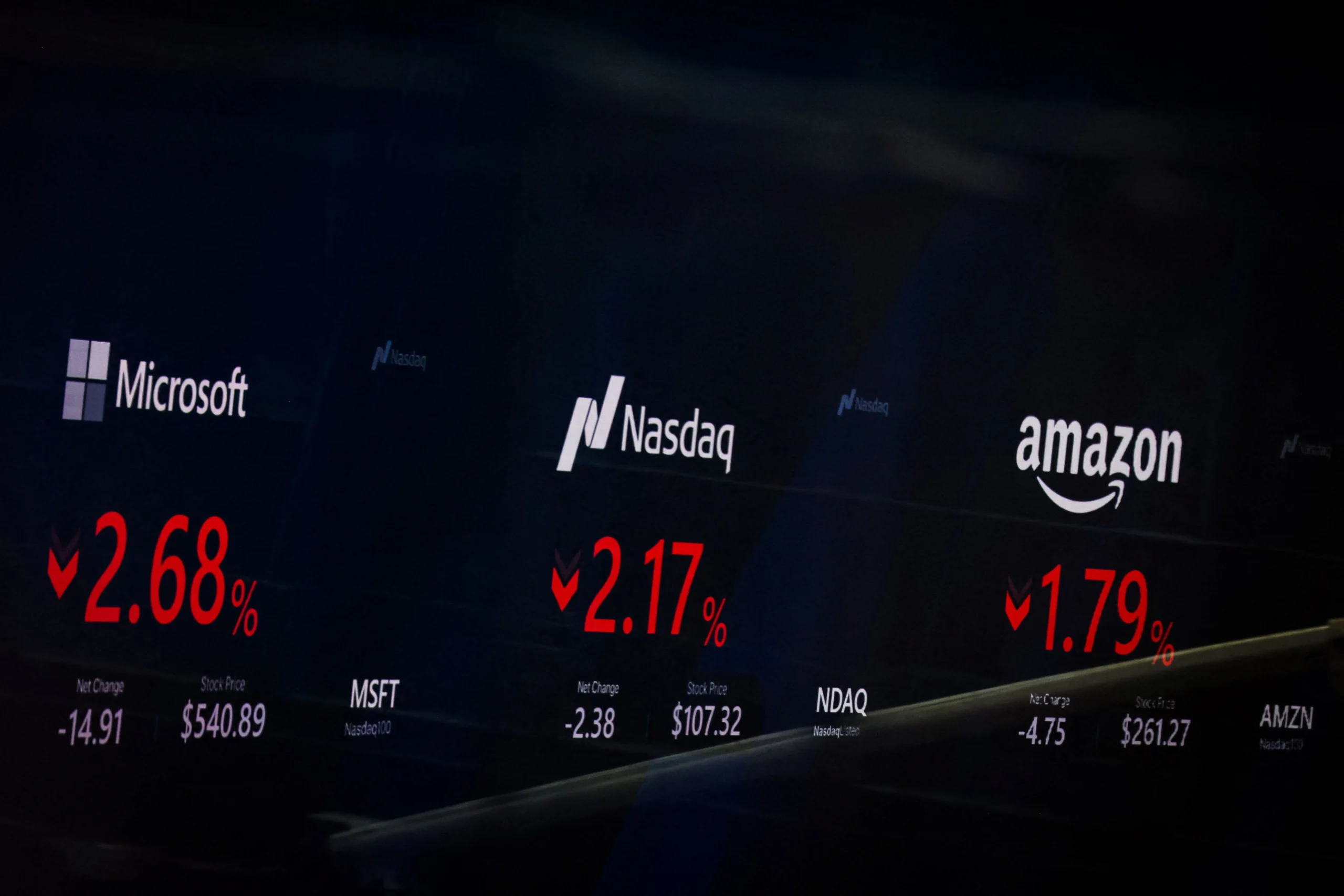
The AI boom has spent years being measured in promises, model launches and spending commitments. This week offers a more grounded test. Nvidia is due to report results after a sudden leadership change, Microsoft will open its Ignite conference, and Palo Alto Networks will publish earnings. None can settle AI’s future in a few days, but together they may show how much of the excitement has become dependable business.
My view is that the important question is no longer whether AI is impressive. It is whether customers are getting enough value to justify the infrastructure, software and security bills. Headlines about ever-larger models tell us little about that on their own.
Nvidia must show demand survives a shock
Nvidia’s quarterly results call is scheduled for 17 November. It will be the first since Jensen Huang stepped down as chief executive and Colette Kress took the interim role. Investors will naturally want to hear how the leadership transition affects customers and execution. The numbers will also test the durability of demand for AI chips against the cost of building data centres.
A strong revenue figure would show that cloud companies continue buying capacity. It would not, by itself, prove their own AI products are profitable. The industry’s supply chain can be healthy while some end-user business models remain unsettled. That distinction is worth keeping in mind when the results arrive.
Microsoft has to demonstrate useful agents
At Microsoft Ignite, which begins on 17 November, the focus is likely to move from what AI agents can do in a demonstration to how they fit into daily work. The practical tests are familiar. Can teams trust their outputs? Who controls access to company data? How are mistakes detected? And what does the software save after accounting for oversight and subscription costs?
Microsoft has a distribution advantage because many organisations already work in its software. But ubiquity is not the same as adoption. An announcement will matter most if it makes deployment, governance and measurable productivity clearer for ordinary customers rather than only early adopters.
Security is part of the AI bill
Palo Alto Networks is scheduled to report on 18 November. Its results may show whether AI-era risk is driving sustained cybersecurity spending. New agents and connected services widen the attack surface, but a surge of interest is not the same as stable recurring revenue.
This matters beyond one supplier. If companies must spend more on controls, monitoring and incident response to use AI responsibly, those costs belong in any honest account of AI’s returns. Security is not a footnote to the productivity story; it is part of the price of making that story credible.
The week could still produce strong numbers and convincing demonstrations. My point is not that the AI rush is ending. It is that the next phase should be judged by evidence of use, resilience and economics, not by the size of another prediction. We will learn more when the companies speak. Until then, these are questions to watch, not outcomes to assume.
Related Reading
More contextual TechBooky stories selected from tags, categories and article context.
We use cookies to ensure that we give you the best experience on our website. If you continue to use this site we will assume that you are happy with it.