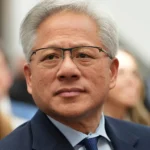
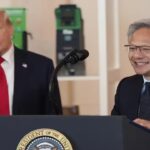
Nvidia founder Jensen Huang has resigned as the company’s chief executive, president and a member of its board, effective immediately. In a statement issued on 12 November, the chipmaker said its chief financial officer, Colette Kress, will serve as interim CEO while the board searches for a permanent successor. It is a sudden leadership change at the company whose processors underpin much of the global artificial intelligence boom.
Kress will continue as executive vice-president and CFO during the interim period. Nvidia said it will consider internal and external candidates for the permanent role. The board also appointed Harvey C. Jones as its first chair. Huang had led Nvidia since co-founding it in 1993, making this the first CEO transition in the company’s history.
The announcement follows days of scrutiny over Huang’s admitted extramarital affair and reports that he was the target of a foreign intelligence effort. Nvidia’s board opened an independent investigation on 8 November, saying at the time that it had no reason to believe national security or company secrets had been compromised. Its resignation statement does not give a reason for Huang’s departure or announce findings from that investigation. Those are important distinctions as the story develops.
Huang also apologised to employees on 8 November for his conduct and said he would cooperate with the review. TechBooky previously reported the board’s decision to investigate. Today’s announcement is a material change, not merely another account of whether directors might act.
Kress has been Nvidia’s CFO since 2013. Before joining the company, she held finance roles at Cisco and Microsoft. Jones, a long-serving Nvidia director, said the leadership team would continue serving customers and executing its technology roadmap. Those assurances matter because Nvidia’s chips, software and systems sit inside projects being built by cloud providers, AI laboratories and governments around the world. A change at the top can raise questions about strategy, supply commitments and relationships with regulators even when day-to-day operations continue.
The immediate test is not whether Nvidia can name a familiar interim leader. It is whether the board can provide a credible path to permanent leadership while the independent review remains unresolved. The company has not announced a timetable for that search or said whether Huang will retain any other formal role. Its statement thanks him for his contributions but does not detail future involvement.
Nvidia is due to report fiscal 2027 third-quarter results on 17 November, with written results expected at about 1:20 p.m. Pacific Time and a conference call at 2 p.m., according to its investor announcement. That call will give investors an early opportunity to hear how the interim management team intends to handle the transition. Nvidia said the financial reporting schedule remains unchanged.
Huang’s departure also changes the context for the wider debate over AI chips and US national security. Nvidia faces intense demand for advanced processors while Washington weighs access to them across borders. TechBooky has covered the pressure around China-related cloud access, but those policy questions should not be conflated with a conclusion about the board’s investigation. For now, the confirmed facts are the immediate resignation, Kress’s interim appointment and a search for a successor.
Related Reading
More contextual TechBooky stories selected from tags, categories and article context.
We use cookies to ensure that we give you the best experience on our website. If you continue to use this site we will assume that you are happy with it.



 Kress will continue as executive vice-president and CFO during the interim period. Nvidia said it will consider internal and external candidates for the permanent role. The board also appointed Harvey C. Jones as its first chair. Huang had led Nvidia since co-founding it in 1993, making this the first CEO transition in the company’s history.