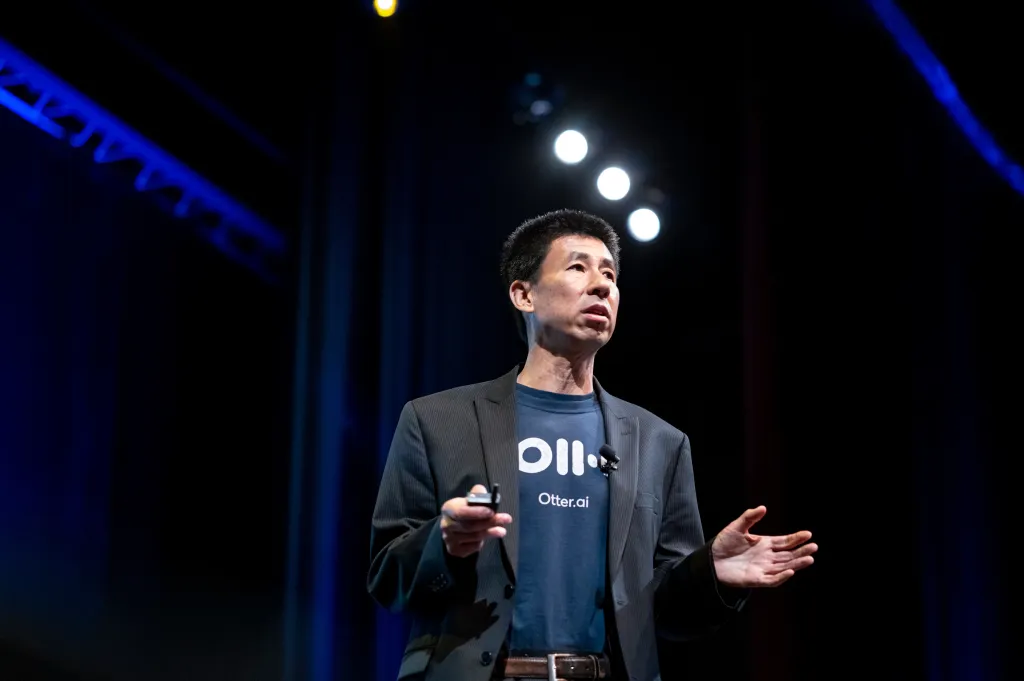
Otter.ai has secured $320 million from General Catalyst to push its AI meeting assistant deeper into corporate work. The headline number is large, but the structure matters just as much: this is repayable, non-equity financing rather than a conventional venture round in which Otter sells new shares.
The company announced the agreement on October 20 with General Catalyst’s Customer Value Fund. It plans to spend on enterprise growth, international expansion and product development. Chief executive Sam Liang told Reuters the funding must be paid back with interest as sales and marketing efforts generate revenue. Existing shareholders are not diluted by the arrangement, but the company takes on a repayment obligation.
A typical startup funding announcement implies investors bought a stake at a stated or implied valuation. That is not what Otter has disclosed here. The $320 million should not be read as a fresh equity valuation, and the company has not published terms that would let outsiders calculate the full cost of the financing. It is a bet that additional spending to win business customers will yield enough revenue to cover the capital and its financing cost.
Liang said Otter plans to double or triple its sales and marketing budget, expand a small sales team and step up activity outside the United States. He aims to at least double enterprise revenue next year. That is a target, not a result. Reuters reported that he did not disclose enterprise revenue or the share of users who pay, making it difficult to judge the starting point for that ambition.
Otter says it has more than 40 million users, has served teams in 86% of Fortune 500 companies and has transcribed over one billion meetings. Those figures show the scale of its reach, though neither user count nor the presence of a team at a large company tells us how many organisation-wide contracts it has won. Its claimed customer return on investment should likewise be treated as a company estimate rather than independently audited performance.
The company began with transcription and automated meeting notes. Its wider ambition is to make conversation searchable and actionable, so a user can retrieve a decision, assign a task or carry context into the next meeting. That shifts Otter toward the broader market for enterprise assistants, where the service must compete with tools built into Microsoft, Google, Zoom and OpenAI products.
TechBooky has covered ChatGPT’s meeting recording features, one example of how quickly meeting intelligence has become a standard feature rather than a standalone novelty. Otter’s challenge is to show that a dedicated product can deliver deeper, more dependable value than a feature bundled into software a company already pays for.
That requires more than a good summary. Businesses will want clear consent around recording, control over retention, reliable speaker attribution, security reviews and a way to correct errors before AI-generated action items become part of official work. A meeting assistant that gets the central decision wrong may create more work than it saves.
The new financing gives Otter room to compete for that enterprise budget without issuing equity today. The trade-off is pressure to turn spending into durable sales. Watch for disclosed paid-customer growth, revenue and retention, not only the number of meetings processed. Those figures will show whether the $320 million is accelerating a sustainable business or simply making a crowded market more expensive to win.
Related Reading
More contextual TechBooky stories selected from tags, categories and article context.
Paul Femi Balo is the founder and publisher of TechBooky. He covers artificial intelligence, African technology, digital infrastructure, enterprise technology and the global digital economy.
We use cookies to ensure that we give you the best experience on our website. If you continue to use this site we will assume that you are happy with it.