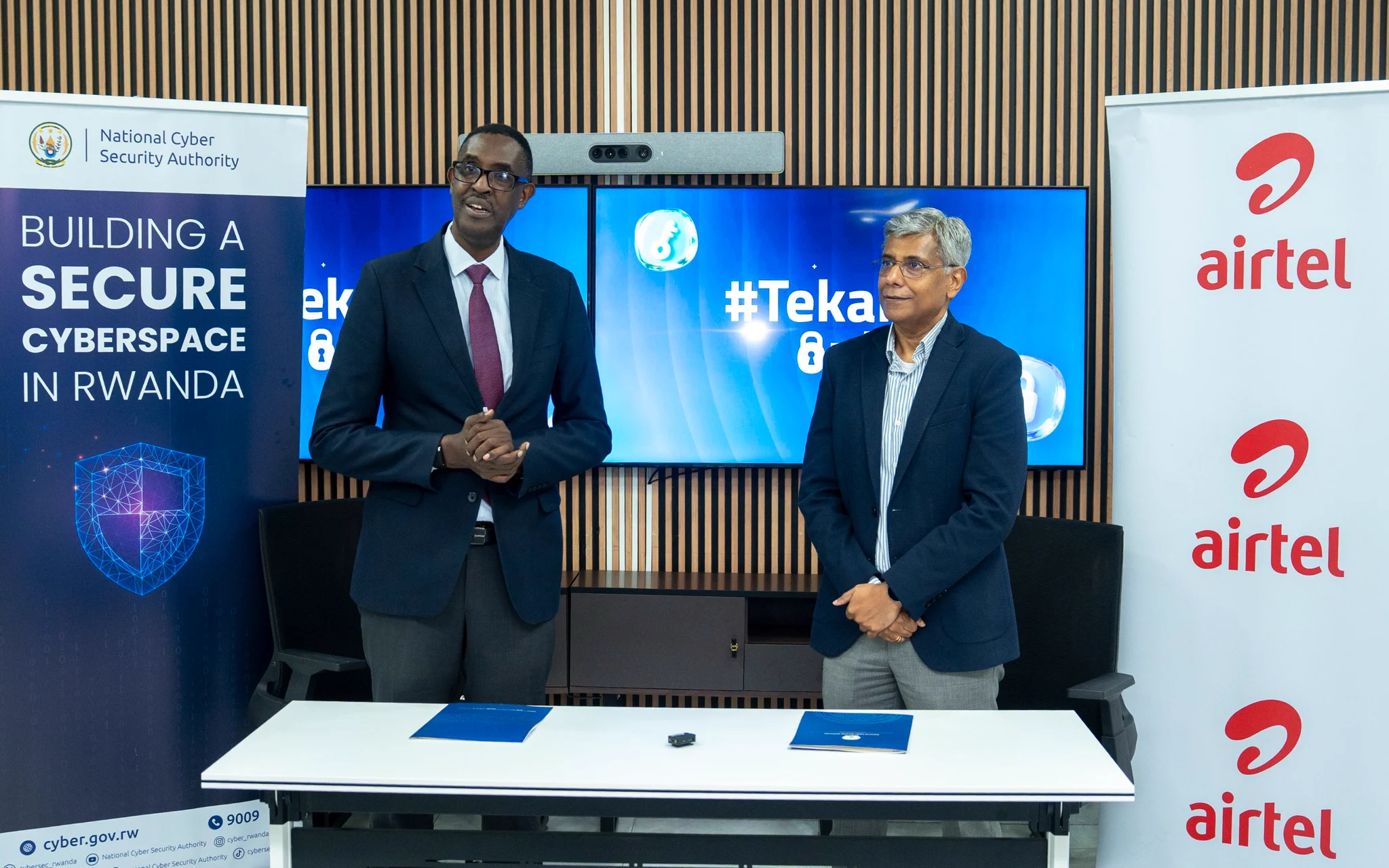
Rwanda’s National Cyber Security Authority has signed agreements with MTN Rwanda and Airtel Rwanda to expand training, internships and early-career opportunities through its CyberHub. The move is about the people who will protect networks and digital services, not the launch of a new consumer security product. The authority announced the two memoranda of understanding after a workshop for telecommunications and internet-service providers in Kigali on 22 October.
The partnerships should give students and graduates a clearer route from learning cyber concepts to working inside organisations that run essential infrastructure. Airtel says it will provide career guidance sessions and structured internships across areas including network and IT operations, enterprise technology, mobile money and fintech. Outstanding graduates may be considered for trainee or entry-level roles. These are opportunities, not a promise of employment for every participant.
The National Cyber Security Authority says both telecom agreements focus on skills and career development. That is significant because mobile operators carry a large share of the traffic and financial activity in many African markets. A technical failure or intrusion at a provider can affect communications, business payments and access to public services. The workshop also raised concerns ranging from network intrusions to SIM-swap fraud and mobile-money scams.
The CyberHub opened in October 2025 at the University of Rwanda’s College of Science and Technology in Kigali, in collaboration with Cisco. It combines training, an innovation space and technical labs. A classroom can introduce security principles, but students need exposure to real operating conditions to learn how to detect unusual activity, respond to incidents and protect systems that cannot simply be turned off for a lesson.
That is where the new partnerships could have practical value. A placement inside a telecoms company can show a trainee how network teams, fraud specialists and customer support interact when a problem crosses organisational lines. It can also help employers identify the skills they need before graduates enter the job market. The public announcement does not specify the number of internships, the budget or a timetable for measuring outcomes, so the scale of the programme remains to be demonstrated.
The test now is follow-through. The authority and its partners will need to turn signed agreements into supervised placements, useful technical training and jobs. Publishing the number of participants and subsequent hires would help show whether the CyberHub is building lasting capacity rather than producing another well-intentioned launch announcement.
Related Reading
More contextual TechBooky stories selected from tags, categories and article context.
Paul Femi Balo is the founder and publisher of TechBooky. He covers artificial intelligence, African technology, digital infrastructure, enterprise technology and the global digital economy.
We use cookies to ensure that we give you the best experience on our website. If you continue to use this site we will assume that you are happy with it.