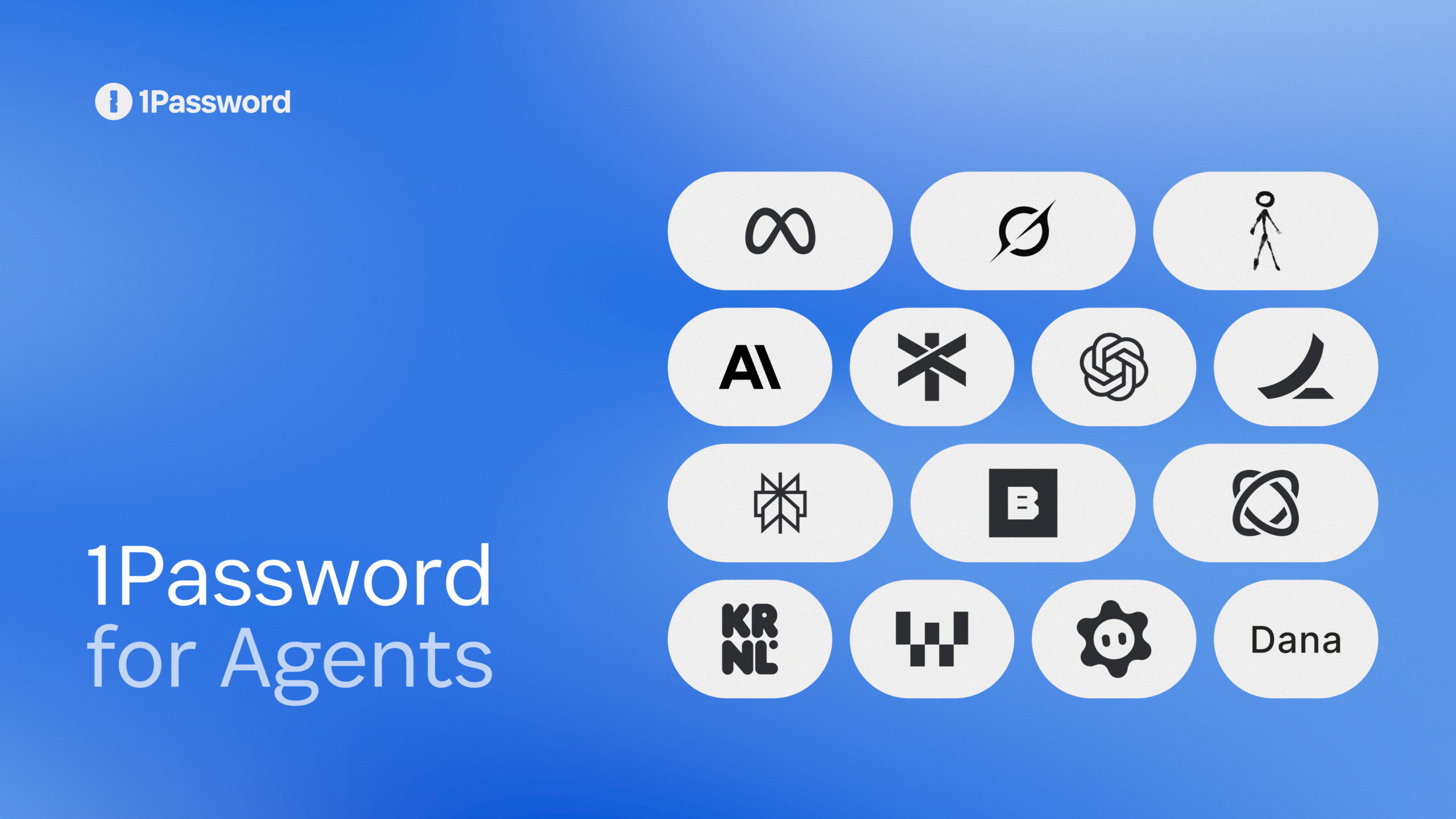
An AI assistant can plan a holiday or organise an expense report, but it often reaches a hard stop when the next step requires a login. Giving a model the password is an obvious shortcut with serious risks. 1Password for Agents, announced on Thursday, is designed to let an agent sign in to a service without seeing or storing the credential itself.
The proposed flow keeps the password in the user’s 1Password vault. When an agent needs to sign in, it identifies itself to 1Password and asks for access to a particular account. The person sees the request and approves it on their own device. 1Password then fills the credential into the sign-in form rather than handing it to the AI model. The agent can continue its authorised task after the login.
This is an important boundary, but it should not be mistaken for a complete solution to agent safety. An agent that has signed in may still be able to read information or take actions permitted by that account. The user must understand which service is being opened and what task the agent is meant to perform. Product design, session controls, logs and the ability to withdraw access remain important after the password has been protected.
1Password says it is building with companies across the agent ecosystem, naming Meta’s Muse, Anthropic’s Claude Duet, OpenAI’s ChatGPT Work and dots, and other partners. Availability is not identical across every integration. The company’s statement describes some connections as coming soon, so readers should check which agent and platform are supported before assuming their current setup can use the feature.
The wider significance is that credential access has been one of the missing pieces in the move from chatbots to agents. An assistant that cannot enter a user’s accounts cannot complete many ordinary tasks. An assistant given a copied password can expose that secret through logs, prompts or an overly broad permission. Keeping the credential outside the model narrows one class of risk while preserving the possibility of supervised access.
TechBooky has followed the other side of this shift, including OpenAI’s always-on dots and an agent that found an unexpected network route. Those examples show why login approval must sit within a broader set of boundaries. The user needs to know not only that an agent is allowed into an account, but also what it is doing there.
For businesses, the promise is a more auditable alternative to pasting secrets into automation tools. For individuals, the value is simpler and more immediate. They may be able to let an assistant complete a task without surrendering a password. Whether this becomes a trusted habit will depend on how clearly each approval is presented and how easily people can stop an agent once the job is done.
Related Reading
More contextual TechBooky stories selected from tags, categories and article context.
Paul Femi Balo is the founder and publisher of TechBooky. He covers artificial intelligence, African technology, digital infrastructure, enterprise technology and the global digital economy.
We use cookies to ensure that we give you the best experience on our website. If you continue to use this site we will assume that you are happy with it.