WhatsApp is testing a new way to keep business messages from taking over the main inbox, and it is the kind of small product change that says something bigger about where messaging apps are going.
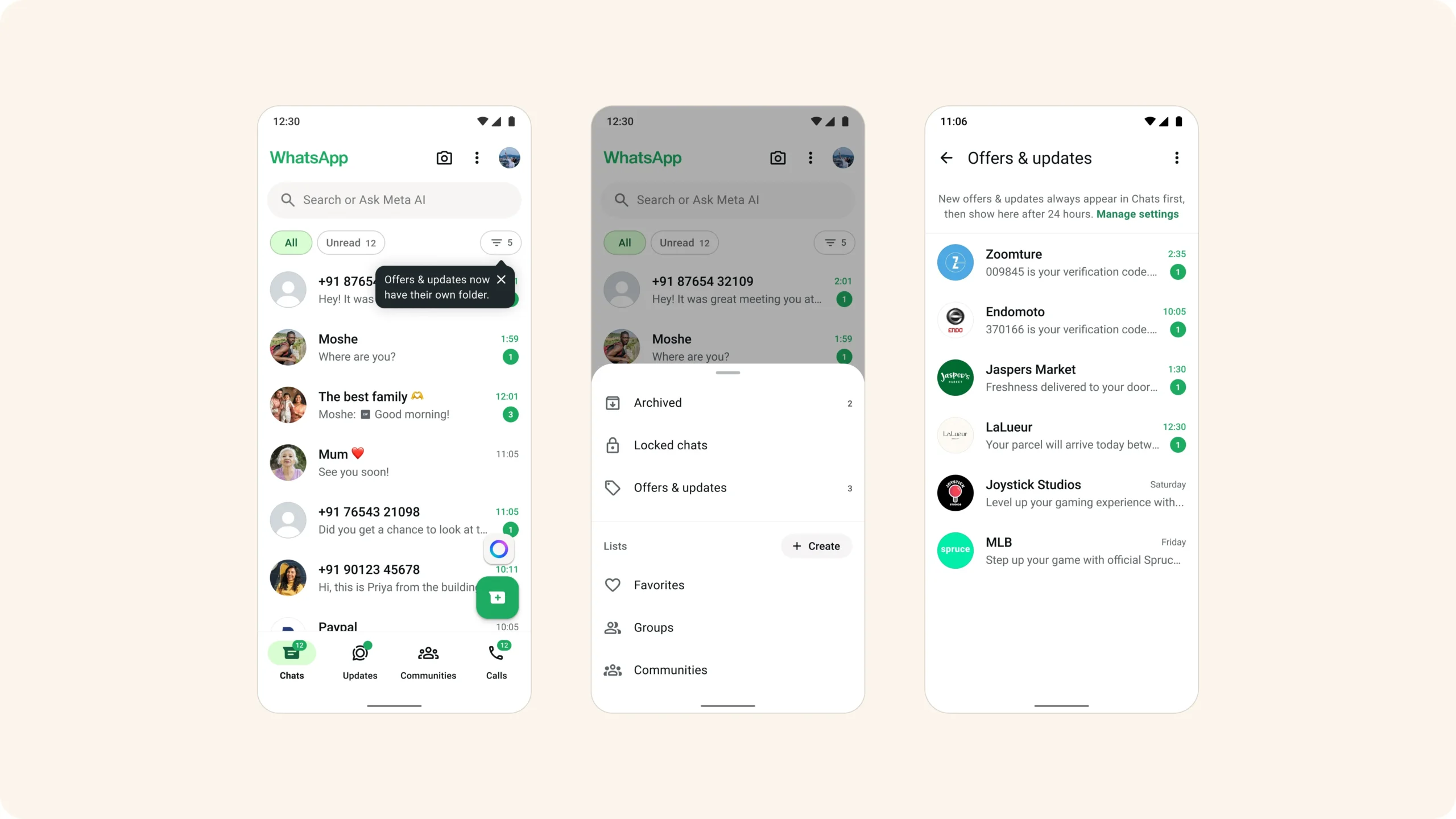
TechCrunch reports that WhatsApp is testing an Offers & Updates folder for messages from large businesses. When a user receives a message from a large business, WhatsApp can automatically move it into the folder after a number of hours. The company is reportedly testing different delays, including up to 24 hours, and users can turn the setting off if they prefer business messages to stay in the main chat list.
At first glance, this sounds like inbox housekeeping. But WhatsApp has become much more than a private messaging app. In markets like Nigeria, India, Brazil, Indonesia and Kenya, it is also a customer-service desk, sales channel, delivery tracker, marketing channel, community noticeboard and sometimes even a lightweight commerce platform.
That growth creates a tension. Businesses want access to users because WhatsApp messages feel more immediate than email. Users, meanwhile, do not want the same app they use for family and close contacts to become a stream of discount codes, delivery updates and brand campaigns. The new folder is WhatsApp attempt to protect the personal feel of the app while still keeping business messaging valuable.
Meta has been pushing WhatsApp Business hard because messaging is one of the places where commerce, ads and AI agents can meet. Earlier this year, Meta made its AI agent for WhatsApp Business available globally, giving companies a way to automate more customer interactions. That only increases the need for better inbox controls. More automation means more messages, and more messages can easily become noise.
The folder could also help with trust. Scam messages, impersonation and fake business accounts remain a constant problem on messaging platforms. A cleaner split between personal chats and large-business communication will not solve fraud by itself, but it gives users a clearer mental model of what kind of conversation they are in.
For African businesses, WhatsApp is already a major operating tool. Many SMEs use it to take orders, confirm payments, send receipts, answer complaints and manage repeat customers. If WhatsApp starts separating large-business messages, smaller merchants may watch closely to see whether the rules eventually affect them too.
The risk for Meta is that business messaging becomes too successful for its own good. If users begin to feel spammed, they will mute, archive or ignore brand conversations. If businesses feel their messages are hidden too aggressively, they may complain that reach is being reduced. WhatsApp has to find the middle ground where commerce is useful but the inbox still feels human.
That balance matters because messaging is becoming the next storefront. The companies that can keep it useful, trusted and uncluttered will have a real advantage. WhatsApp new folder may look like a small test, but it is really about who controls attention inside the most personal screen on the phone.
Paul Balo is the founder of TechBooky and a highly skilled wireless communications professional with a strong background in cloud computing, offering extensive experience in designing, implementing, and managing wireless communication systems.
We use cookies to ensure that we give you the best experience on our website. If you continue to use this site we will assume that you are happy with it.