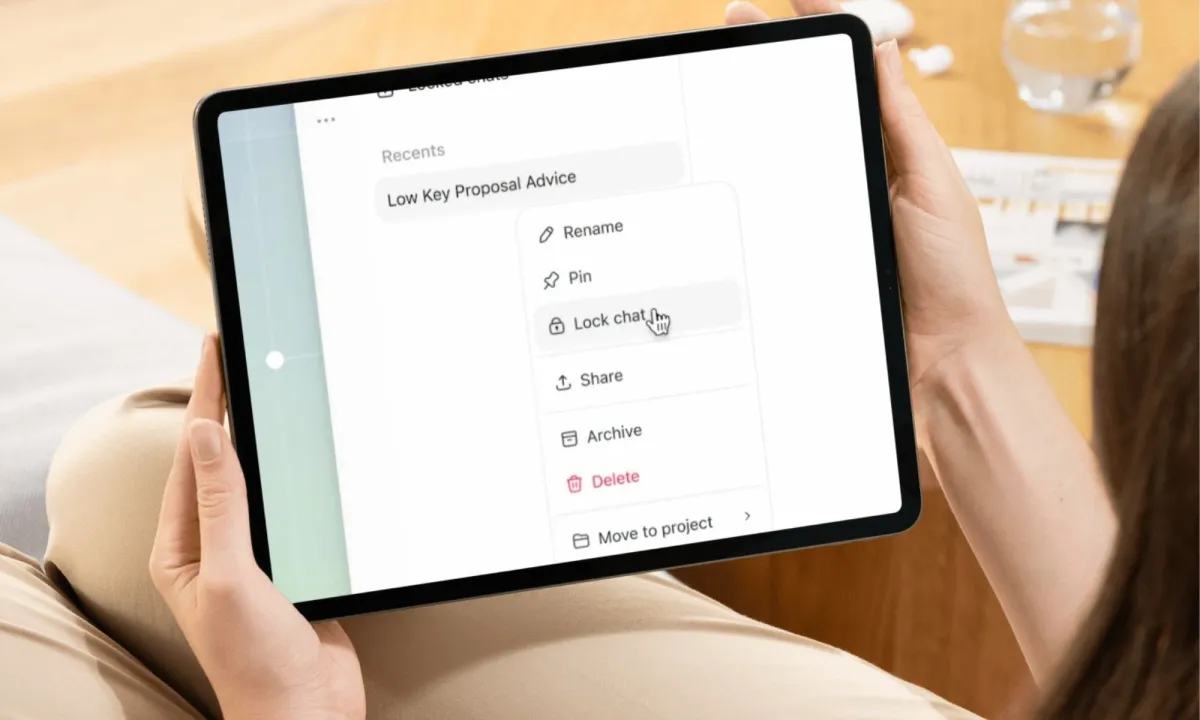
OpenAI is rolling out locked chats in ChatGPT, giving users a way to put selected conversations behind a PIN or device biometrics. It is a useful control for anyone who shares a device or wants sensitive chats out of their ordinary history. But the word ‘locked’ can suggest a stronger privacy guarantee than this feature provides.
According to OpenAI’s guidance, locked chats are hidden from the normal chat list and search. They can be opened with the chosen PIN or an available biometric method. The feature is rolling out gradually across ChatGPT plans, so some users may not see it immediately.
The most immediate benefit is protection against casual access. If somebody briefly uses an unlocked computer or borrows a phone, a locked conversation will not be sitting alongside ordinary chats for them to open. That matters for personal questions, confidential drafts and work discussions. It is a practical improvement to the interface, especially where a device is shared.
It is not, however, an encrypted private vault. OpenAI says locking a chat does not change the underlying data retention or model-training settings. It also does not erase information a previous conversation may already have contributed to ChatGPT’s memory. Users who want to limit how their data is handled still need to review the separate privacy and memory controls. TechBooky has previously examined how ChatGPT’s memory system works.
There is a significant trade-off. OpenAI says resetting a forgotten PIN permanently deletes the locked chats and their files. That makes a recovery decision consequential: a user cannot assume that changing the PIN will simply restore access to archived material. Anyone relying on a locked chat for important records should retain authorised copies elsewhere.
The distinction is particularly important for organisations. On Enterprise and Edu plans, OpenAI says locked conversations remain available through its Compliance Platform. Administrators cannot unlock a user’s chat or reset that user’s PIN, but the feature does not remove existing compliance visibility. Workplace users should therefore not treat locked chats as a way to keep conversations outside an employer’s retention or oversight policies.
Locked chats are best understood as an access-control feature within ChatGPT, not a rewrite of the service’s privacy model. They make the visible conversation list more discreet and reduce accidental exposure. The harder questions about retention, training, memory and organisational access remain governed by separate settings and policies. That is the distinction users should understand before moving their most sensitive conversations behind the new lock.
Related Reading
More contextual TechBooky stories selected from tags, categories and article context.
Paul Femi Balo is the founder and publisher of TechBooky. He covers artificial intelligence, African technology, digital infrastructure, enterprise technology and the global digital economy.
We use cookies to ensure that we give you the best experience on our website. If you continue to use this site we will assume that you are happy with it.