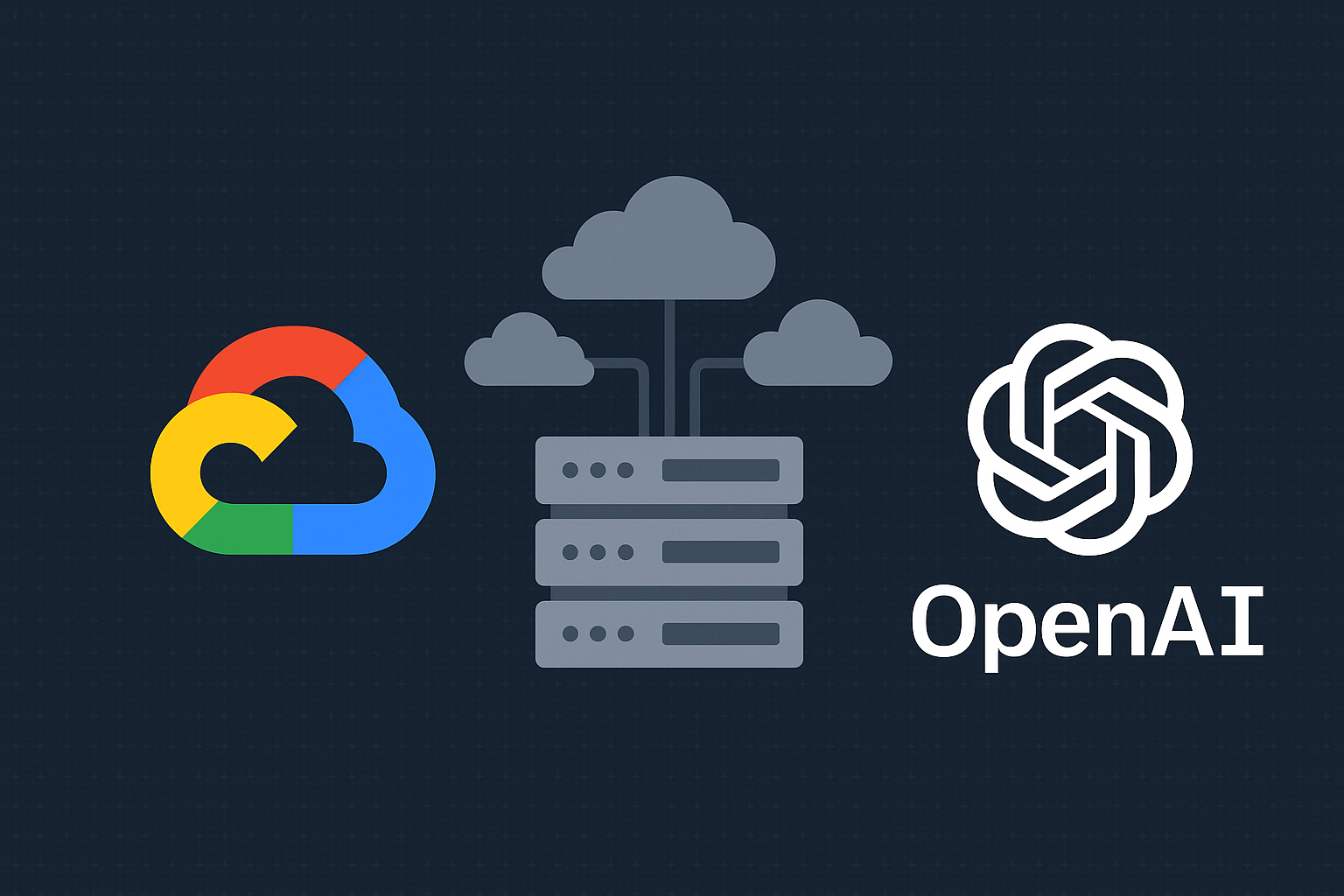
OpenAI’s frontier models and Codex workflows are coming to Google Cloud, giving businesses a new way to use OpenAI technology inside a platform that already sells Google’s competing Gemini models. The companies announced the partnership on 21 October, with general availability planned in the coming weeks rather than immediate access for every customer.
The integration will put OpenAI models in Google Cloud’s Model Garden. Customers will be able to purchase them through Google Cloud Marketplace and, according to OpenAI, apply existing Google Cloud spending commitments to those purchases. Codex agentic workflows are also part of the arrangement. For enterprises already running data and applications on Google Cloud, that could reduce the work involved in evaluating a second model provider.
Model Garden is a catalogue through which Google Cloud customers can discover and deploy AI models. Bringing OpenAI into that environment means developers can compare different systems without necessarily moving their wider cloud estate. OpenAI says its models will be paired with Google’s access controls, data governance and infrastructure for demanding enterprise workloads, including those in regulated sectors.
The companies also say OpenAI models will become available in Google Antigravity and the Gemini Agent. That is an unusual sight in a fiercely competitive market. Google is both a cloud distributor for OpenAI and the maker of one of its strongest model rivals. For customers, the more useful question is whether the promised model choice translates into straightforward pricing, dependable performance and clear data-handling terms.
There are limits to what has been announced. OpenAI has not provided a full list of models, prices or launch markets in its statement. Businesses should not mistake a planned general availability window for a service that is already enabled across every Google Cloud account.
What happens to Microsoft?
The announcement does not end OpenAI’s Microsoft relationship. OpenAI explicitly says Microsoft remains its primary cloud partner. But it does underline how much more flexible AI distribution has become. TechBooky previously covered the restructuring of the Microsoft-OpenAI partnership, which removed earlier exclusivity restrictions and made deals with other cloud providers possible.
That background matters because the AI market is no longer organised around one model and one infrastructure provider. Large customers increasingly want a choice of models, commercial terms and deployment environments. Google Cloud gets another high-demand model family to offer. OpenAI gets access to organisations that have already standardised on Google’s cloud services. Microsoft retains its stated primary-partner position, at least for now.
For developers and procurement teams, the next test will be practical. Which OpenAI models arrive first, what they cost through Marketplace, and how Codex integrates with existing workflows will determine whether this is a major change in day-to-day AI adoption or mainly a strategic headline. Until those details arrive, the clearest development is that two direct competitors have decided customers’ demand for choice is too important to ignore.
Related Reading
More contextual TechBooky stories selected from tags, categories and article context.
Paul Femi Balo is the founder and publisher of TechBooky. He covers artificial intelligence, African technology, digital infrastructure, enterprise technology and the global digital economy.
We use cookies to ensure that we give you the best experience on our website. If you continue to use this site we will assume that you are happy with it.