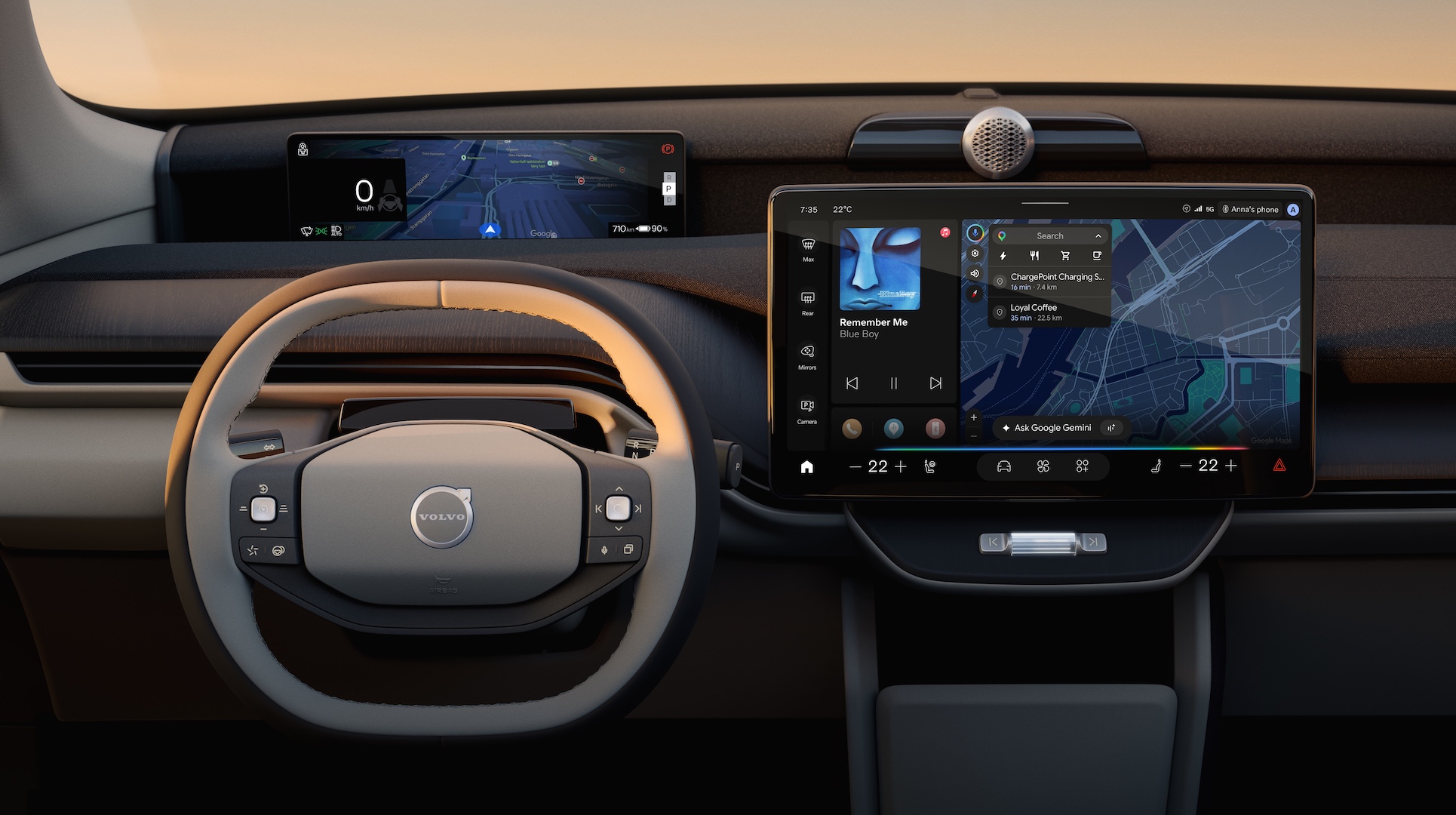
Google is bringing a more personalised version of Gemini to cars, beginning with Android Auto. Drivers who opt in will be able to connect information from Google services and ask for help that draws on their own calendars, messages, photos and other data. But the initial Personal Intelligence rollout has a notable geographic limit: users in the UK and Nigeria are not eligible for that personalised layer, even though the standard Gemini car experience is available more broadly.
In its 20 October announcement, Google said Personal Intelligence is coming first to Android Auto and later to vehicles with Google built-in. The feature is designed to make a car assistant useful beyond generic questions. A driver could ask about an appointment, find a place discussed in an email or continue a task using context from connected Google apps.
It is an opt-in connection between Gemini and a user’s own Google services. Google lists Workspace tools such as Gmail and Calendar alongside Photos, Maps, YouTube and Search as possible sources of context. Rather than requiring the driver to remember an address or search through messages while travelling, the assistant can use authorised information to answer a request. That is a meaningful step towards a car interface that knows why a journey matters, not just where it ends.
The distinction between the base assistant and Personal Intelligence matters. Google says Gemini in cars is rolling out globally. The personalised capability, however, is limited to eligible personal accounts held by adults and is not being offered in the European Economic Area, Switzerland or the UK. Nigeria is also outside the initial availability. Google has not provided a date for expanding the personalised feature to those markets. Describing Gemini as unavailable in UK or Nigerian cars would therefore be misleading; it is this additional account-connected layer that is missing.
The useful part of an AI car assistant may increasingly be its ability to act on a person’s context. Navigation and voice commands are familiar, but pulling a meeting location from a calendar or locating details buried in an email can remove real friction from a trip. If that capability reaches some markets before others, drivers will have substantially different experiences under the same Gemini branding.
There are also sensible questions about how much personal data a car assistant should access. Opt-in controls are important, especially in a vehicle used by several people. Users should examine which services they connect and understand when responses may reveal personal information to passengers. TechBooky has previously covered Google’s evolving Android Auto interface, where the challenge has been making more features usable without adding distraction.
For now, the practical takeaway is straightforward. Gemini’s broader in-car arrival should not be confused with universal access to Personal Intelligence. Google has established a path for account-aware assistance on the road, starting with Android Auto, but UK and Nigerian users will have to wait for an expansion that has not yet been dated.
Related Reading
More contextual TechBooky stories selected from tags, categories and article context.
Paul Femi Balo is the founder and publisher of TechBooky. He covers artificial intelligence, African technology, digital infrastructure, enterprise technology and the global digital economy.
We use cookies to ensure that we give you the best experience on our website. If you continue to use this site we will assume that you are happy with it.